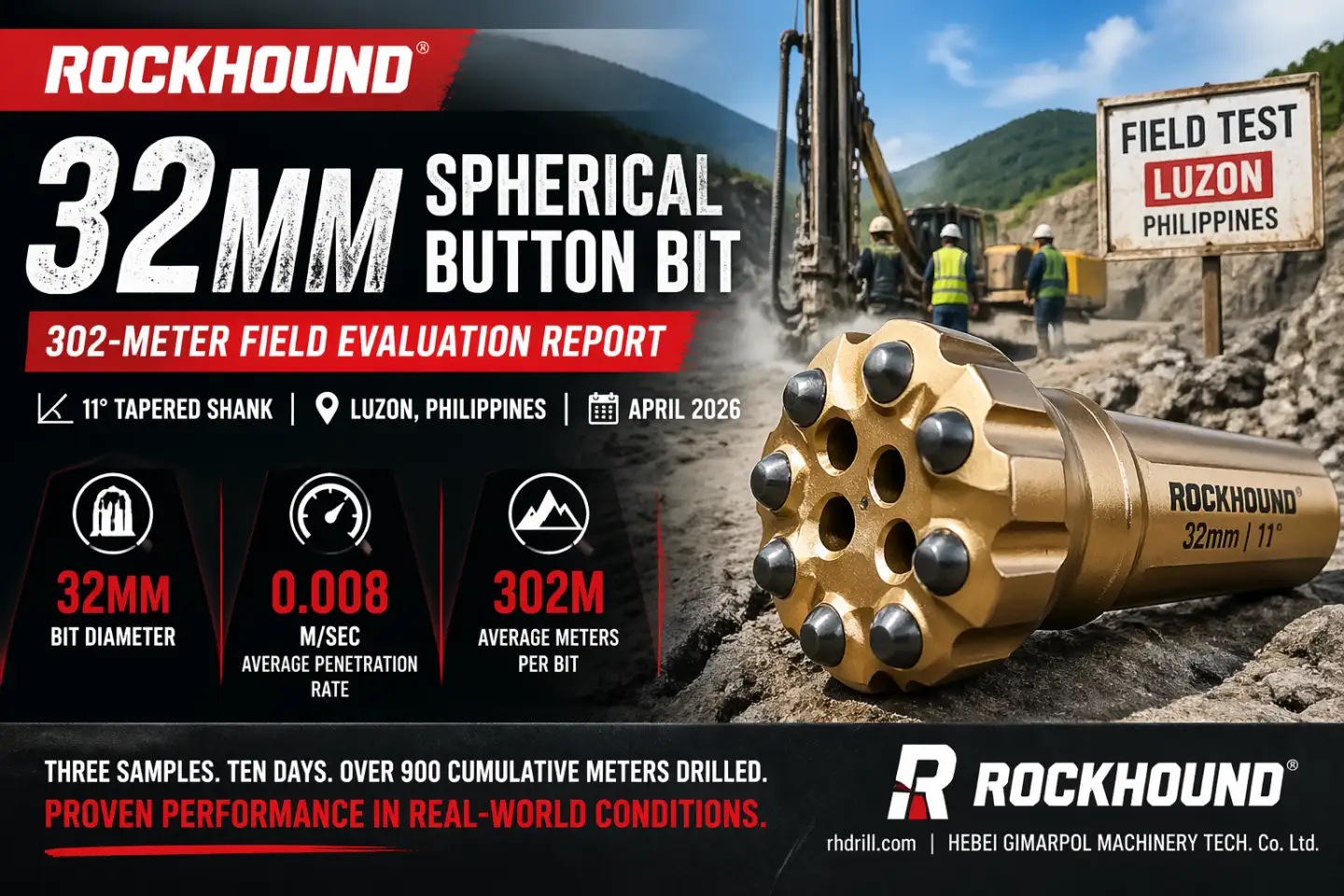
11° Tapered 32mm Button Bits Field Test In Luzon
ROCKHOUND 11° Tapered 32mm spherical button bits completed a 302-meter field evaluation in Luzon with a consistent 0.008 m/sec penetration rate. Full report inside.

ROCKHOUND 11° Tapered 32mm spherical button bits completed a 302-meter field evaluation in Luzon with a consistent 0.008 m/sec penetration rate. Full report inside.
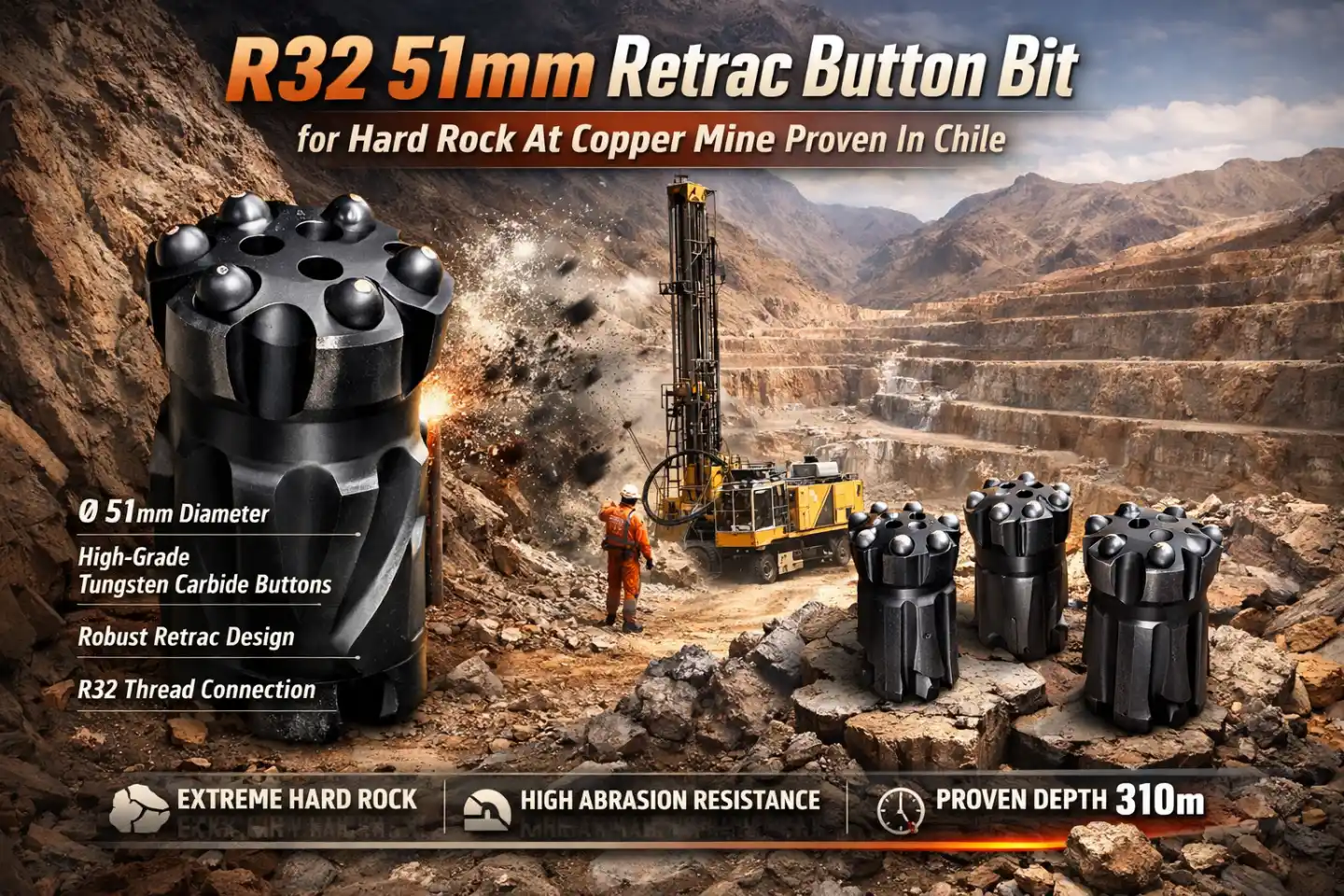
Engineered for 180MPa+ hard rock. Discover how our R32 51mm Retrac bit achieved 310m in Chile’s copper mines. High-grade YK05 carbide & 45CrNiMo1V steel. Shop top-tier rock drill tools.
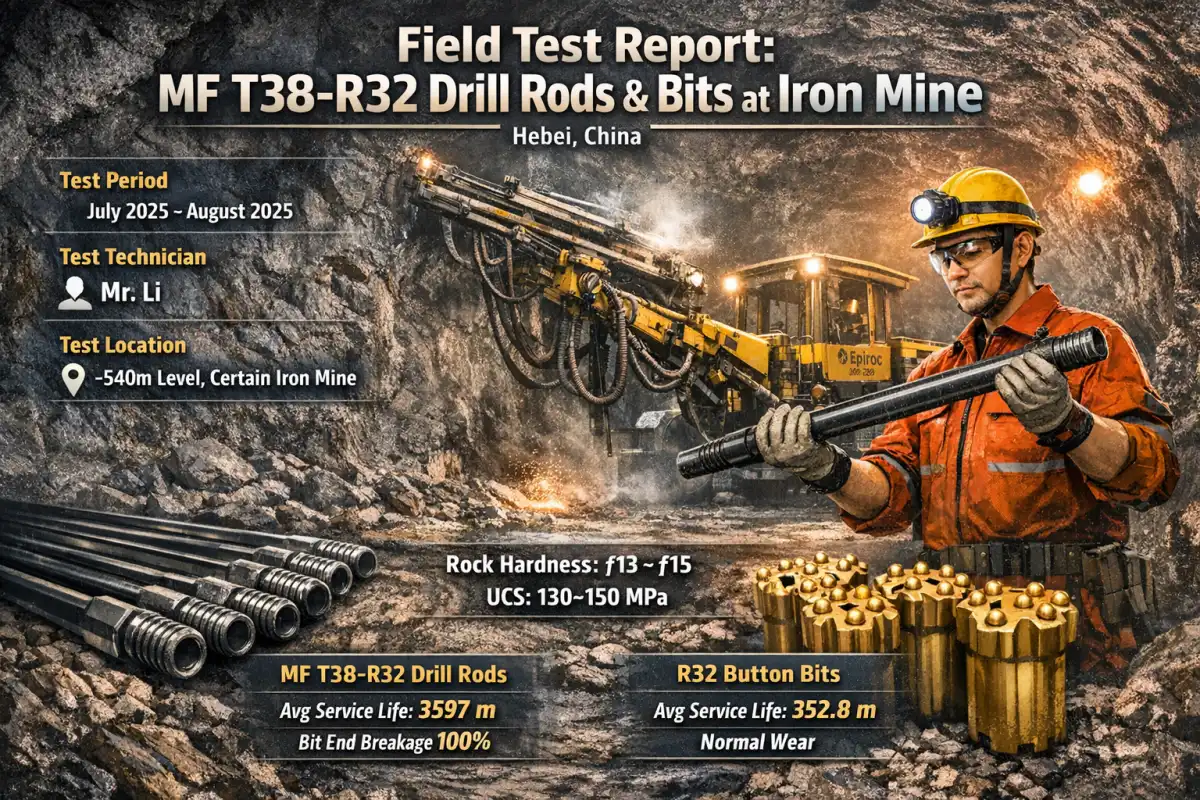
Read RockHound Field Test Report for MF T38-R32 drill rods and R32 bits. Achieved an average service life of 3,597m in hard iron ore (130-150 MPa) using Epiroc Boomer 281.
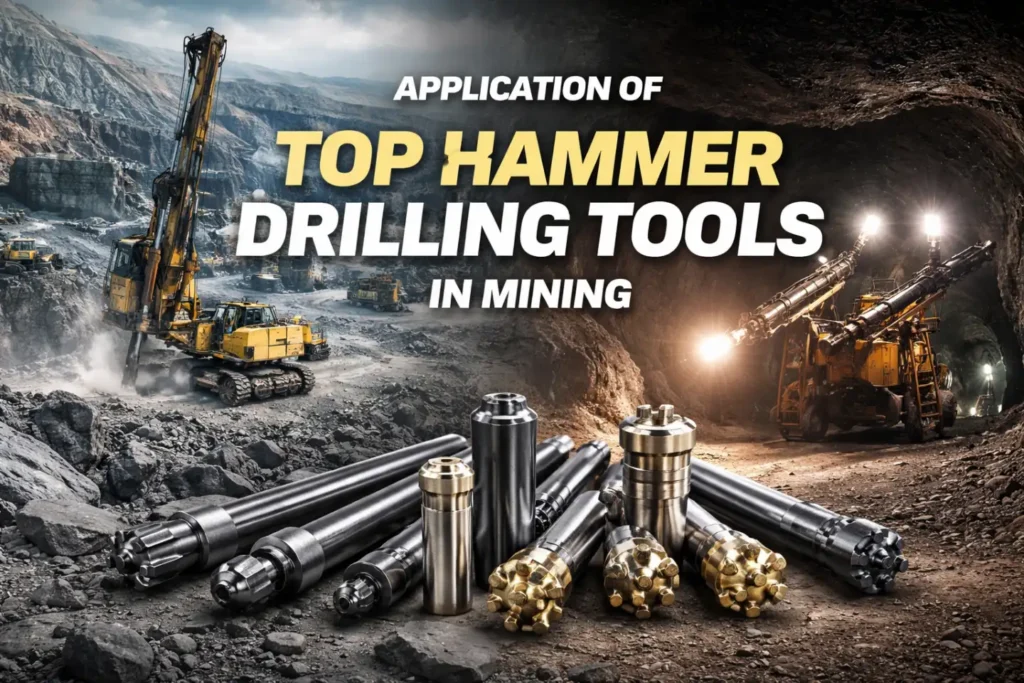
At RockHound, we engineer high-performance top hammer drill string components built for the real demands of surface & underground mining environments. [Explore: Advantage of Top Hammer Drilling Tools In Mining]
| Key Performance Factors in Bench Drilling | How Top Hammer Long-Hole Systems Address Them |
|---|---|
|
|
Limestone is a reasonable rock to drill most of the time. UCS(Uniaxial Compressive Strength) values typically run between 50 and 120 MPa, which gives a well-chosen bit solid penetration rates without burning through carbide fast. The real challenge is inconsistency. Chert nodules, clay seams, and karst voids can all turn up inside a single blast pattern and put very different loads on the same tools.
For most limestone bench drilling, spherical button bits in T38 or T45 thread sizes hit the right balance between speed and bit life. In softer, more even limestone, semi-ballistic (parabolic) button profiles are worth trying — the geometry pushes energy into the rock more aggressively, and penetration rate goes up noticeably when flushing conditions are good.
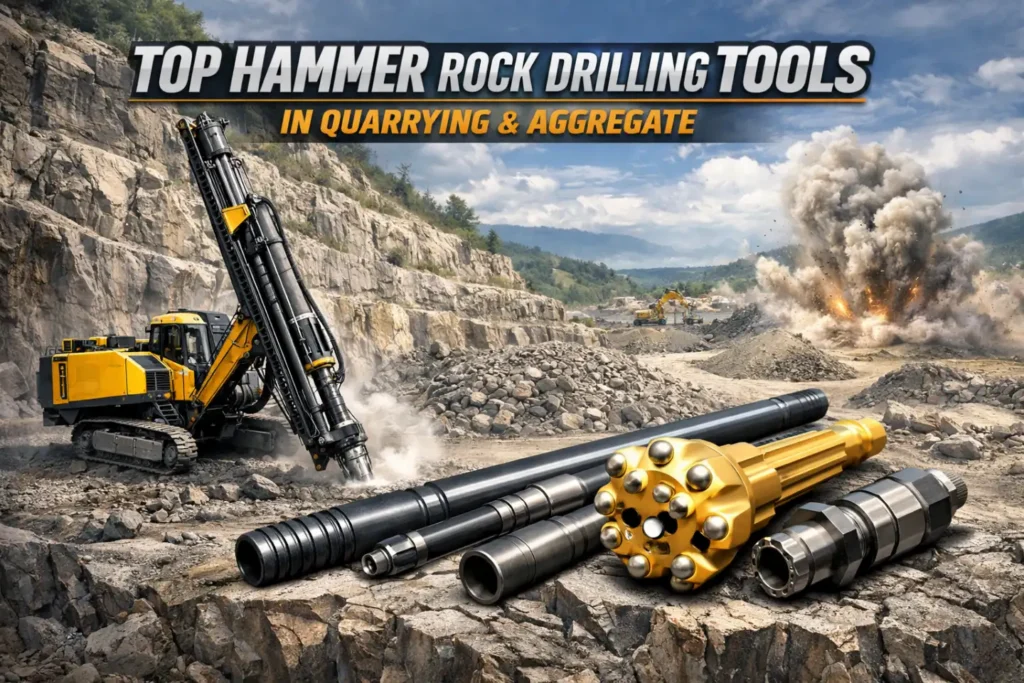
[Explore More: Top Hammer Rock Drilling Tools In Quarrying & Aggregate]
Two principal percussive methods compete in underground hard-rock work: top hammer (TH) and down-the-hole (DTH). The structural difference is straightforward—top hammer locates the hydraulic drifter at the top of the drill string and transmits impact energy as a stress wave down through the extension rods; DTH places the pneumatic or hydraulic hammer directly behind the bit, eliminating transmission losses over long strings.
In tunnelling practice, the split is not a matter of preference but geometry. Tunnel blast holes are typically 38–57 mm in diameter and 3–6 m deep. Roof-bolt holes run 33–42 mm at 2–4 m. Probe and drainage holes extend to 20–40 m but remain slender.
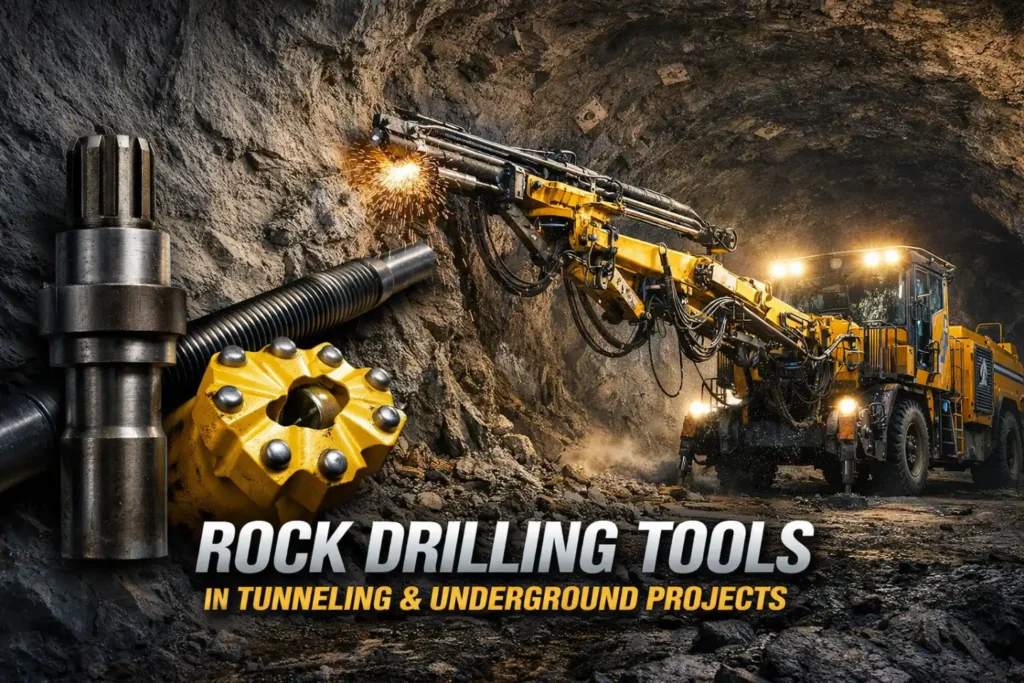
[Explore More: Rock Drilling Tools In Tunneling & Underground Drifting]
Before getting into specific applications, it helps to understand why top hammer remains the go-to method for most construction drill and blast work.
In top hammer drilling, the hammer produces a percussive force on the drill rods or tubes, which is transmitted to the drill bit. The percussive system can deliver 2,000–5,000 strikes per minute, with rotation speeds between 60 and 200 rpm.That combination of impact and rotation breaks rock efficiently without requiring the downhole components that make DTH systems heavier and more complex to service.
In 2026, top hammer drilling technology remains one of the most economical and efficient solutions for shallow-to-medium depth rock drilling, with advantages including high penetration rates, precise hole control, and relatively low operational costs.
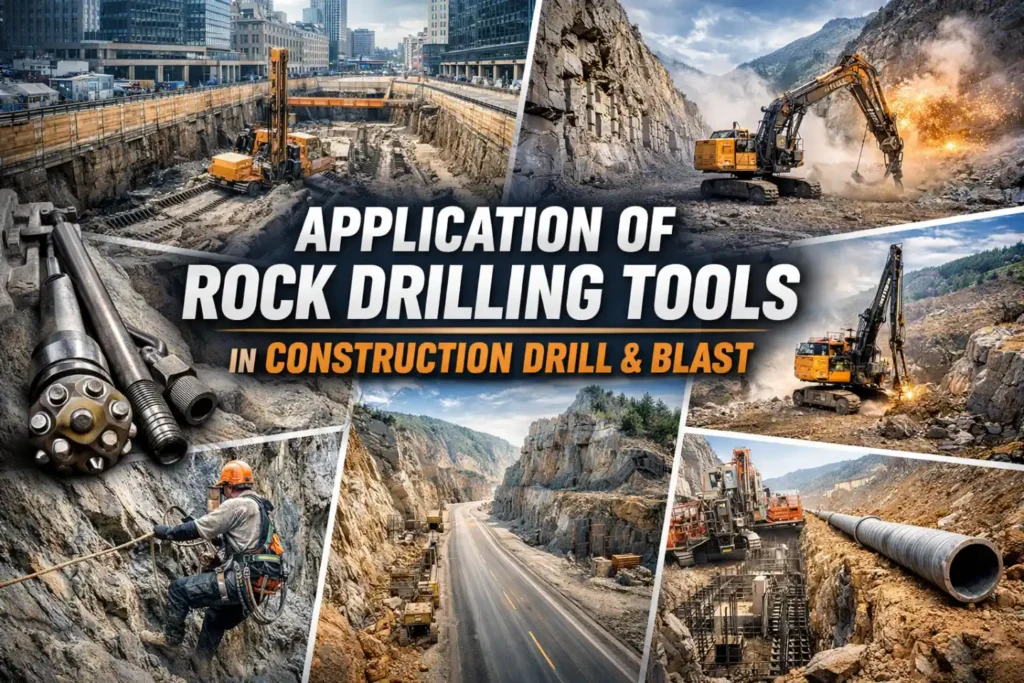
[Explore More: Top Hammer Rock Drilling Tools In Construction & Blast]
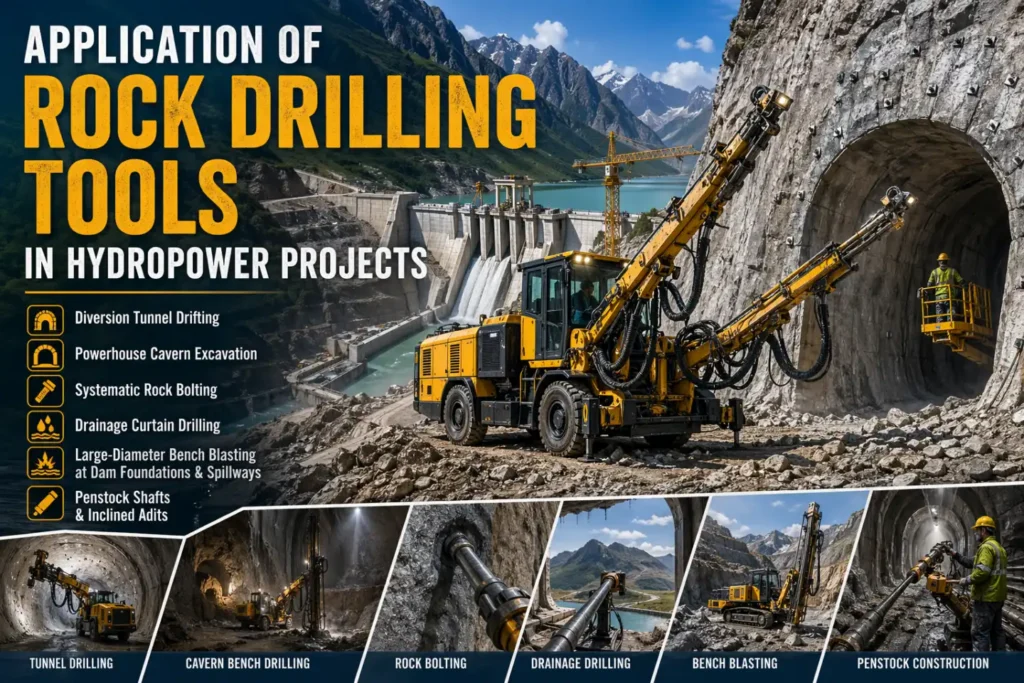
Hydropower construction is not a single job. It is a collection of different civil engineering challenges stacked on top of each other — diversion tunnels that need to redirect entire rivers, underground powerhouse caverns the size of sports arenas, dam abutments anchored into fractured valley walls, and penstock shafts that drop hundreds of meters through solid rock. Every one of these tasks depends on drilling, and the choice of rock drilling tools shapes how fast the work moves and how much of the budget survives.
Top hammer technology sits at the center of most of this work. Hydraulic jumbo-mounted tools handle face drilling in tunnels and drifts. Long-hole rigs run production blasting and rock reinforcement patterns in caverns. Specialized large-diameter tools cut bench rounds at dam foundations and spillways. Understanding which tool goes where — and why — is the starting point for any serious procurement decision on a hydropower project.
[Explore: Rock Drilling Tools in Hydropower Projects]