Table of Contents
Introduction: Why Heat Treatment Defines the Service Life of Rock Drilling Tools
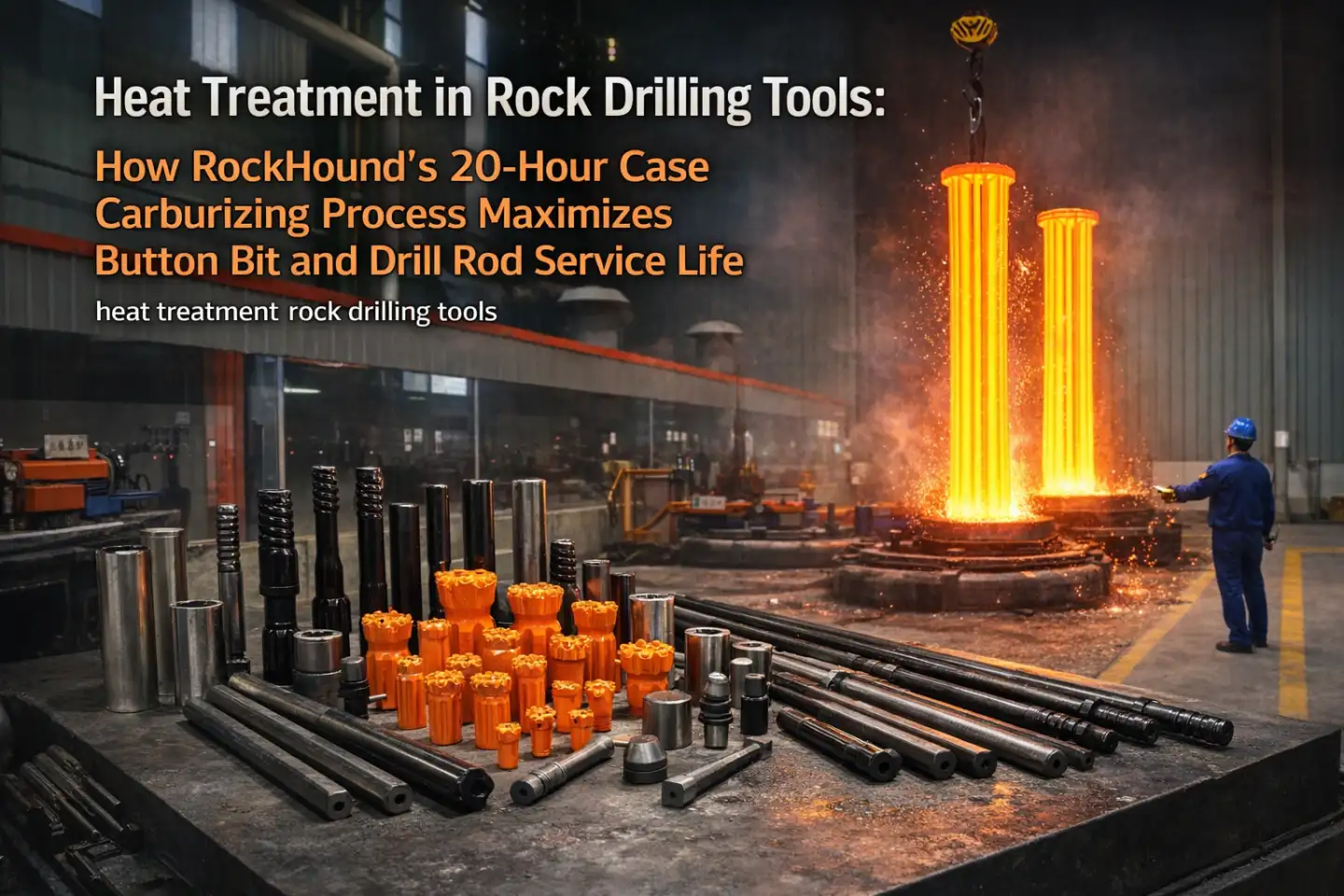
In top hammer drilling, the performance gap between a button bit that survives 50 meters and one that exceeds 200 meters rarely comes down to geometry alone — it is determined by metallurgical integrity. Specifically, it is determined by heat treatment.
At RockHound, we treat the heat treatment stage not as a finishing step, but as the core manufacturing process for our button bits and coupled drill rods. Critically, we recognize that these two components operate under different dominant stress regimes — and therefore demand different alloy systems and tailored heat treatment protocols.
This article explains the materials science behind our proprietary 20-hour case carburizing cycle, why alloy selection matters independently for button bits and drill rods, and what separates a properly heat-treated rock tool from a commodity product.
The Mechanical Demands on a Rock Drilling Tool Body
Before evaluating any heat treatment process, it is essential to define the failure modes it must prevent. A top hammer drill string is simultaneously subjected to three destructive loading conditions:
- High-frequency impact fatigue — Repeated axial blows from the rock drill piston, typically at 2,000–4,500 bpm, generate cyclical tensile and compressive stresses throughout the drill rod and bit shank.
- Abrasive surface wear — Continuous contact with hard, siliceous rock formations causes progressive material removal from the bit body, gauge face, and flushing channels.
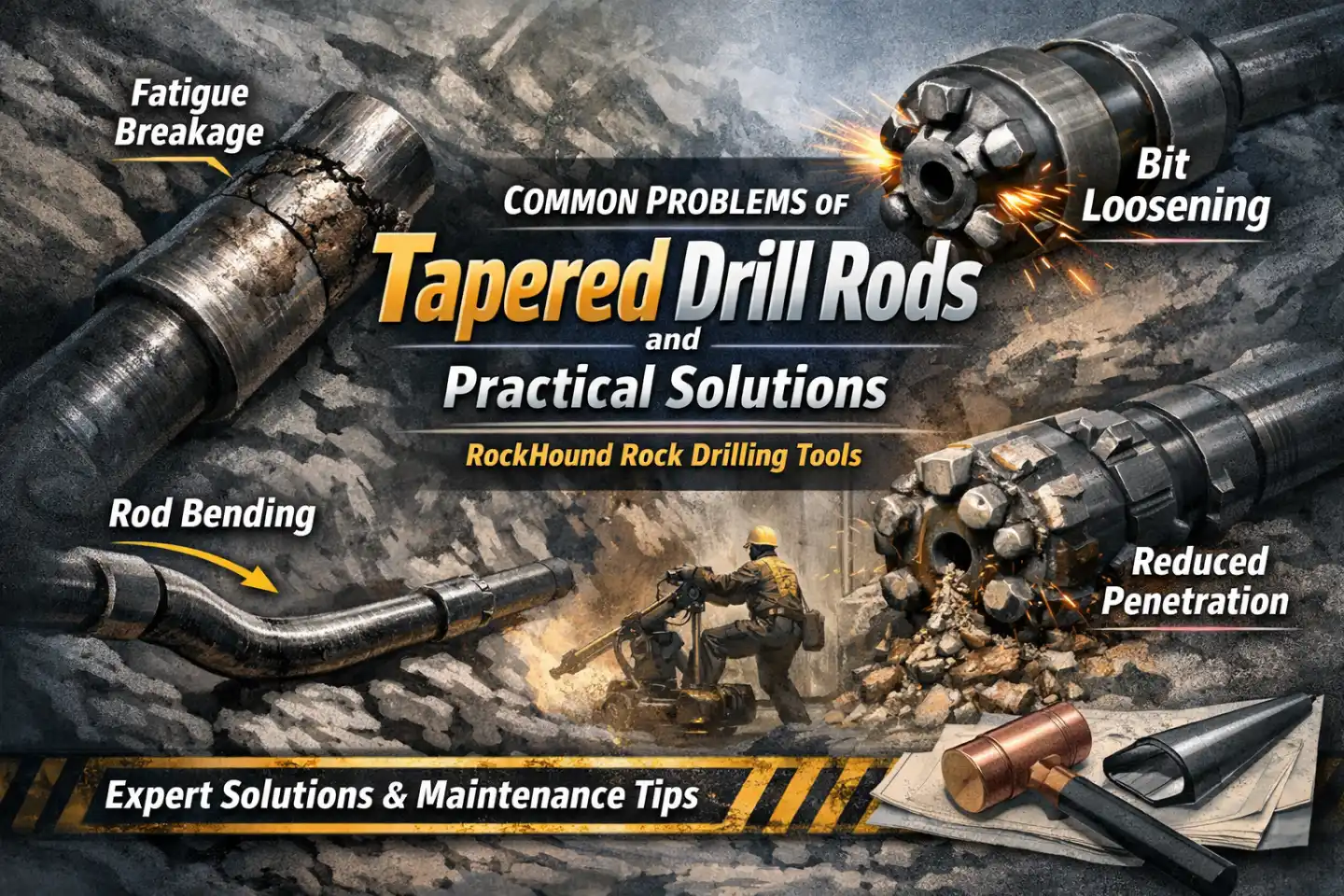
- Torsional and bending stress concentration — Rotation under load imposes shear stress on threaded connections and bending fatigue along the rod body, which is the primary driver of thread fatigue, rod-drop incidents, and mid-body fracture in drill rods.
Surviving all three simultaneously requires a steel component with a hard, wear-resistant case and a tough, ductile core — properties that are fundamentally contradictory in unprocessed steel, and can only be achieved through controlled thermochemical treatment. The correct path to achieving this balance differs between button bits and drill rods, which is why RockHound specifies distinct alloy grades for each product.
Material Foundation: Two Alloys, Two Roles
Button Bits — 45CrNiMoV Alloy Steel
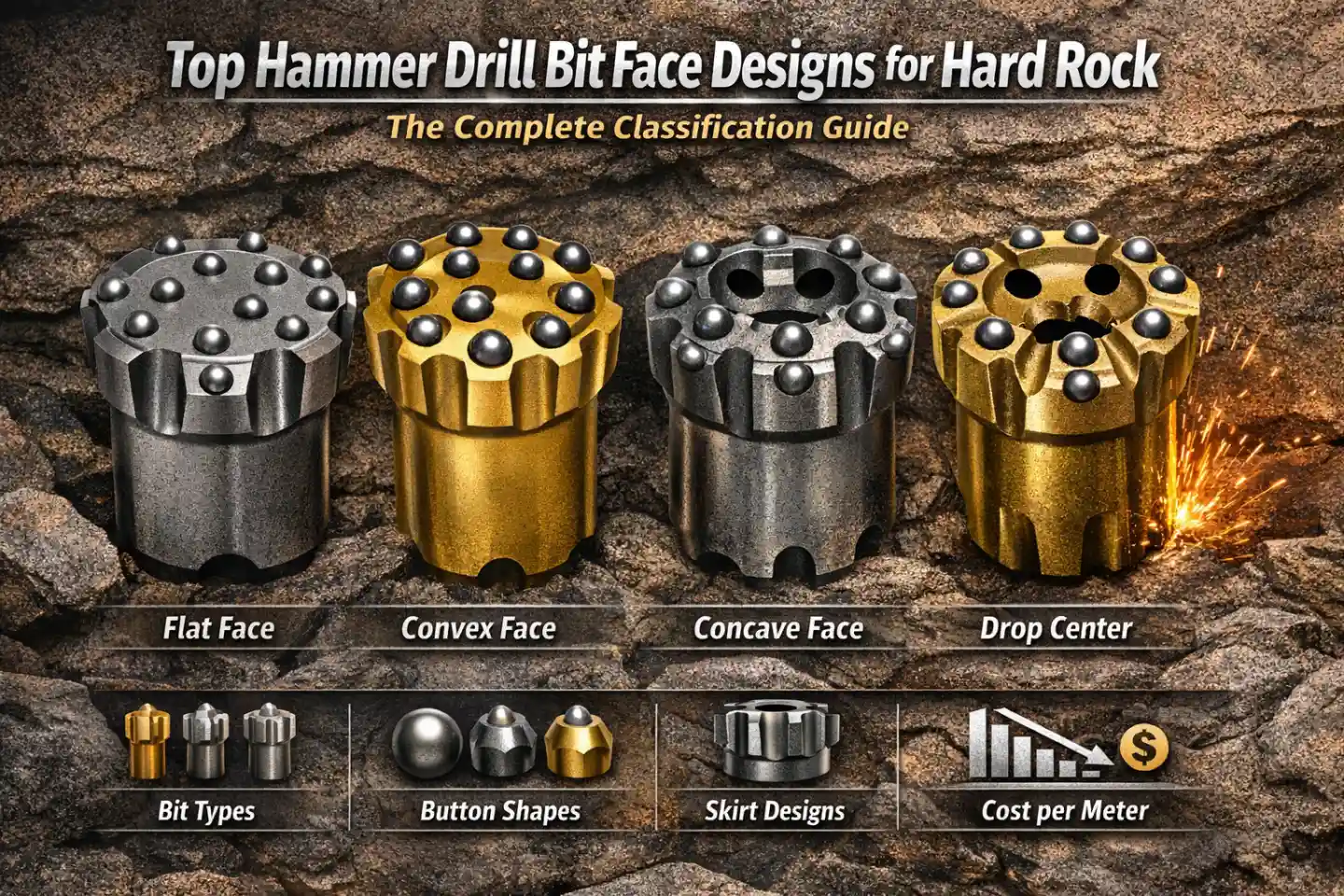
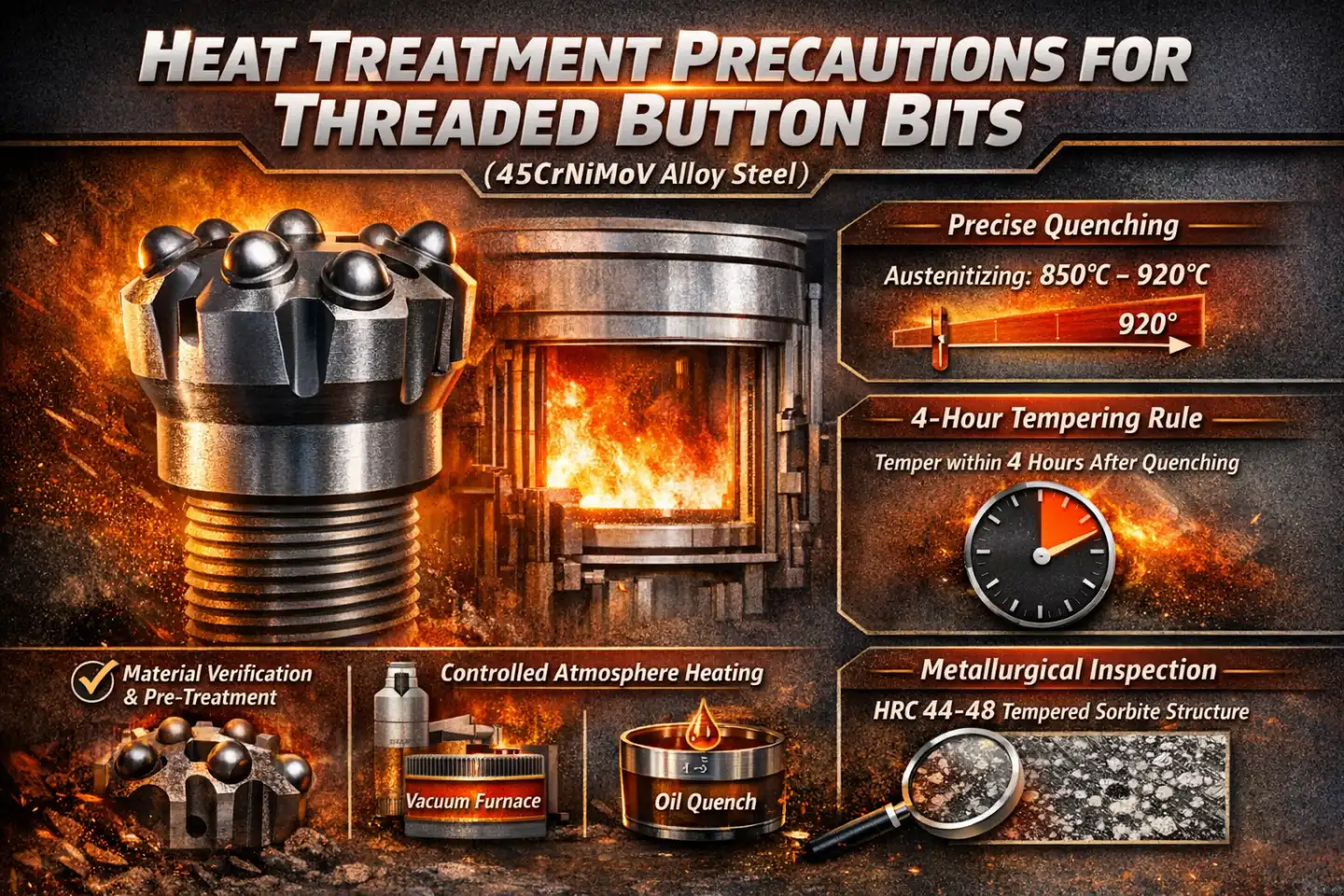
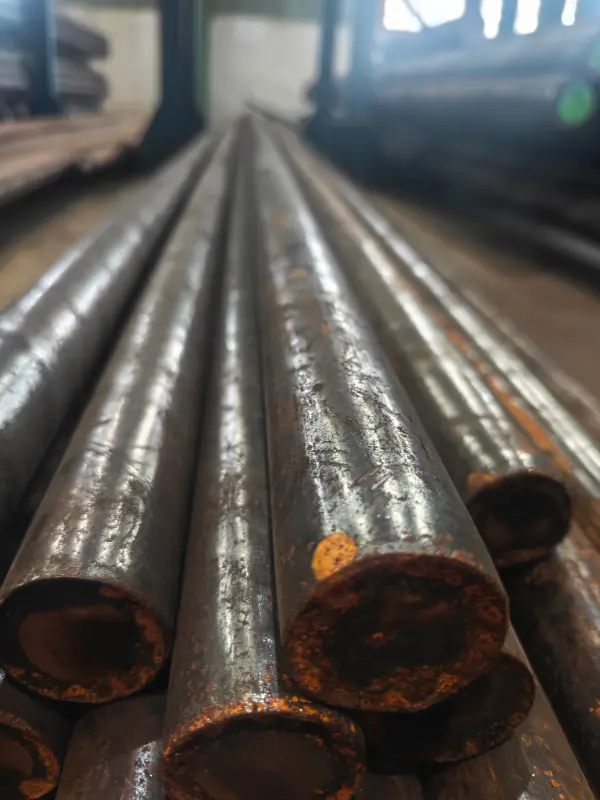
RockHound button bit bodies are manufactured from 45CrNiMoV, a medium-carbon Chromium-Nickel-Molybdenum-Vanadium alloy steel selected for its response to case carburizing and its resistance to surface fatigue under high-frequency impact.
Discover More:
Rock Drill Bits Manufacturing Process
| Element | Role in Button Bit Performance |
|---|---|
| Chromium (Cr) | Forms stable carbides during carburizing; significantly increases case hardenability, surface hardness, and wear resistance in abrasive rock formations. |
| Nickel (Ni) | Enhances core toughness and low-temperature fracture resistance; suppresses brittle fracture at the bit shank and button seat zone under high-impact loading. |
| Molybdenum (Mo) | Refines prior austenite grain size; prevents temper embrittlement; maintains elevated-temperature strength at the bit face during prolonged high-frequency drilling. |
| Vanadium (V) | Precipitates fine VC carbides that pin grain boundaries, inhibiting grain coarsening during the extended 20-hour carburizing cycle; improves long-term wear resistance and fatigue life. |
The 0.45% nominal carbon content of the base material ensures adequate core hardenability after quenching, while the multi-element alloying system supports a deep, uniform effective case depth without excessive grain growth — a critical requirement for maintaining cemented carbide button retention integrity throughout the tool’s service life.
Drill Rods — 23CrNi3Mo Alloy Steel
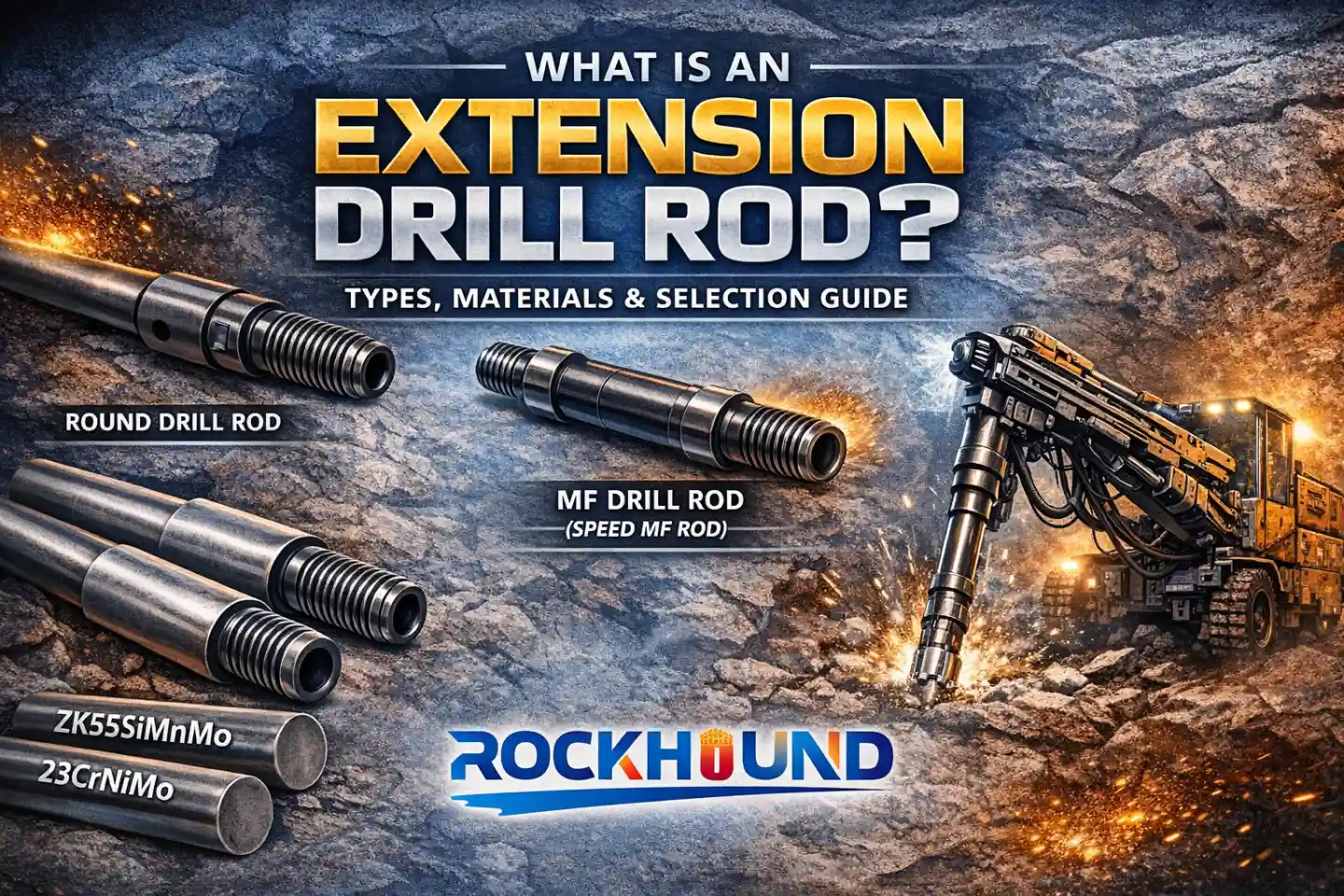
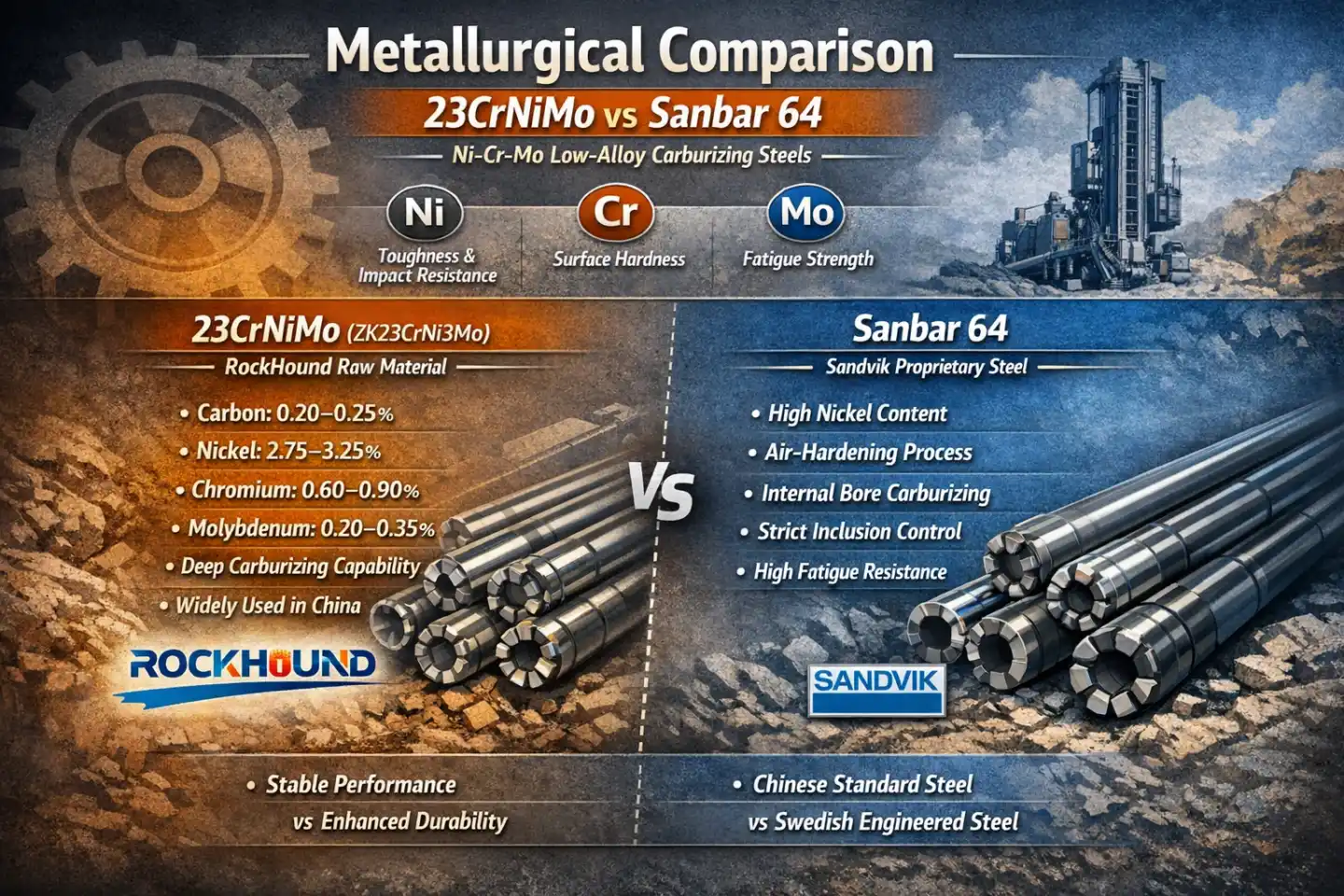
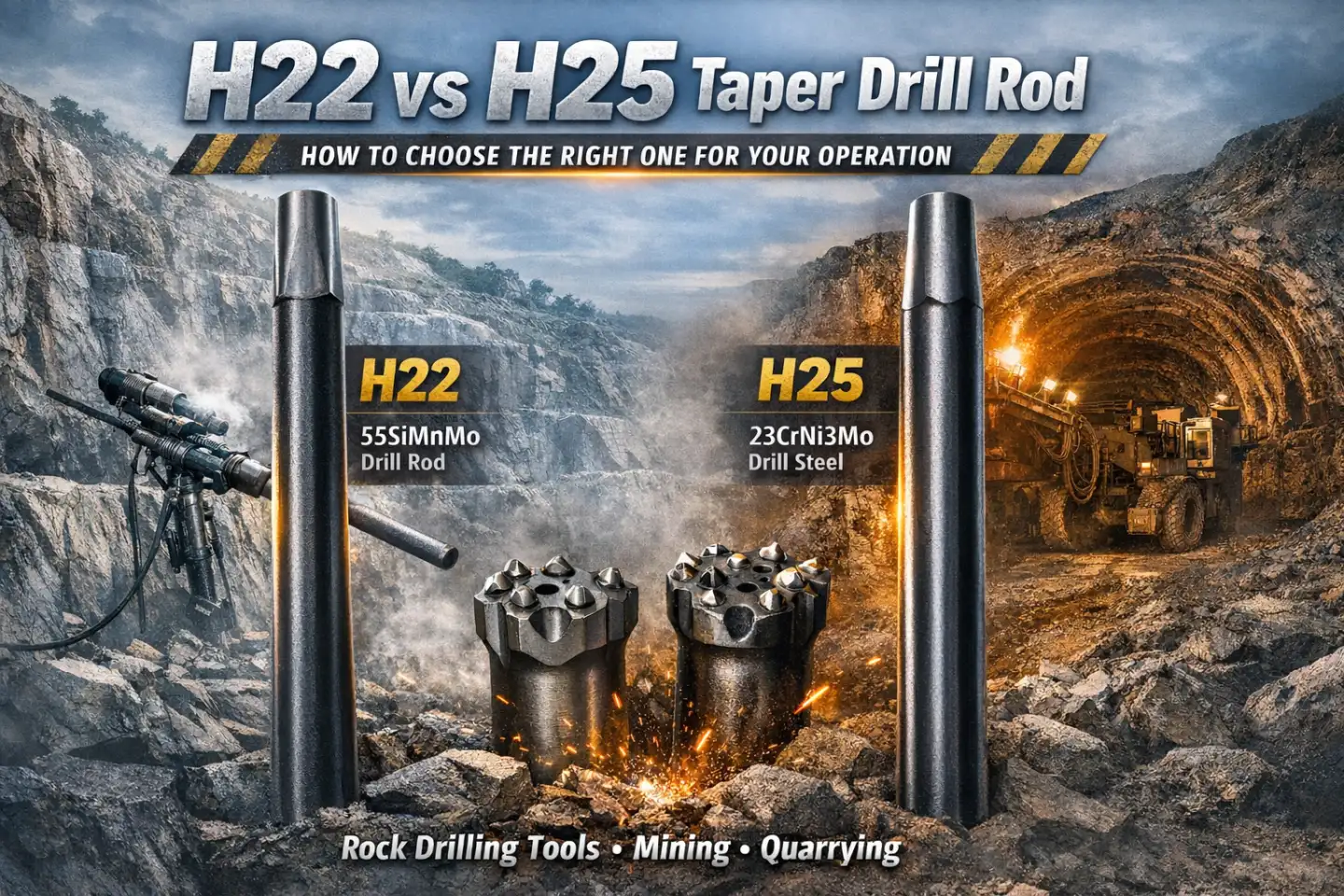
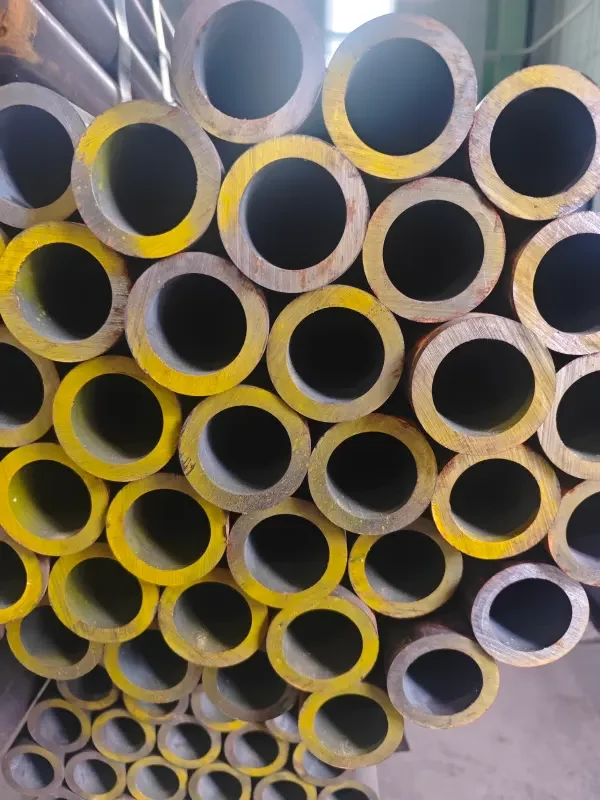
RockHound drill rod bodies are manufactured from 23CrNi3Mo, a low-carbon case-hardening steel purpose-designed for components subjected to high-cycle bending fatigue and torsional loading rather than surface abrasion. This grade is widely specified for percussion drill rods in demanding top hammer and down-the-hole applications.
| Element | Role in Drill Rod Performance |
|---|---|
| Chromium (Cr) | Improves hardenability across the rod cross-section; contributes to higher case hardness and enhanced thread wear resistance under abrasive and high-contact conditions in top hammer drilling. |
| Nickel (Ni) — elevated at ~3% | Significantly increases core impact toughness and resistance to fatigue crack propagation; the higher Ni content (compared to typical button bit steel) is specifically designed to mitigate bending-induced fracture risk in long drill rods. |
| Molybdenum (Mo) | Enhances deep hardenability in larger rod cross-sections; prevents secondary hardening embrittlement during tempering, ensuring long-term toughness and dimensional stability under repeated high-stress cycles. |
The lower base carbon (0.23%) of 23CrNi3Mo means the as-quenched core remains in a tougher, lower-hardness martensitic condition compared to 45CrNiMoV — which is precisely the design intent for a drill rod body that must absorb millions of bending fatigue cycles without mid-body fracture. The elevated Nickel content (~3 wt%) is the key differentiator, providing the core impact energy needed to prevent catastrophic rod failure in broken or deviated ground conditions.
Why Two Different Alloys for One Drill String?
The distinction between 45CrNiMoV (button bits) and 23CrNi3Mo (drill rods) reflects fundamentally different failure modes in each component:
- Button bits fail primarily by surface wear and carbide button loss — requiring a hard, deep carburized case with maximum wear resistance and button seat integrity.
- Drill rods fail primarily by bending fatigue fracture and thread fatigue — requiring a tough, high-energy-absorbing core with good case-to-core transition properties to resist crack initiation and propagation under cyclic bending.
Specifying the same alloy for both components — as many low-cost manufacturers do — is a materials engineering compromise that optimizes neither. RockHound’s dual-alloy system ensures each component is metallurgically matched to its dominant failure mechanism.
RockHound's 20-Hour Case Carburizing Process: Technical Breakdown
What Is Case Carburizing?
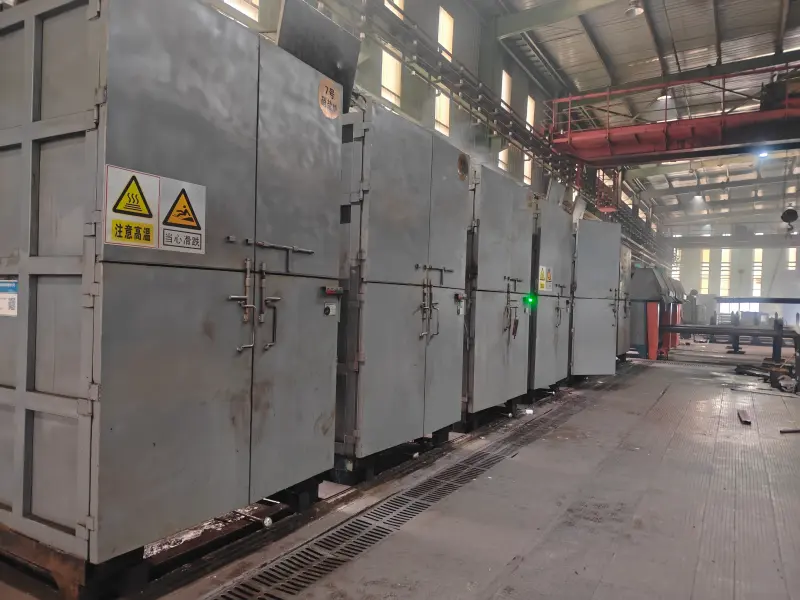
Case carburizing (also termed gas carburizing or atmosphere carburizing) is a thermochemical surface-hardening process in which carbon is diffused into the surface of a low-to-medium carbon steel component at elevated temperature, creating a high-carbon case over a lower-carbon core.
The depth of this case — termed the effective case depth (ECD) — is defined as the distance from the surface to the point where hardness falls below 550 HV (or approximately 52 HRC), per ISO 2639 and ASTM E1919 standards.
Why 20 Hours? The Physics of Carbon Diffusion
Carbon diffusion in austenite obeys Fick’s second law. At a carburizing temperature of 910–940°C, carbon diffusivity in γ-iron is approximately 1.5–2.5 × 10⁻¹¹ m²/s. The relationship between case depth (x) and cycle time (t) follows a parabolic rate law:
x ∝ √(D · t)
This means doubling the effective case depth requires quadrupling the process time. Many budget manufacturers use short-cycle carburizing (4–8 hours) to reduce furnace costs, yielding a shallow case depth of 0.8–1.2 mm. At this depth, repeated regrinding — standard practice to restore gauge diameter on button bits — rapidly exposes the soft core, and thread zones on drill rods receive insufficient fatigue protection.
RockHound’s 20-hour carburizing cycle achieves the following effective case depths:
| Component | Material | Target ECD (Effective Case Depth) | Key Benefit |
|---|---|---|---|
| Button Bits | 45CrNiMoV | ≥ 2.0 mm | Survives multiple regrind cycles; maintains button seat integrity and button retention under high-impact loading in abrasive rock formations |
| Drill Rods | 23CrNi3Mo | 1.5–2.0 mm (thread zones) | Compressive stress at thread roots suppresses fatigue crack initiation and propagation; significantly extends rod service life in cyclic high-torque top hammer drilling |
Surface carbon content across both grades is maintained at 0.75–0.95 wt% through precise atmosphere control (endothermic carrier gas + hydrocarbon enrichment). This deep case provides:
- A substantial wear-resistant buffer that survives multiple regrind cycles without exposing the soft core (button bits)
- Compressive residual stress at thread roots, resisting fatigue crack initiation under rotational loading (drill rods)
- Adequate case thickness at the button seat interface, ensuring YG8/YK05 cemented carbide button retention under impact loading (button bits)
- Progressive hardness gradient from surface to core (typically 58–62 HRC surface → 36–42 HRC core), which distributes stress more effectively than an abrupt case/core transition (both)
Comparison with Common Manufacturers
Other manufacturers often complete the carburizing process within 10 hours, while we employ a strictly controlled 20-hour carburizing cycle to ensure the stability of the molecular structure. This allows for an effective carburized layer depth of 0.6 mm to 1.2 mm, enabling the welding electrode to withstand millions of impacts without breaking.
| Technical Specifications | Standard Industry Process (8-13h) | RHdrill Premium 20-Hour Process | Performance Advantages & Value Addition |
|---|---|---|---|
| Effective Case Depth | 1.0mm – 1.5mm | 2.0mm – 3.0mm+ | Doubled or greater case depth dramatically extends wear resistance and service life in abrasive and high-impact rock drilling conditions. |
| Carbon Gradient Transition | Steep gradient; prone to peeling and delamination under cyclic loading. | Gentle / smooth gradient; superior bonding strength | Eliminates abrupt stress concentrations at the case-core interface → significantly improved resistance to chipping, spalling, and layer separation. |
| Core Microstructure | Incomplete phase transformation; moderate toughness. | Fine / refined grain structure; high strength & toughness | Achieves exceptional balance of surface hardness and core impact fatigue resistance — ideal for demanding top hammer and DTH applications. |
| Internal Bore Fatigue Resistance | Susceptible to micro-crack initiation under high-pressure flushing. | Optimized compressive stress distribution | Greatly reduces risk of internal crack propagation to the outer surface, enhancing reliability in high-pressure and long-duration drilling. |
| Expected Service Life | 100% (Industry Standard Baseline) | 40% – 60% Increase | Proven in ultra-hard formations (granite, quartzite) and complex geology — delivers substantially lower cost per meter drilled and higher rig uptime. |
| Manufacturing Cost & Input | Lower energy, gas, and cycle time requirements. | High investment (extended electricity, gas, 20-hour cycle) | Strategic Conclusion: Premium long-cycle carburizing process prioritizes maximum durability and lowest total drilling cost over short-term production savings. |
The Bottom Line: We invest more in electricity, gas, and time so that you spend less on replacements and downtime.
Compressive Residual Stress: The Invisible Fatigue Shield
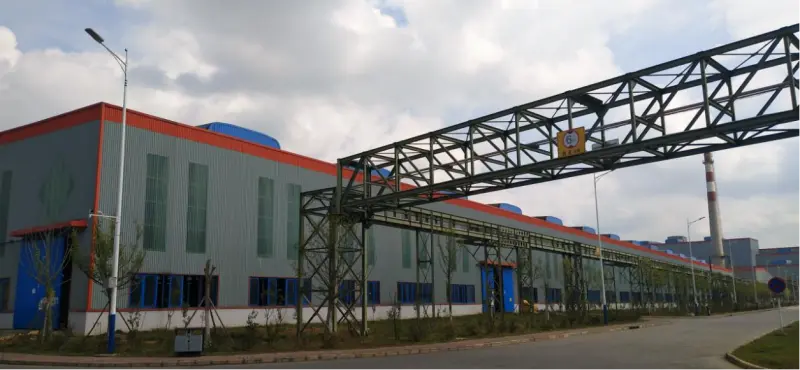
A less-discussed benefit of deep case carburizing is the compressive residual stress field it generates in the surface layer. Because the carburized case has a higher specific volume than the core (due to carbon-enriched martensite formation during quenching), the core constrains the case, placing it in biaxial compression.
This compressive stress state directly opposes the tensile stresses generated at the surface during bending and impact loading — the primary driver of fatigue crack initiation. In drill rods, this mechanism significantly increases shank fatigue life at the thread connection zones and reduces the incidence of shank fracture and thread root cracking. In button bits, it suppresses the micro-crack initiation responsible for gauge face spalling and bit body fracture.
Post-Carburizing Heat Treatment: Quench and Temper Sequence
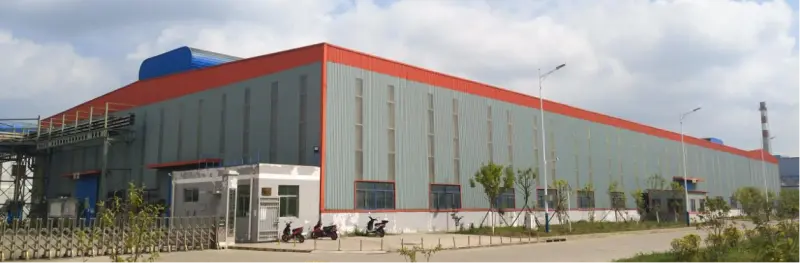
Following the 20-hour carburizing cycle, all RockHound tools proceed through a tightly controlled quench-and-temper (Q&T) sequence:
Direct Quenching
Components are direct-quenched from the carburizing temperature into an oil bath or high-pressure gas quench medium. The rapid cooling rate exceeds the critical cooling rate of both alloy grades, suppressing diffusional transformation and forming a martensitic microstructure throughout the case. This achieves maximum as-quenched hardness in the carburized layer (typically 60–65 HRC).
Cryogenic Treatment (Optional, for Premium Grade Button Bits)
For button bit applications in highly abrasive formations (e.g., quartzite, granite), an optional cryogenic treatment (sub-zero treatment at −75°C to −196°C) is applied immediately after quenching to convert retained austenite in the case to martensite, further increasing wear resistance of the bit face and gauge zone.
Tempering
Quenched components are immediately tempered at 160–200°C (low-temperature tempering). This stage:
- Relieves internal quench stresses that would otherwise cause spontaneous cracking
- Reduces case brittleness by allowing carbon to partially redistribute as fine ε-carbides within the martensitic matrix
- Preserves surface hardness (case hardness reduction is typically ≤3 HRC after low-temperature tempering)
The final component exhibits a dual-property microstructure: a high-hardness, compressively stressed martensitic case over a tempered martensitic or lower bainitic core with high impact toughness — precisely the combination demanded by top hammer drilling conditions.
Performance Outcomes: What Deep Case Carburizing Delivers on Site
The metallurgical outcomes described above translate directly into measurable field performance advantages:
Extended Button Bit Service Life
A deep, uniform effective case depth on 45CrNiMoV resists wear at the gauge face and button seats throughout the bit’s service life — not just in the first few meters. Multiple regrind cycles are possible without exposing the soft core.
Field Test Report:
R32 51mm Retrac Button Bit for Hard Rock At Copper Mine Proven In Chile
Maximum Drill Rod Fatigue Life
The compressive residual stress field at thread roots in 23CrNi3Mo drill rods, combined with the elevated Nickel core toughness, resists the fretting fatigue and galling wear mechanisms responsible for premature thread failure and potential rod-drop incidents.
Field Test Report:
MF T38-R32 Drill Rods & Bits at Iron Mine
Improved Hole Straightness
A tough rod body with high bending fatigue resistance deflects less under eccentric loading in broken or laminated ground, contributing to straighter blastholes and improved blast fragmentation uniformity.
Reduced Total Cost-Per-Meter
Fewer bit changes, fewer rod failures, and longer regrind intervals combine to reduce total drilling cost-per-meter — the metric that ultimately determines the economic value of any drilling tool investment.
Conclusion: The Furnace Determines the Field
Heat treatment is not a value-added option in rock drilling tool manufacturing — it is the process that determines whether a tool is a precision engineering component or an expendable commodity. At RockHound, our commitment to a 20-hour case carburizing cycle — applied to 45CrNiMoV button bit bodies and 23CrNi3Mo drill rod bodies through their respective, tailored protocols — reflects our understanding of the specific failure physics each component must overcome.
If you are evaluating drilling tools based on purchase price per unit rather than cost-per-meter, we encourage you to request heat treatment specifications from every supplier you consider: specifically, effective case depth, surface hardness, core hardness, and the alloy grade used for each component type.
Ready to reduce your drilling cost-per-meter?
FAQ
Through-hardening increases hardness uniformly throughout the cross-section, which maximizes surface hardness but significantly reduces core toughness and impact resistance. Case carburizing selectively hardens the surface while preserving a tough core, which is the correct approach for impact-loaded components such as button bits and drill rods.
Button bits fail primarily through surface wear and carbide button loss, requiring maximum case hardness and wear resistance — hence the higher carbon 45CrNiMoV grade. Drill rods fail primarily through bending fatigue and thread fatigue, requiring high core toughness and fatigue crack resistance — hence the higher-Nickel, lower-carbon 23CrNi3Mo grade. Using the same alloy for both would force a materials compromise that optimizes neither component.
20CrMnTi is a widely used case-hardening steel with adequate performance in lower-demand applications. However, its lower hardenability limits effective case depth in larger cross-sections, and the absence of Mo and V results in lower resistance to temper embrittlement and coarser grain structure under extended carburizing cycles. 45CrNiMoV provides superior wear resistance, deeper hardenability, and better fatigue performance for high-impact top hammer drilling applications.
Thread geometry concentrates stress at the thread roots during rotation and impact. A shallow case that terminates near the thread root provides insufficient support against fatigue crack initiation. A deep case (≥1.5 mm ECD at thread zones) ensures the compressively stressed, high-hardness zone extends well below the thread root geometry, where peak stresses occur — significantly extending the service life of threaded connections and reducing rod-drop risk.