Table of Contents
Choosing the right top hammer drill bit is essential for maximizing drilling efficiency, extending tool life, and reducing operating costs in mining, quarrying, construction, and tunneling projects. The correct selection depends on several factors including rock hardness and abrasiveness, drill rig capacity, bit design features, carbide quality, and drilling depth.
RockHound will help you make informed decisions and select the best top hammer drill bit for your drilling conditions.
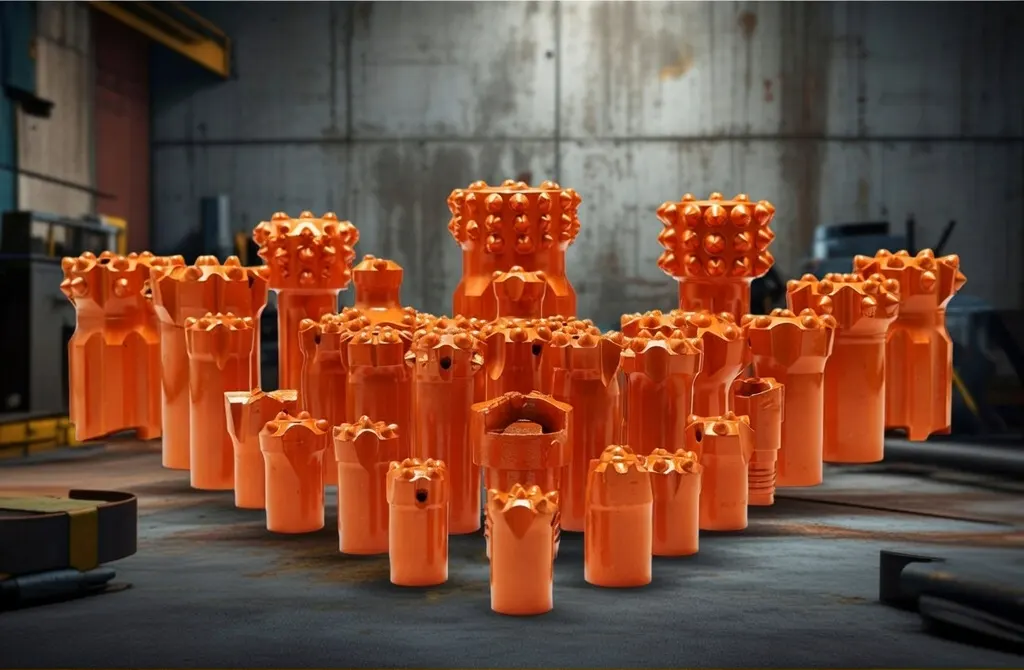
Rock Properties: Hardness & Abrasiveness
The most important factor in selecting a top hammer drill bit is the type of rock you are drilling. Understanding rock hardness and abrasiveness ensures the bit shape and design match the drilling environment.
Rock Hardness (UCS) and Bit Selection
Different rock formations respond better to specific button shapes and face designs:
- Hard & low-abrasive rock (e.g., granite, basalt) → Spherical button bits
- Medium-hard & abrasive rock (e.g., sandstone) → Ballistic button bits
- Soft to medium rock (e.g., limestone) → Drop center button bits
- Unstable or fractured rock → Retrac button bits
These recommendations are based on common drilling practice and field experience.
Tips: Conduct a rock hardness test (e.g., using a Schmidt hammer) before drilling to assess uniaxial compressive strength (UCS).
Match Button Shape to Rock Conditions
Button shape design affects penetration rate, wear resistance, and impact energy distribution:
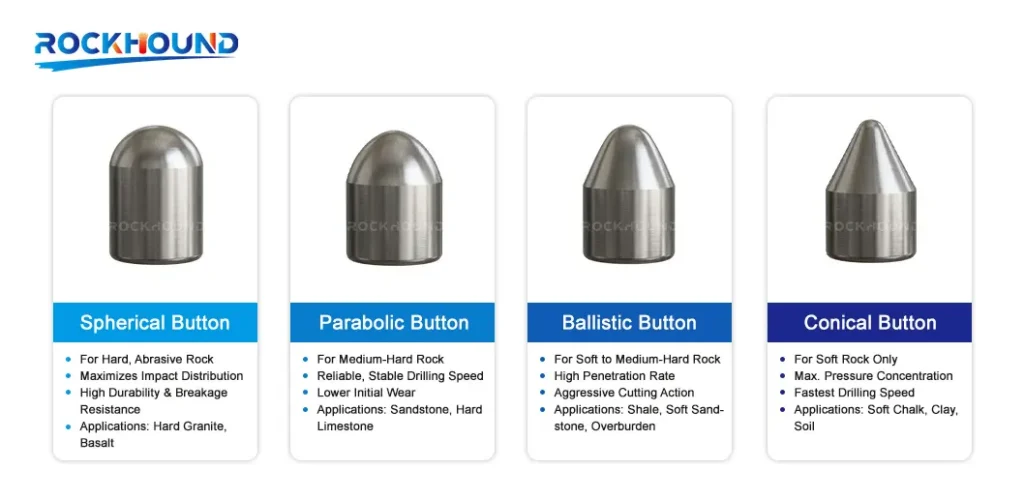
Spherical Button Bits
High wear resistance and fracture tolerance
Best for hard, abrasive rock
Lower penetration rate but long service life
Ballistic Button Bits
Fast penetration in softer rock
Moderate wear resistance
Semi-ballistic / Conical Button Bits
Balanced performance between penetration and durability
Good choice in medium rock conditions
Drop Center & Retrac Bits
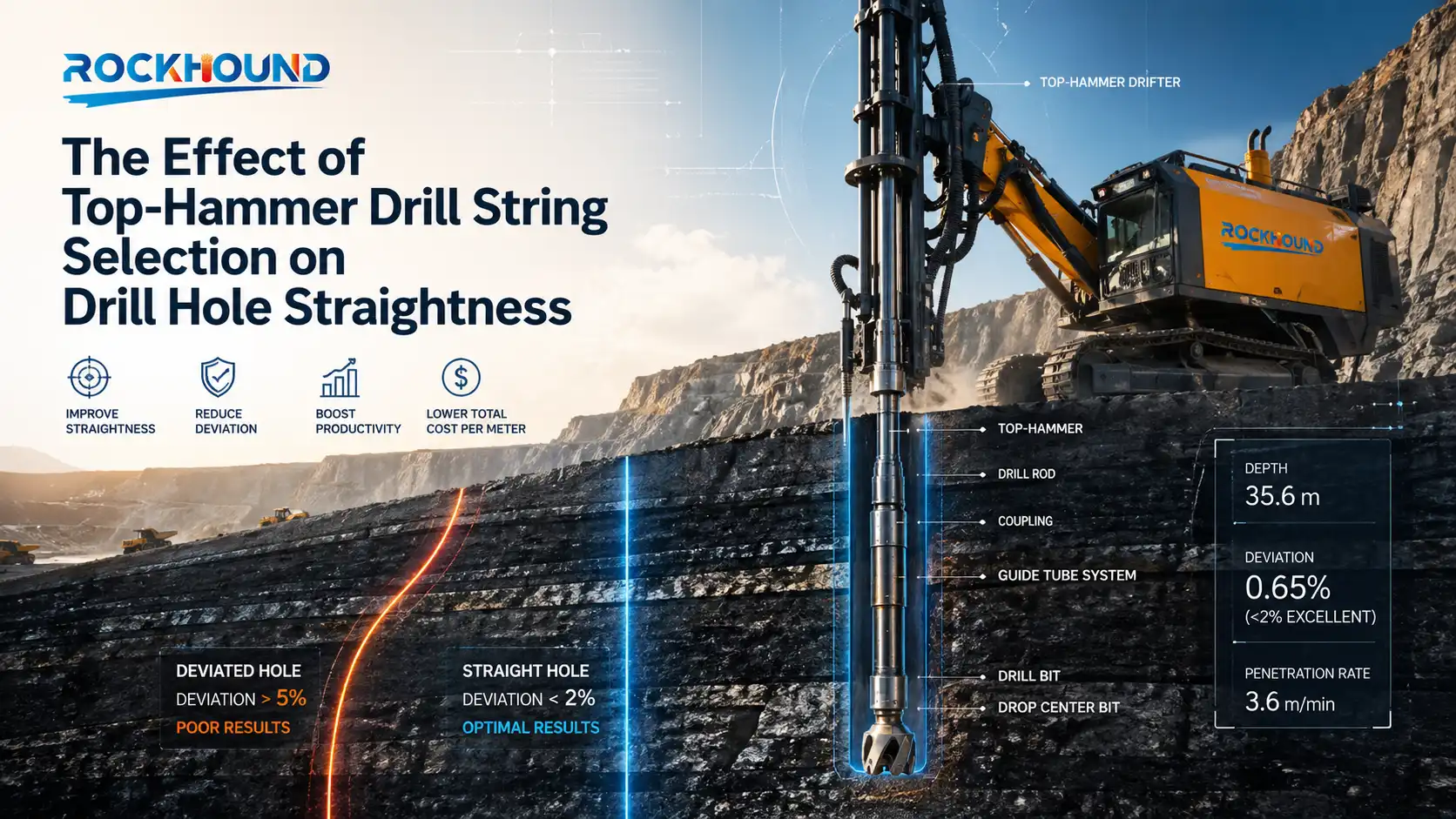
Drop center improves flushing and hole straightness
Retrac bits aid in unstable or fractured formations
These bit categories are widely recognized in the drilling industry and match specific rock behaviors.
| Rock Type | Hardness (UCS) | Abrasiveness | Recommended Button Bit Type |
|---|---|---|---|
| Granite, Basalt | 150–250 MPa | Low–Medium | Spherical Button Bit |
| Sandstone | 80–150 MPa | High | Ballistic Button Bit |
| Limestone | 50–100 MPa | Low | Drop Center Button Bit |
| Schist, Gneiss | 100–200 MPa | Medium–High | Retrac Button Bit |
Consider Bit Size vs. Drill Rig Capacity
Choosing the correct bit diameter and thread type is critical. The bit must be compatible with your drilling rig and project requirements.
| Diameter (mm) | Application | Compatible Drills |
|---|---|---|
| 38–45 mm | Bench drilling, anchoring, small-scale construction | HL500, COP1238 and similar lightweight top-hammer drills |
| 48–64 mm | Production blasting, quarrying, medium-scale open-pit mining | COP1838, HLX5 and equivalent medium-duty top-hammer rigs |
| 76–89 mm | Long-hole drilling, tunneling, underground mining & stoping | COP2550, RD525 and high-power top-hammer longhole drills |
Depth and hole characteristics influence bit choice:
Shallow holes (<5m): Standard or drop center button drill bit — focus on speed.
Deep holes (>10m): Retrac bit or reinforced gauge buttons — prevents bit loss and deviation.
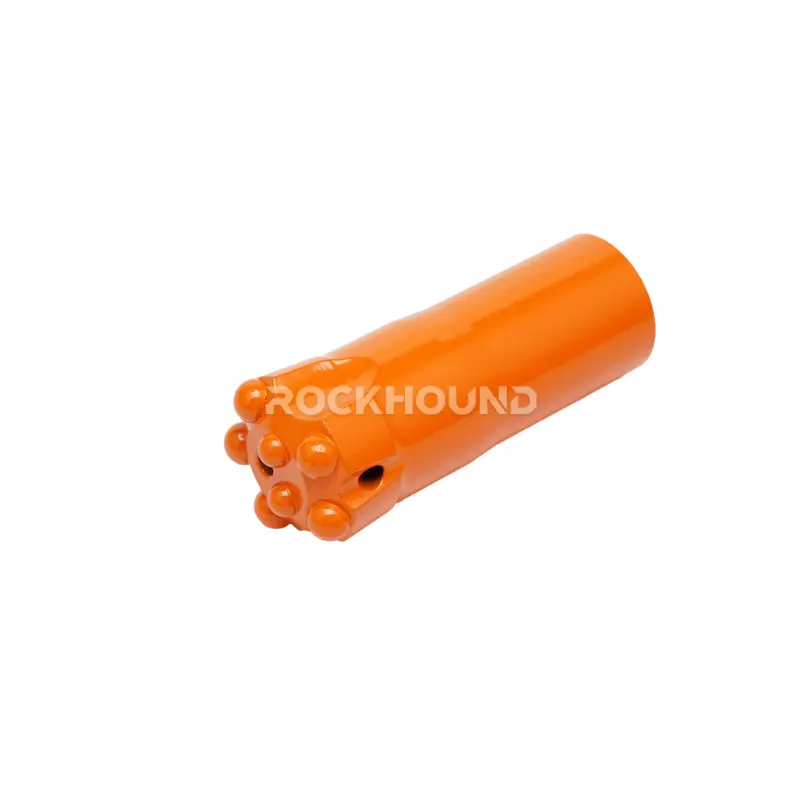
RockHound offers top hammer drill button bits in 38–127 mm, competable with Sandvik,Epiroc,Atlas Copco and Furukawa rigs.
Evaluate Button Grade and Carbide Quality
Not all tungsten carbide button bits are created equal. Carbide quality and grade substantially affect wear resistance, toughness, and thermal stability.
| Grade Type | Hardness (HRA) | Toughness | Best For – Top Hammer Button Bits |
|---|---|---|---|
| YK05 | 91.0 | Low | Ultra-hard granite, quartzite & very abrasive rock (UCS > 200 MPa); maximizes wear resistance and bit life in extreme hard rock drilling |
| KD10 | 91.5 | Medium-Low | Hard to very hard rock formations; high wear resistance with balanced toughness for threaded/top hammer bits in abrasive conditions |
| KK06 | 90.8 | Medium | Medium-hard to hard rock; good balance of hardness & impact strength, ideal for general top hammer drilling with consistent ROP |
| KK06H | 91.2 | Medium-High | Hard rock with moderate abrasiveness; enhanced toughness variant for high-frequency impact in top hammer applications, reduces chipping |
| KD10L | 90.5 | High | Medium to hard rock with high shock/impact; improved toughness for deeper holes and fractured ground in top hammer operations |
Button Size and Number
Larger buttons (Ø12–16 mm): Higher impact, better in hard rock.
More buttons (7–9): Better flushing, ideal for soft rock.
Fewer buttons (5–6): Faster penetration in medium rock.
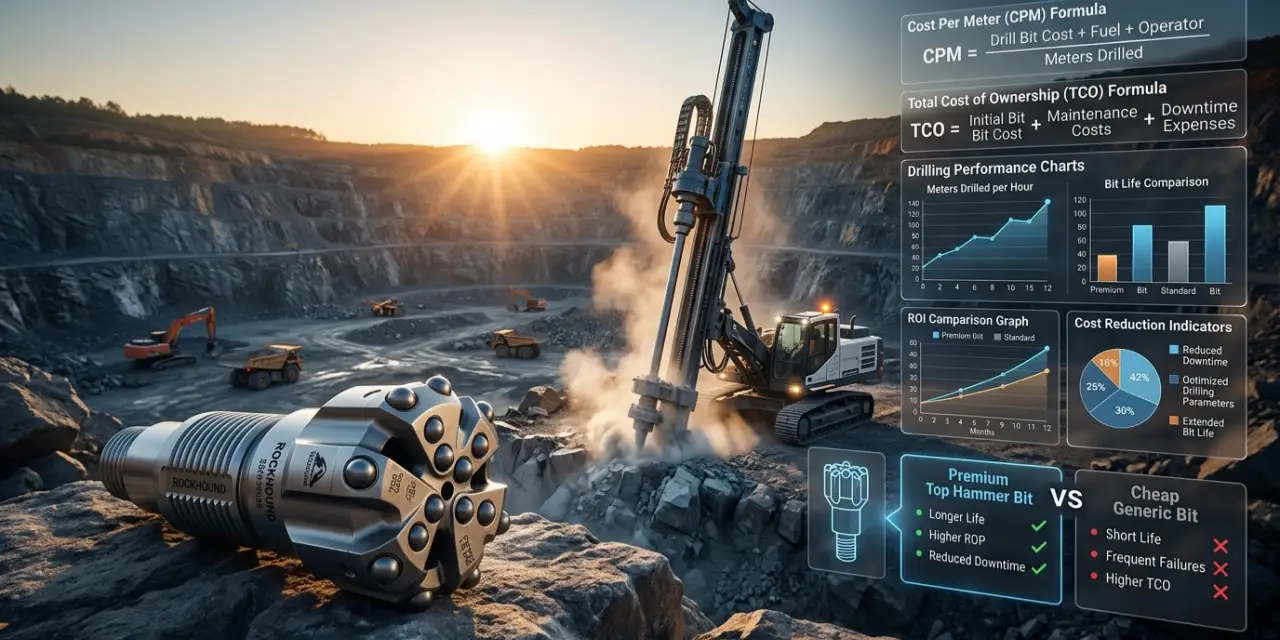
Choosing the right carbide grade increases bit service life and lowers drilling cost per meter.
Optimize Bit Face and Flushing Design
Efficient removal of cuttings and cooling is vital for continuous drilling.
| Design Feature | Benefit |
|---|---|
| Large flushing holes | Better chip evacuation in soft, sticky, or clay-rich formations → reduces clogging and improves drilling efficiency |
| Drop center face | Improved hole straightness and reduced deviation → especially effective in fractured or uneven rock |
| Retrac skirt | Prevents jamming and bit sticking in fractured, collapsing, or loose zones → enhances reaming stability and reduces downtime |
| Serrated gauge buttons | Enhanced gauge wear protection → significantly extends bit life in abrasive side-wall conditions and maintains hole diameter longer |
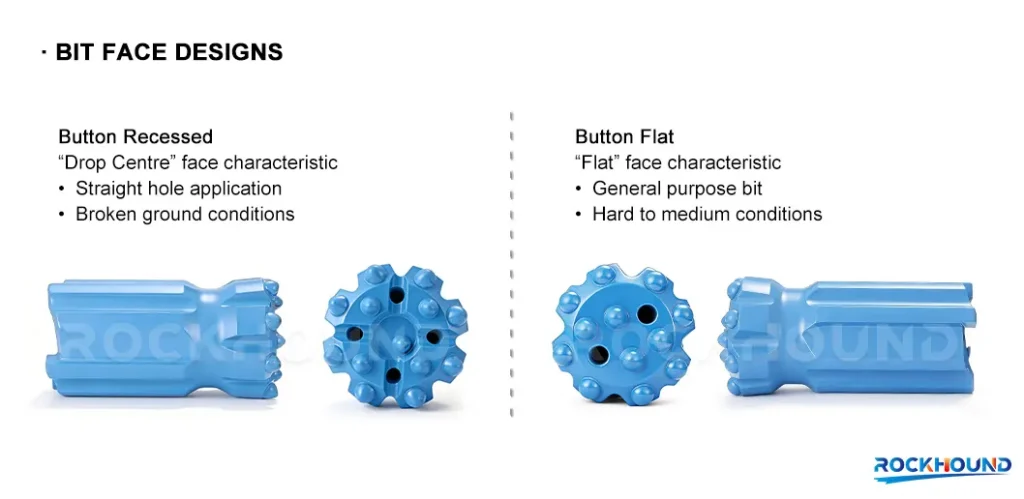
When to Choose Retrac vs. Standard Button Bits
| Condition | Recommended Bit |
|---|---|
| Loose, fractured rock | Retrac Button Bit |
| Stable, hard rock | Standard Button Bit |
| High-speed production | Ballistic Bit |
| Precision anchoring | Drop Center Bit |
Proper flushing design reduces overheating, prevents clogging, and improves drilling stability.
Evaluate Penetration vs. Bit Life Balance
Every drilling scenario requires a trade-off between penetration speed and wear life:
Fast penetration is often achieved with ballistic or conical buttons but may wear sooner.
Longer bit life generally comes from spherical buttons and premium carbide grades in hard and abrasive rock.
Practical Tips for Field Selection
Conduct field trials with 2–3 bit types to compare actual performance.
Monitor button wear — uneven wear often signals wrong bit choice or improper drilling parameters.
Always match bits to rig thread type and impact energy settings.
Choosing the Right Top Hammer Drill Bit
Selecting the optimal top hammer drill bit is not just about picking the strongest bit — it’s about matching bit design to rock conditions, drill rig compatibility, and drilling goals. By considering rock hardness, abrasiveness, button shape, carbide quality, bit face design, flushing performance, and drilling depth, you can improve drilling efficiency, reduce downtime, and control operating costs.
Whether you’re drilling in hard granite, abrasive sandstone, or fractured limestone, a well-chosen top hammer drill bit can make a significant difference in performance and productivity.
This guide is based on common drilling practices and field experience from mining, quarrying, construction, and tunneling projects using top hammer drilling systems.
Related Read:
FAQ
Rock hardness is measured by Uniaxial Compressive Strength (UCS). Your choice should align with these benchmarks:
Hard & Abrasive (150–250 MPa): Use Spherical Button Bits. They offer the highest fracture tolerance and wear resistance for rocks like Granite or Basalt.
Medium-Hard & Abrasive (80–150 MPa): Use Ballistic Button Bits for faster penetration in rocks like Sandstone.
Soft to Medium (50–100 MPa): Use Drop Center Bits for rocks like Limestone to maintain hole straightness.
It’s a trade-off between durability and speed:
Spherical Buttons: These are the "heavy lifters." They have a rounded profile that survives high-impact forces in hard rock. They last longer but drill slower.
Ballistic Buttons: These have a pointed profile. They "bite" into softer rock more effectively, offering a much higher Rate of Penetration (ROP), but they wear down quickly in abrasive conditions.
If you are dealing with unstable or fractured rock, a standard bit often isn't enough.
For Straightness: Switch to a Drop Center bit. The recessed center helps guide the bit, keeping the hole path true.
To Prevent Sticking: Use a Retrac bit. The "retrac" skirt features cutting edges on the back of the bit, which helps it drill its way out of a hole if the rock collapses behind it.
Compatibility depends on the power and intended application of your rig: | Bit Diameter | Typical Application | Compatible Rig Examples | | :--- | :--- | :--- | | 38–45 mm | Anchoring & Bench Drilling | HL500, COP1238 | | 48–64 mm | Quarrying & Production Blasting | COP1838, HLX5 | | 76–89 mm | Long-hole & Underground Mining | COP2550, RD525 |
Carbide grade determines the balance between hardness (wear resistance) and toughness (impact resistance):
High Hardness (e.g., YK05 - 91.0 HRA): Best for ultra-hard granite. It won't wear down easily but is more brittle.
High Toughness (e.g., KD10L - 90.5 HRA): Better for deep holes and fractured ground where the bit takes a lot of "shock" and vibration.