
Product Overview
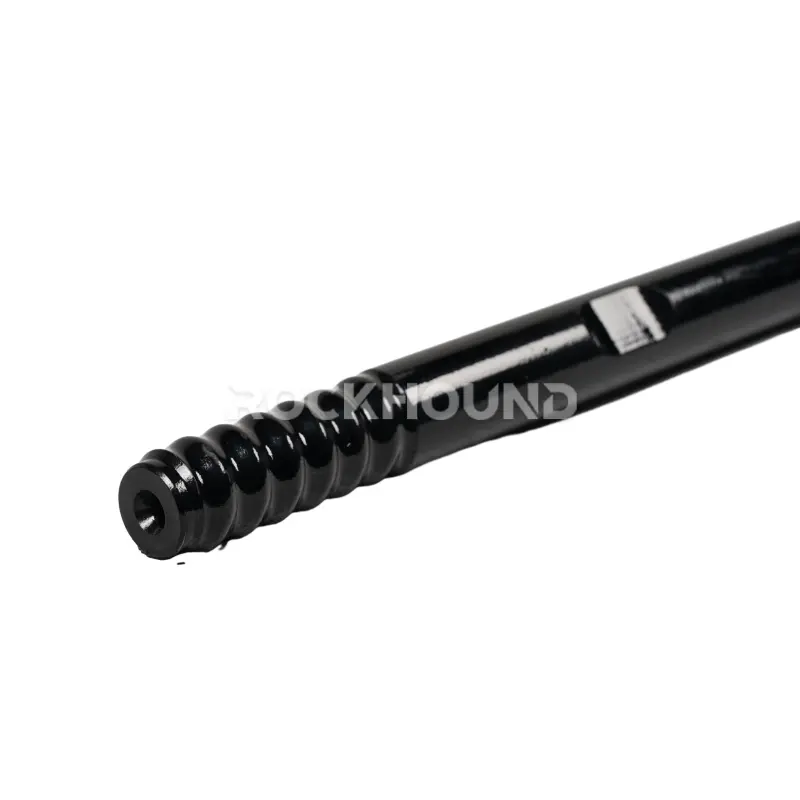
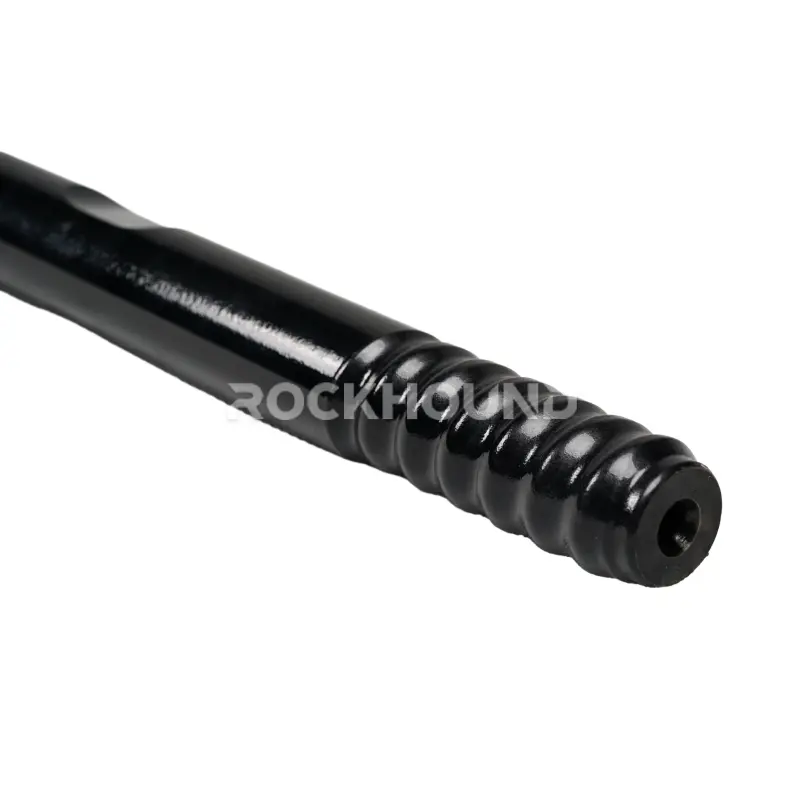
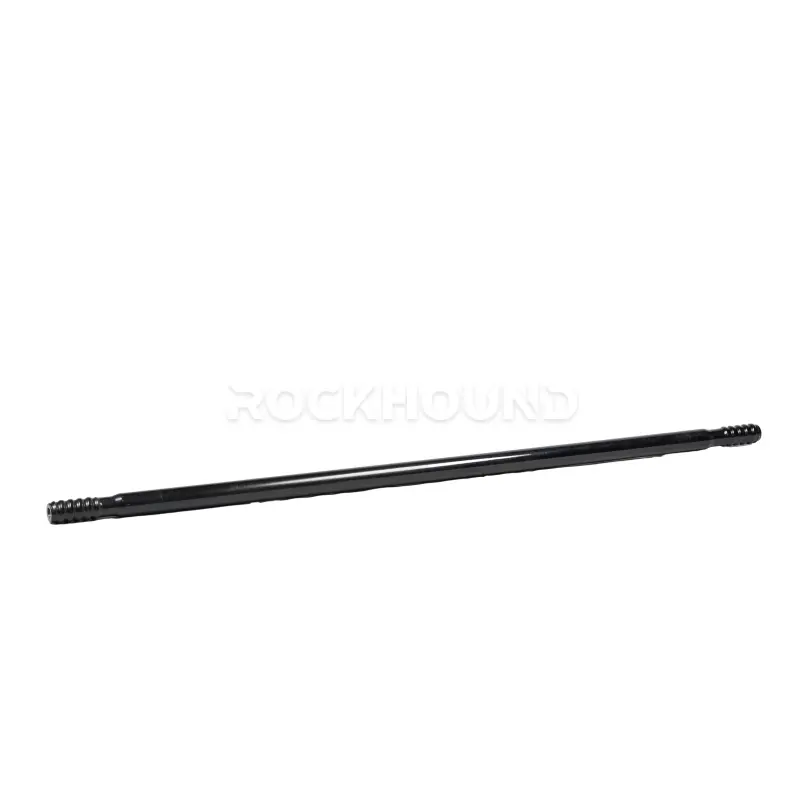
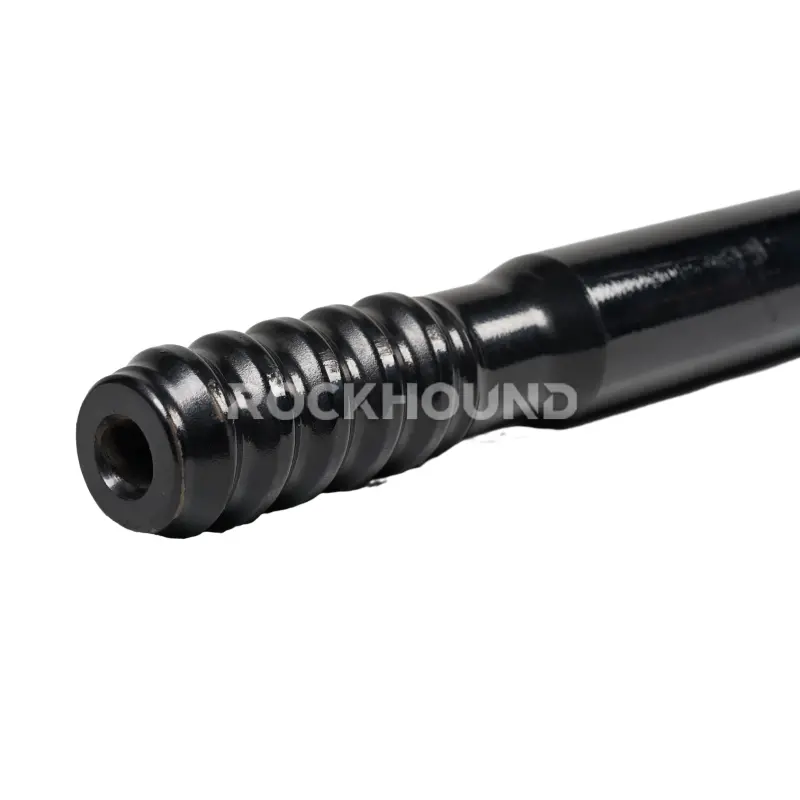
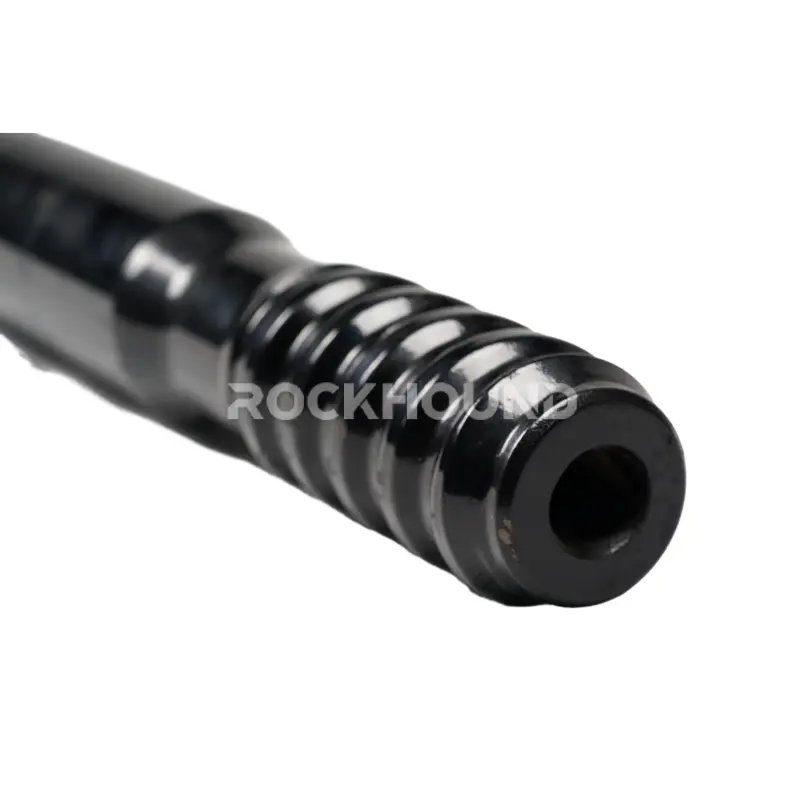
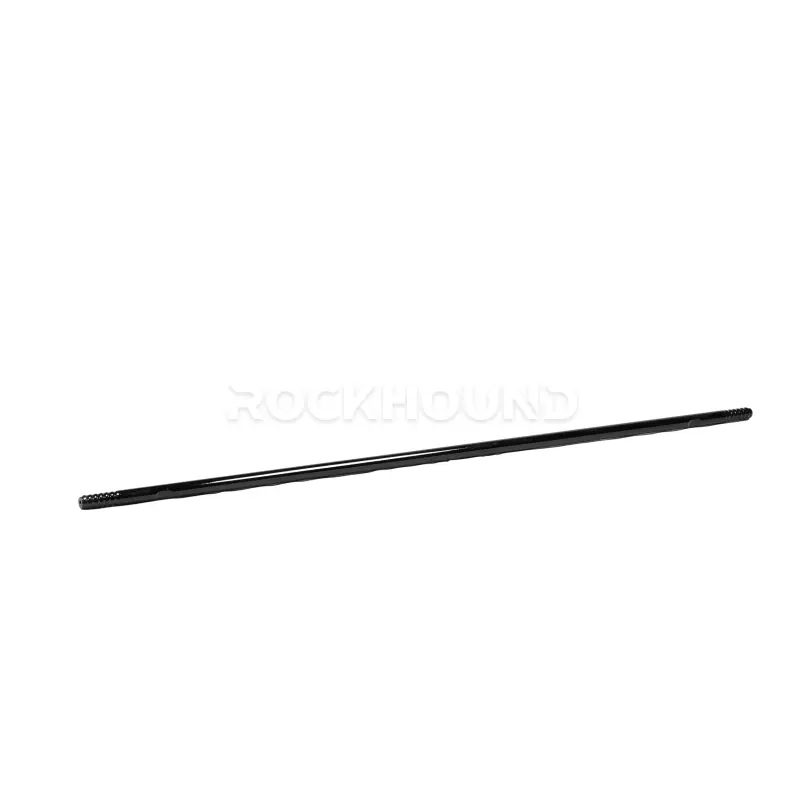
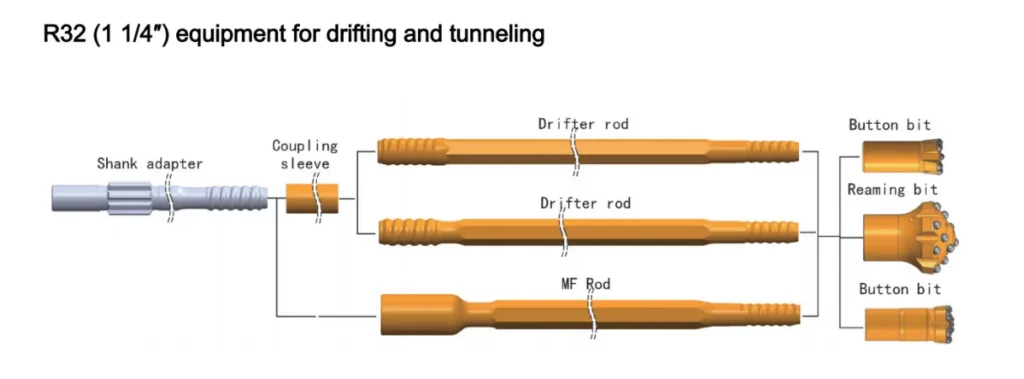
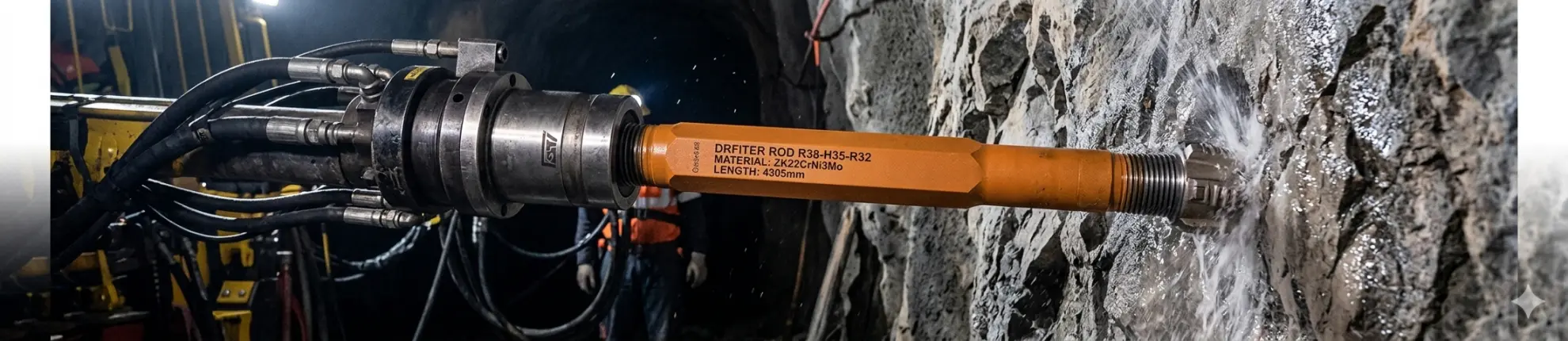
The R38-H35-R32 Drifter Rod is a hex-body extension rod engineered for top hammer rock drilling in tunneling, drifting, and underground development applications. It features an R38 male thread at the shank (machine) end and an R32 male thread at the bit end, connected via a standard R38/R32 coupling sleeve in rod string configurations.
The H35 hexagonal cross-section (35mm / 1 5/8 inch across flats) delivers higher bending stiffness and greater annular flushing area compared to conventional round-body rods, reducing hole deviation in long-hole drifting and improving drill cuttings evacuation.
Material
All rods are manufactured from ZK22CrNi3Mo alloy steel — a chromium-nickel-molybdenum grade specifically developed for percussive drilling consumables — and subjected to full-body carburizing heat treatment to achieve a hard, wear-resistant surface layer with a tough, fatigue-resistant core.
Key Features
ZK22CrNi3Mo Alloy Steel
A specialized Cr-Ni-Mo percussive steel grade offering optimal fatigue strength under high-frequency impact loads, significantly extending rod service life in hard and abrasive rock conditions.
H35 Hexagonal Body
The 35mm hex cross-section increases rod stiffness over round sections, minimizes angular hole deviation during long feeds, and provides larger flush water channels for efficient cuttings removal and bit cooling.
Full-Body Carburizing Treatment
Through 20-hours controlled carburization and quench tempering, the rod achieves high surface hardness (wear resistance) while retaining a ductile core — the critical combination that resists both abrasive wear at the thread roots and bending fatigue along the shank.
Precision CNC Thread Grinding
R38 and R32 threads are CNC-ground to 0.2mm strict dimensional tolerances, ensuring consistent make-up torque, full thread engagement, and minimized energy loss at each coupling joint within the drill string.
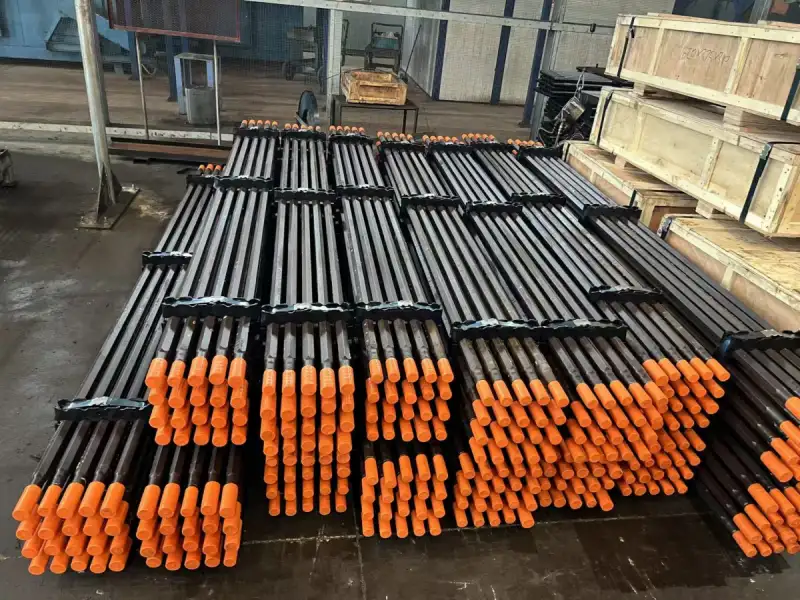
Length Range: 3090mm – 5525mm
Five standard lengths covering the feed stroke range of most hydraulic jumbo drill rigs (two-boom and three-boom configurations), compatible with Epiroc Boomer series, Sandvik DD series, and equivalent platforms.
Technical Specifications
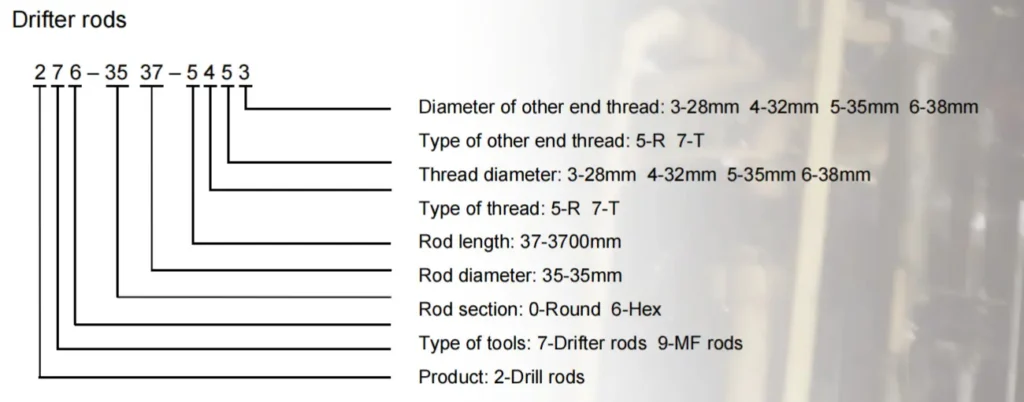
| Product Code | Thread — Shank End | Thread — Bit End | Body Section | Length (mm) | Length (ft/in) | Weight (kg) |
|---|---|---|---|---|---|---|
| 276-3530-5654 | R38 | R32 | H35 (1 5/8″) | 3090 | 10′ 1 21/32″ | 24.0 |
| 276-3537-5654 | R38 | R32 | H35 (1 5/8″) | 3700 | 12′ 1 1/2″ | 28.7 |
| 276-3543-5654 | R38 | R32 | H35 (1 5/8″) | 4305 | 14′ 1 3/64″ | 33.7 |
| 276-3549-5654 | R38 | R32 | H35 (1 5/8″) | 4915 | 16′ 1 1/2″ | 38.2 |
| 276-3555-5654 | R38 | R32 | H35 (1 5/8″) | 5525 | 18′ 1 33/64″ | 43.1 |
Note: Length (L) is measured overall rod length. H denotes the hex across-flats dimension. All weights are nominal dry values.
Applications
The R38-H35-R32 drifter rod is primarily deployed in:
- Underground Tunneling & Drifting — Drill-and-blast development headings in mining and civil tunnel projects, where consistent hole straightness and rod interchangeability across shifts are critical.
- Rig Compatibility — Compatible with hydraulic rock drills operating at the R38 shank standard, including but not limited to Epiroc COP series and Sandvik RD series rock drills.
- Infrastructure Development — Hydropower caverns, railway tunnels, and urban underground construction requiring precise blast pattern control.
- Underground Production Drilling — Small cross-section stope drilling using single-boom or mechanical arm rigs.
How to Select the Correct Drifter Rod
Step 1 — Confirm thread compatibility.
Verify your shank adapter (drill steel adapter) carries an R38 female thread and your drill bit is R32 male. Mismatched thread standards cause accelerated thread wear and energy transfer losses.
Step 2 — Match rod length to rig feed stroke.
The rod length must not exceed the effective feed length of your drill rig’s boom. Standard Boomer L2/L2C feeds typically use 3700mm or 4305mm rods; longer feeds up to 5525mm suit extended-feed configurations.
Step 3 — Assess rock conditions.
ZK22CrNi3Mo steel is recommended for hard rock (UCS > 120 MPa) and highly abrasive formations (quartzite, granite, basalt) where fatigue and thread erosion are the dominant failure modes.Lorem ipsum dolor sit amet, consectetur adipiscing elit. Ut elit tellus, luctus nec ullamcorper mattis, pulvinar dapibus leo.
Step 4 — Evaluate flushing requirements.
In fractured or clay-bearing ground where cuttings tend to pack, the H35 hex body’s larger annular flush area provides a measurable advantage over H32 or round-body alternatives.
Maintenance Guidelines
- Thread lubrication: Apply approved drill rod grease to all thread connections before each shift. Unlubricated R38/R32 threads are prone to galling and heat checking, which accelerate fatigue crack initiation at thread roots.
- Alignment check: Ensure the drill rig’s guide cell, shank adapter, rod centralizer, and drill bit are coaxially aligned. Lateral misalignment induces bending stresses exceeding the rod’s design fatigue limit.
- Avoid dry percussion: Never operate the rock drill under impact without adequate feed pressure. Loose thread joints under percussion cause peening and rapid thread profile destruction.
- Rotation inspection: After each shift, inspect thread forms for signs of deformation, heat discoloration, or longitudinal cracking. Remove rods exhibiting core cracks or severely deformed threads from service immediately to prevent catastrophic in-hole breakage.
- Rod rotation practice: Rotate rods in the inventory to distribute wear evenly across the fleet. Do not reuse heavily worn coupling sleeves with new rods.
Related Readings:
Related Production
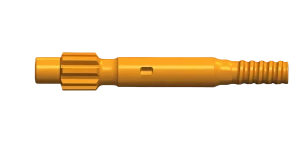
For volume pricing, OEM supply, and custom length enquiries, contact our technical sales team.
FAQ
The designation breaks down into three components, each describing a critical dimension of the rod. R38 refers to the thread type at the shank (machine) end — a rope thread with a 38mm nominal diameter that connects to the shank adapter on the rock drill. H35 indicates the rod body is hexagonal with 35mm across flats (equivalent to 1 5/8 inch), which governs bending stiffness and flushing channel area. R32 identifies the thread at the bit end — a 32mm rope thread that mates with your R32 drill bit or coupling sleeve. Selecting a rod where all three parameters match your drill rig and bit configuration is essential for efficient energy transfer and extended consumable life.
A drifter rod — also referred to as an extension rod or drill steel — is the primary energy-transmitting component in a top hammer drill string. It transfers percussive impact energy and rotational torque from the rock drill (via the shank adapter) through to the drill bit at the working face. In tunneling and underground drifting operations, drifter rods are used to drill blast holes to the designed depth across the tunnel face. RockHound's R38-H35-R32 drifter rods are specifically engineered for hydraulic jumbo drilling rigs operating in underground development headings, where consistent hole straightness and reliable rod life directly affect blast pattern quality and cycle times.
The terms are often used interchangeably in the industry, but there is a practical distinction. A drifter rod typically refers to a single rod used without coupling — directly connecting the shank adapter to the drill bit in shorter-hole applications. An extension rod is used when multiple rod sections are coupled together via coupling sleeves to achieve greater drilling depth. The R38-H35-R32 from RockHound can function in both roles: as a standalone drifter rod in single-rod setups, or as part of an extended drill string using R38 coupling sleeves when longer penetration depths are required.
RockHound's R38-H35-R32 drifter rods are manufactured from ZK22CrNi3Mo alloy steel, a chromium-nickel-molybdenum steel grade purpose-developed for percussive drilling consumables. This material provides the critical combination of high surface hardness — achieved through full-body carburizing and quench-tempering heat treatment — and a tough, ductile core that resists fatigue cracking under high-frequency impact loads. In practical terms, ZK22CrNi3Mo performs reliably in hard and abrasive rock formations (UCS > 120 MPa), including granite, quartzite, and basalt, where inferior steel grades fail prematurely through thread erosion or body fracture.
RockHound supplies the R38-H35-R32 drifter rod in five standard lengths to cover the feed stroke range of most hydraulic jumbo drill rigs:
- 3090mm (10' 1 21/32") — Product Code 276-3530-5654
- 3700mm (12' 1 1/2") — Product Code 276-3537-5654
- 4305mm (14' 1 3/64") — Product Code 276-3543-5654
- 4915mm (16' 1 1/2") — Product Code 276-3549-5654
- 5525mm (18' 1 33/64") — Product Code 276-3555-5654
Rod length selection should be matched to your drill rig's effective feed travel. As a general reference, standard two-boom jumbos (e.g., Epiroc Boomer L2C) most commonly use 3700mm or 4305mm rods. For custom length requirements outside this range, contact RockHound's technical sales team directly.
Compatibility depends on three factors. First, confirm your shank adapter carries an R38 female thread — this is the standard connection point between the rock drill and the drill rod. Second, verify your drill bits are R32 thread specification. Third, ensure the rod length you select does not exceed the effective feed stroke of your boom. The R38-H35-R32 is compatible with hydraulic rock drills operating on the R38 shank standard, including Epiroc COP series and Sandvik RD series rock drills. If you are unsure of your rig's shank standard, refer to the OEM equipment specification sheet or contact RockHound with your rig model for a confirmed compatibility check.
Service life varies significantly based on rock hardness, rig alignment, operator practice, and maintenance discipline. Under normal operating conditions in medium-hard rock with proper lubrication, a quality drifter rod should deliver between 300 and 600 drill meters before retirement. The most common causes of premature failure are thread erosion from dry (unlubricated) coupling, fatigue cracking from lateral misalignment between the drill rig guide cell and the drill hole collar, and heat checking of threads caused by running loose joints under percussion. Implementing a strict rod greasing protocol, performing daily alignment checks, and rotating rods evenly through your fleet inventory are the most effective measures to maximize service life and reduce cost-per-meter on consumables.
When using the R38-H35-R32 rod in an extended drill string — i.e., coupling two or more rods together — you will require an R38 coupling sleeve (also called an R38 rod coupling or R38 extension coupling). The coupling sleeve has a female R38 thread at both ends and connects the R38 shank-end thread of one rod to the R38 shank-end thread of the next rod in the string. The R32 bit-end thread of the final rod in the string then connects directly to your R32 drill bit. RockHound supplies R38 coupling sleeves as a compatible accessory to this rod — see our R38 Coupling Sleeve product page for specifications.
Yes. RockHound supports custom length fabrication outside the five standard offerings (3090mm–5525mm) for clients with non-standard feed configurations or specialized drilling equipment. We also offer OEM and private-label supply for drilling equipment distributors and mining consumable resellers requiring branded product. Minimum order quantities apply for custom specifications. Submit your technical requirements — including required length, quantity, target delivery port, and any dimensional drawing — via our inquiry form or contact our technical sales team directly for a lead-time and pricing confirmation.