
Product Overview
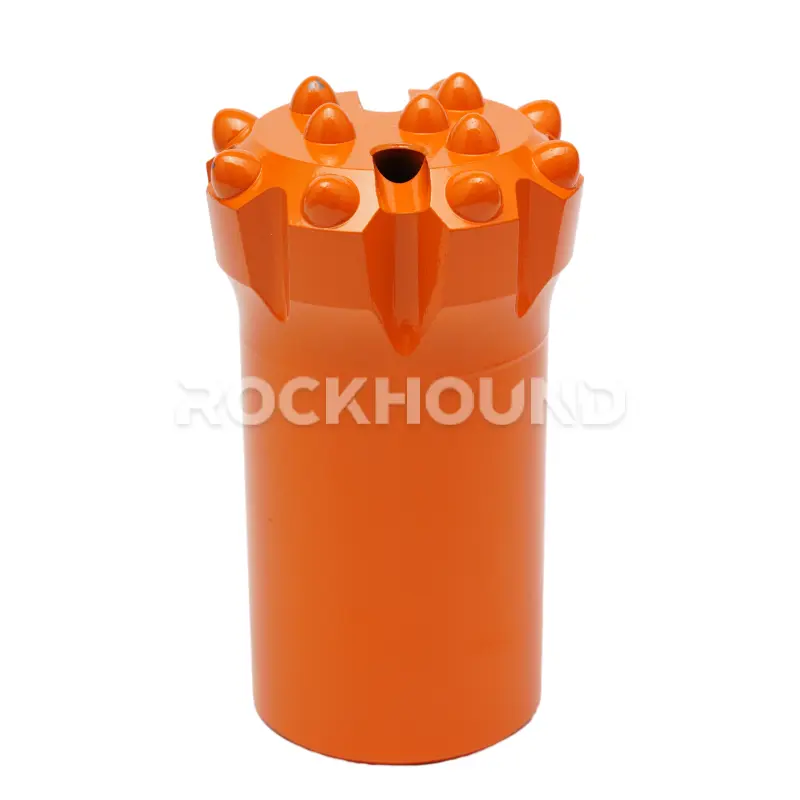
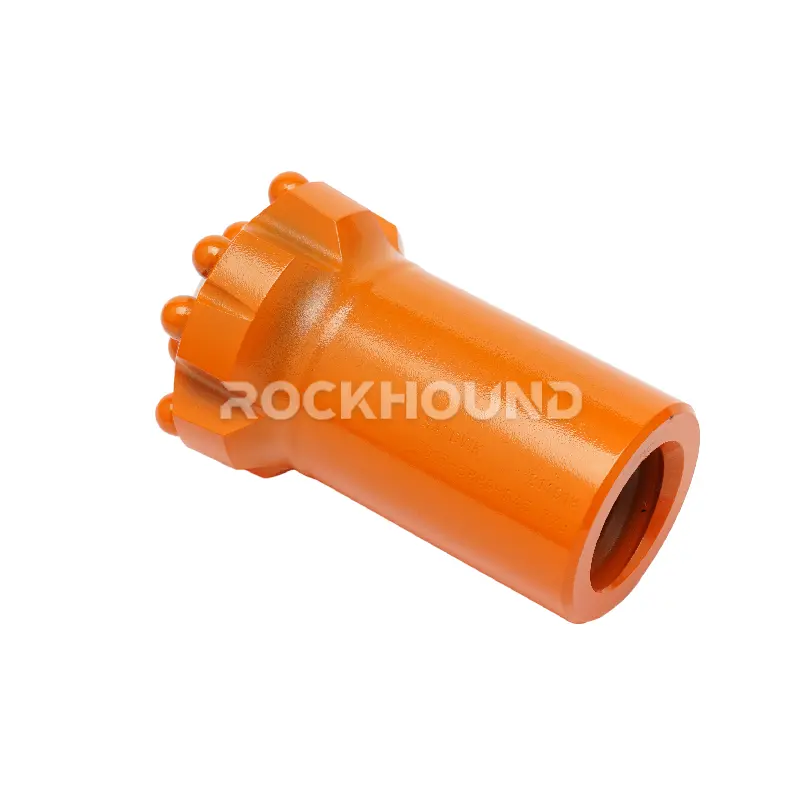
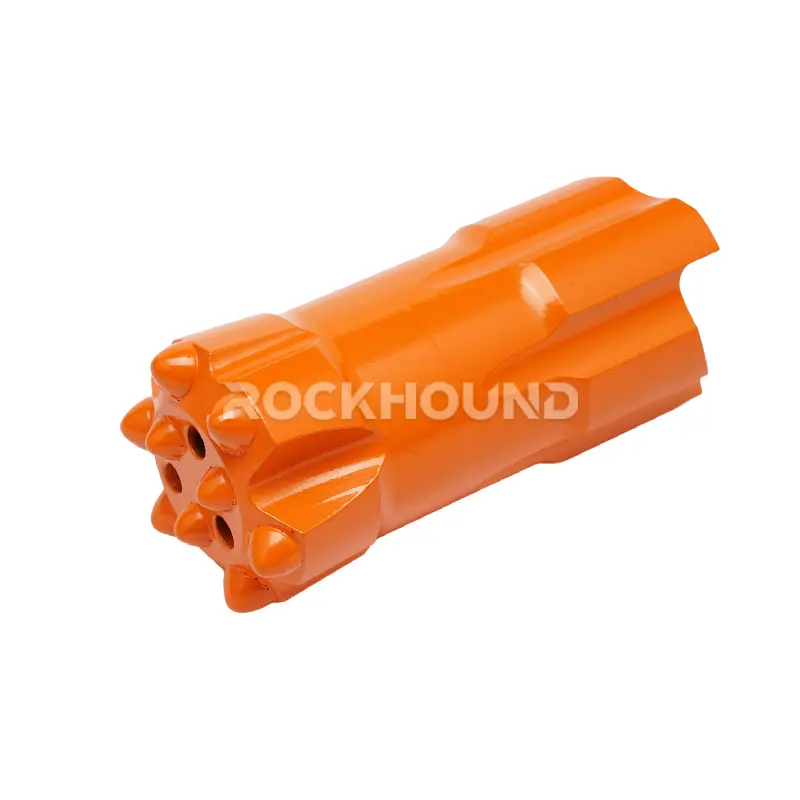
Engineered for demanding top hammer drilling applications, RockHound T35 Threaded Button Bits deliver consistent penetration rates and extended service life across underground mining, tunneling, drifting, and quarrying operations.
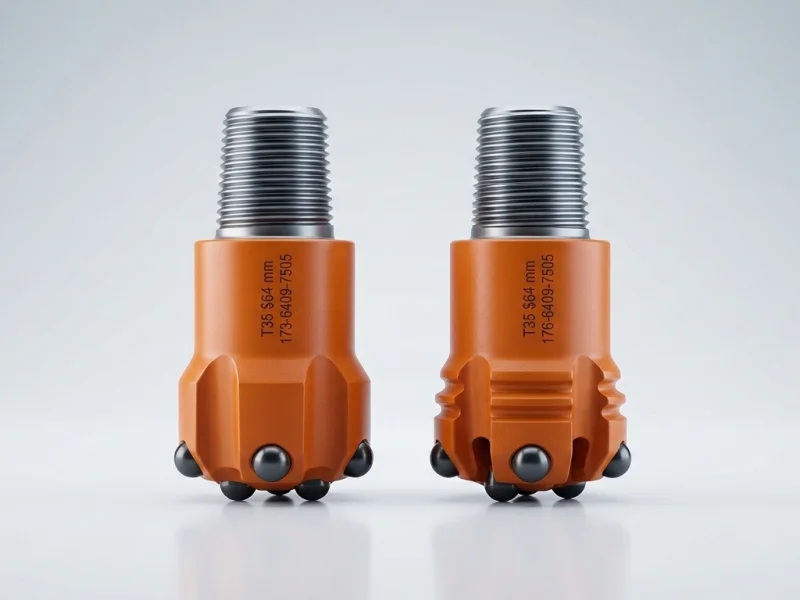
Each bit is manufactured with a 45CrNiMoV high-strength alloy steel body and fitted with YK05 tungsten carbide buttons, providing the optimum balance between impact toughness and abrasion resistance. A proprietary 20-hour deep carburization heat treatment forms a thick, wear-resistant case hardening layer while preserving a ductile core — minimizing shank fatigue and bit body failure under high-frequency percussion loads.
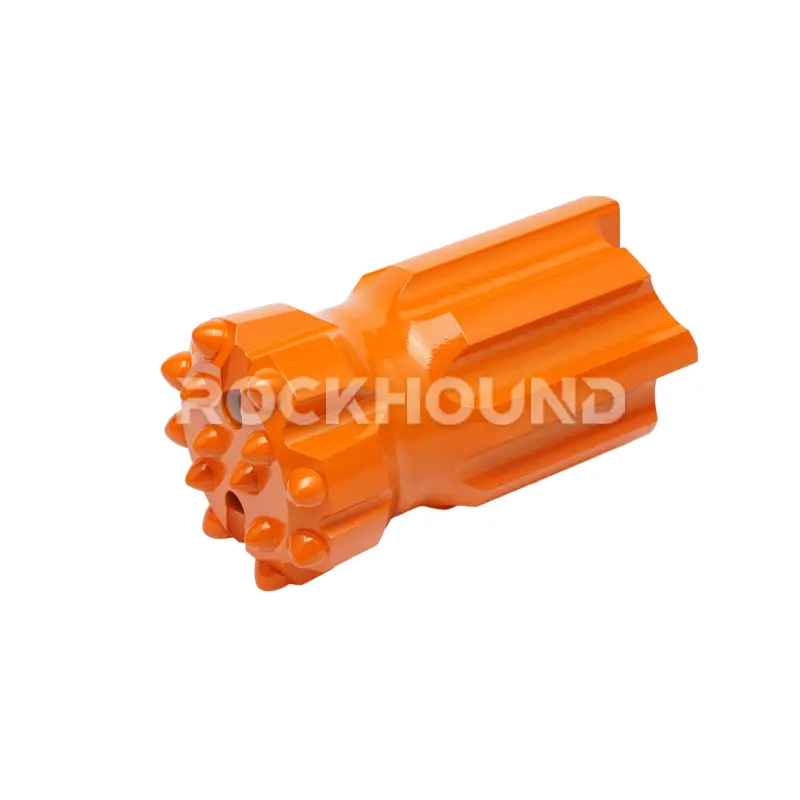
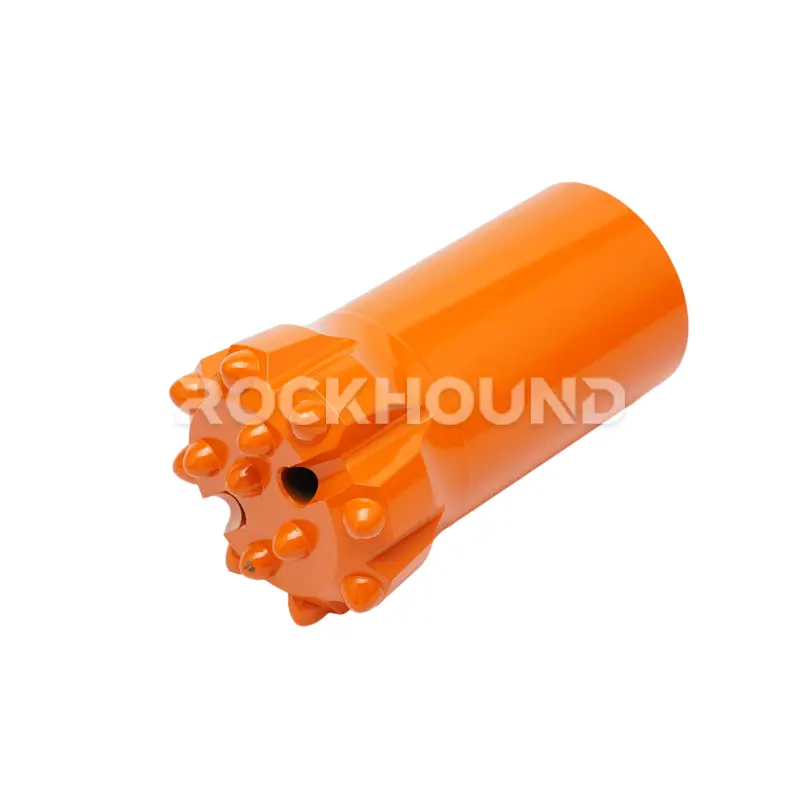
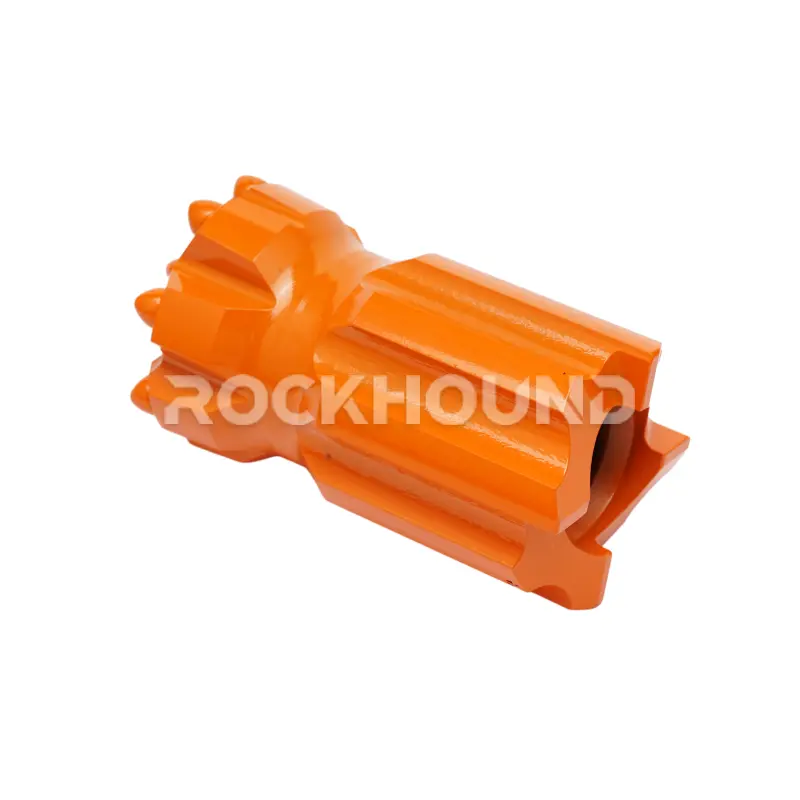
Available in Standard Button and Button/Flat/Retrac configurations with a 35° gauge button angle, these bits are fully compatible with the T35 (1 3/8″) thread system and designed to pair seamlessly with T35 MF extension rods and shank adapters for long-hole drilling strings.
Key Features
Premium Material Combination 45CrNiMoV forged steel body paired with YK05 carbide inserts ensures superior hardness, toughness, and resistance to thermal cracking under continuous impact loading.
20-Hour Deep Carburization Process Our extended carburizing cycle produces a significantly deeper hardened case than industry-standard treatments, directly translating to longer re-grinding intervals and lower cost-per-meter.
Dual Face Geometry Options
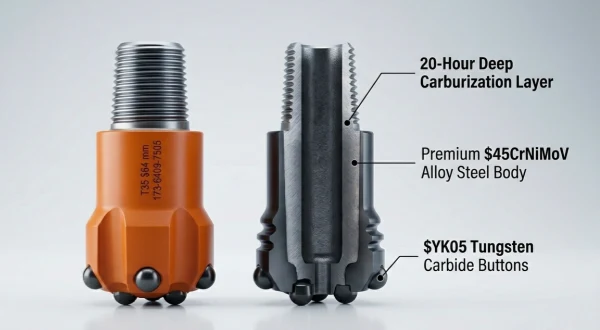
- Standard Button: Flat face with hemispherical buttons. Ideal for competent, stable rock formations where maximum penetration rate is the priority.
- Button/Flat/Retrac: Retrac body profile with peripheral grooves. Engineered for fractured, fissured, or collapsing ground conditions — enhances flushing efficiency, reduces hole deviation, and ensures safe bit retrieval without rod sticking.
35° Gauge Button Angle The precision-ground 35° gauge angle optimizes rock-breaking efficiency at the borehole wall, maintains accurate hole gauge over the full service life of the bit, and reduces gauge wear.
Full T35 System Compatibility Designed to the T35 (1 3/8″) thread standard, these bits integrate directly with T35 shank adapters and MF rods — no adapters required. See the T35 equipment diagram below.
Technical Specifications
| Product Code | Diameter (mm) | Diameter (inch) | Gauge Buttons (No × Size) | Centre Buttons (No × Size) | Gauge Button Angle | Thread | Weight (kg) | Type |
|---|---|---|---|---|---|---|---|---|
| 173-5409-7505 | 54 | 2 1/6″ | 6 × 10 mm | 3 × 9 mm | 35° | T35 | 1.4 | Standard Button |
| 173-5709-7505 | 57 | 2 1/4″ | 6 × 10 mm | 3 × 9 mm | 35° | T35 | 1.5 | Standard Button |
| 173-6409-7505 | 64 | 2 1/2″ | 6 × 11 mm | 3 × 10 mm | 35° | T35 | 1.6 | Standard Button |
| 176-5409-7505 | 54 | 2 1/6″ | 6 × 10 mm | 3 × 9 mm | 35° | T35 | 1.8 | Button/Flat/Retrac |
| 176-5709-7505 | 57 | 2 1/4″ | 6 × 10 mm | 3 × 9 mm | 35° | T35 | 2.0 | Button/Flat/Retrac |
| 176-6409-7505 | 64 | 2 1/2″ | 6 × 11 mm | 3 × 10 mm | 35° | T35 | 2.2 | Button/Flat/Retrac |
Note: Custom diameters and carbide grades available upon request. OEM/ODM orders accepted.
Compatible T35 Drilling System
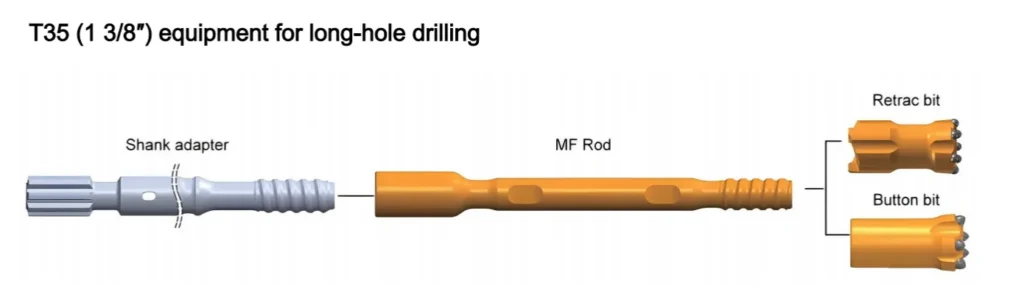
The T35 (1 3/8″) top hammer system consists of three core components working in series:
- Shank Adapter — Transmits rotation and percussion energy from the rock drill
- T35 MF Extension Rod — Transfers energy down the drill string; available in standard lengths
- T35 Button Bit (Standard or Retrac) — Breaks rock at the face
All components use the standardized T35 male/female thread connection for reliable energy transmission and easy assembly underground.
Applications
| Industry | Typical Use – Top Hammer Drilling Applications |
|---|---|
| Underground Mining | Long-hole stoping, production blast holes, ring drilling, sub-level caving, cut & fill operations; ideal for high-precision, high-frequency impact in narrow veins and massive ore bodies |
| Tunneling & Drifting | Full-face advance in hard rock tunnels, cross-cuts, gallery development, heading and benching; provides excellent hole straightness and flushing in confined, abrasive environments |
| Quarrying | Bench drilling in granite, limestone, marble, sandstone, dimension stone extraction; maximizes penetration rate (ROP) and bit life in open-pit and surface quarrying conditions |
| Civil Engineering | Foundation bolting, rock anchoring, soil nailing, site preparation, slope stabilization, dam & bridge abutment drilling; ensures reliable hole quality and fast installation in varying ground conditions |
How to Select the Right T35 Button Bit
Choose Standard Button when:
- Rock mass is competent and stable (RQD > 75%)
- Priority is maximum penetration rate (ROP)
- Weight and handling ease are operational considerations
Choose Button/Flat/Retrac when:
- Ground conditions are fractured, jointed, or blocky
- Hole deviation is a concern
- Risk of bit jamming during rod withdrawal is present
- Flushing efficiency needs to be maximized
On button size:
- 54 mm & 57 mm bits use 10 mm gauge / 9 mm centre buttons — optimized for medium-hard rock
- 64 mm bits use 11 mm gauge / 10 mm centre buttons — suited for harder, more abrasive formations
Maintenance Guidelines
- Button Inspection & Regrinding — Inspect buttons after each drill run. Regrind using a button bit grinder when flat wear exceeds 1/3 of the button diameter. Restoring the hemispherical profile early significantly extends total bit life.
- Thread Care — Clean T35 threads with a wire brush after each shift. Apply thread grease (shank grease) before coupling to prevent galling and fretting corrosion.
- Flushing Pressure — Maintain adequate air or water flushing volume to evacuate drill cuttings continuously. Insufficient flushing causes re-drilling of cuttings, which is the primary driver of premature gauge wear and steel body erosion (steel wash).
- Rotation-to-Feed Ratio — Do not apply excessive feed force at the expense of rotation speed. Correct drilling parameters prevent button cracking and reduce the risk of shank breakage.
- Early Pull-Out — If penetration rate drops sharply despite correct parameters, pull the bit before the body is compromised. Running a worn bit to failure is the highest-cost drilling practice.
Related Products
- T35 Shank Adapters
Looking for custom specifications, OEM branding, or volume pricing? Contact our technical sales team for a tailored quotation.
FAQ
RockHound T35 button bits are engineered for high-performance drilling in medium to very hard rock. This includes abrasive formations like granite, quartzite, and basalt, as well as common materials like limestone and marble. For maximum penetration in extremely abrasive conditions, we recommend our $64\text{ mm}$ variant equipped with $11\text{ mm}$ YK05 tungsten carbide buttons, which provide superior wear resistance and extended service life.
The choice depends on your borehole stability:
Standard Body: Choose this for stable ground conditions. It is lighter, cost-effective, and offers excellent energy transfer.
Retrac Body: RockHound recommends the Retrac (Easy-back) profile for fractured or loose rock. The grooved skirt acts as an anti-jamming tool, allowing the bit to clear debris more efficiently and preventing it from getting stuck when pulling the drill string out of a collapsing hole.
Absolutely. All RockHound T35 threaded bits are manufactured to strict international ISO standards. Our T35 (1 3/8") threads are 100% compatible with T35 drifting rods, extension steels, and shank adapters from all major global manufacturers. You can seamlessly integrate our bits into your existing drill string without any loss in coupling precision.
Unlike standard market offerings, RockHound utilizes a premium $45\text{CrNiMoV}$ alloy steel body subjected to a specialized 20-hour deep carburization process. This advanced heat treatment creates a high-hardness "armor" layer that resists fatigue while maintaining a tough core to absorb the heavy impacts of top hammer drilling.
We cater to projects of all scales. RockHound supports small-batch trial orders for site testing as well as high-volume supply contracts for large-scale mining operations. Please [Contact Our Sales Team] for a personalized quote and to discuss volume-based pricing.