

Product Description
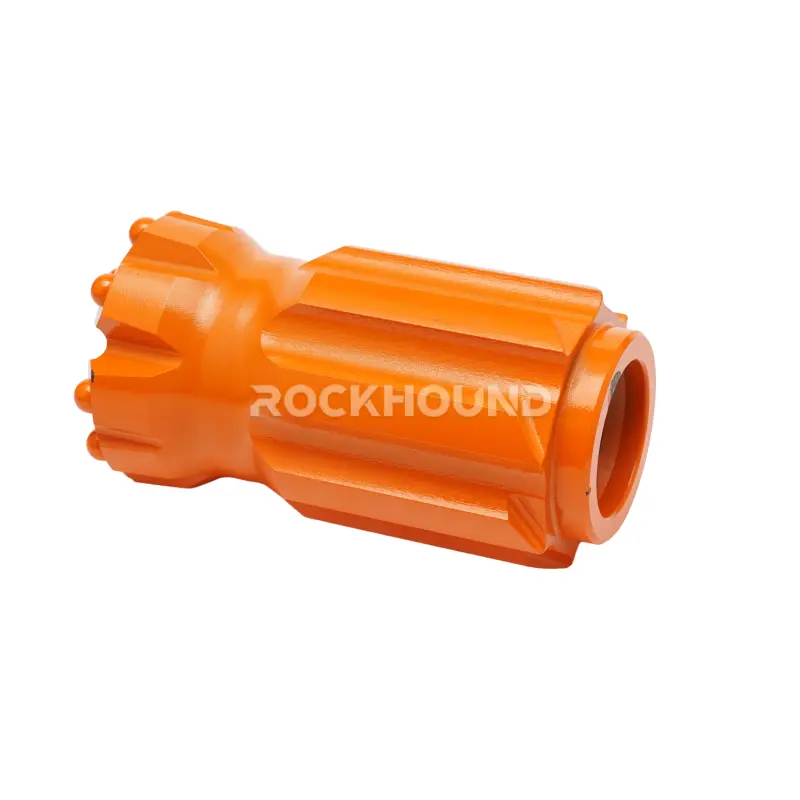
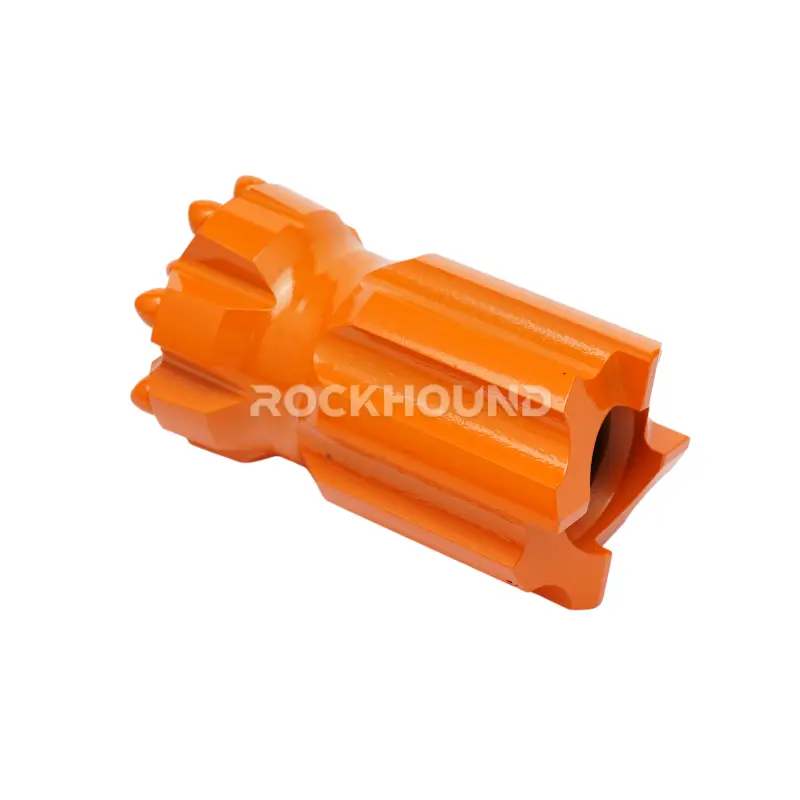
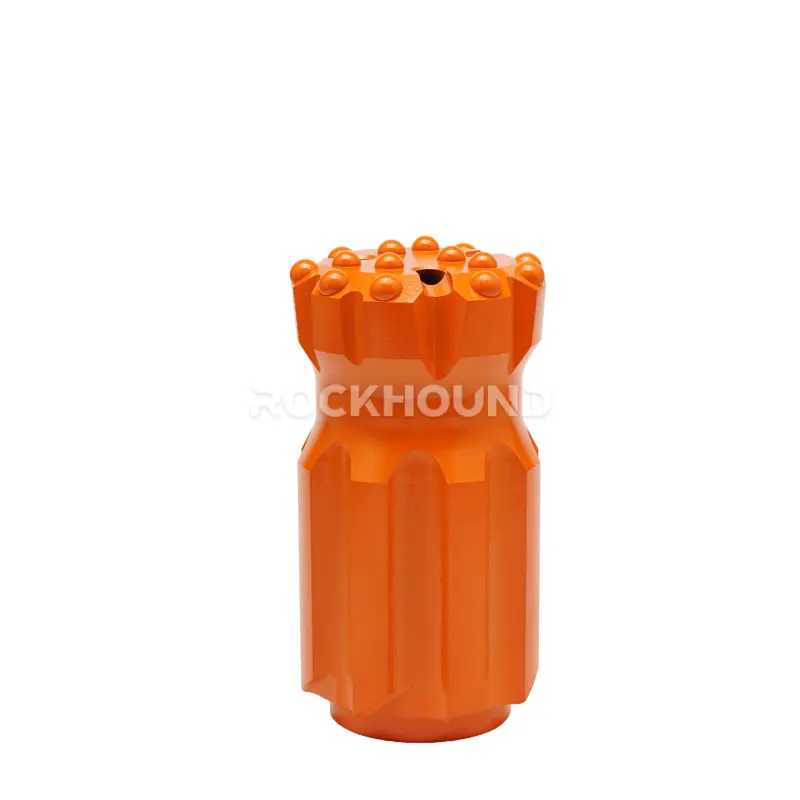
The RockHound ST58 Threaded Retrac Button Bit is a high-performance top hammer drill bit purpose-built for mining, quarrying, and deep-hole drilling applications where fractured and unstable rock formations present the greatest operational risk. The defining feature of this product line is its Retrac (back-reaming) skirt geometry — a series of cutting flutes machined into the rear of the bit body that actively clear collapsed rock fragments from around the bit, dramatically reducing the incidence of stuck tools and lost equipment in broken ground.
Material
Every bit in the ST58 series is manufactured from 45CrNiMoVa alloy steel — a high-grade, heat-treatable steel widely regarded as the benchmark material for percussion drill bit bodies due to its outstanding fatigue resistance and impact toughness.
The carbide inserts are precision-pressed from YK05 tungsten carbide, a grade specifically formulated to balance hardness and transverse rupture strength under high-frequency impact loading. All bodies undergo our 20-hour heat treatment process, which develops a hardness gradient that maximises surface wear resistance while preserving a tough, ductile core. Learn more about our raw material selection philosophy and the full manufacturing process behind every RockHound bit.
Key Features
Retrac Anti-Jamming Body Design
The rearward-angled cutting flutes on the bit skirt allow the bit to ream its way back out of a collapsed or unstable hole. This is the single most effective engineering solution for reducing tool loss in heavily jointed, faulted, or weathered rock formations.
45CrNiMoVa Alloy Steel Body
The bit body is forged from 45CrNiMoVa — a chromium-nickel-molybdenum-vanadium alloy steel that delivers exceptional fatigue life under the repeated high-energy impacts of top hammer drilling. It resists body cracking even in hard, abrasive rock conditions where lesser steels fail prematurely.
YK05 Tungsten Carbide Buttons
YK05-grade carbide offers a carefully engineered balance between wear resistance and toughness, making it the preferred insert material for demanding percussion applications. Buttons are interference-pressed into precisely machined sockets for permanent, secure retention.
Proprietary 20-Hour Heat Treatment
Each bit body passes through a controlled, 20-hour heat treatment cycle that develops a hard, wear-resistant outer case while maintaining a resilient core — extending bit service life by up to 15–20% compared to conventionally heat-treated competitors.
ST58 Threaded Connection
The ST58 thread profile provides a robust, low-maintenance mechanical connection to compatible shanks and extension rods. High thread contact area ensures efficient transfer of both rotational torque and percussive energy with minimal energy loss at the joint.
Custom Logo Branding
RockHound offers professional laser or stamped marking services. Your company logo or product code can be applied to the bit body (maximum branding area: 100 × 100 mm), supporting fleet identification, inventory management, and distributor brand building.
Technical Specifications
| Bit Type | Diameter (mm) | Diameter (inch) | Gauge Buttons (No × Size) | Centre Buttons (No × Size) | Gauge Button Angle | Thread | Product Code | Weight (kg) |
|---|---|---|---|---|---|---|---|---|
| Button / Drop Center / Retrac | 89 | 3 1/2″ | 8 × 13 mm | 6 × 13 mm | 35° | ST58 | 176-8914-2905 | 4.3 |
| Button | 102 | 4″ | 8 × 13 mm | 6 × 13 mm | 35° | ST58 | 173-0214-2905 | 5.3 |
| Button | 102 | 4″ | 8 × 13 mm | 8 × 13 mm | 35° | ST58 | 173-0214-2965 | 5.3 |
Custom diameters, button configurations, and face designs available on request. Contact our technical team for OEM and private-label enquiries.
Application Range
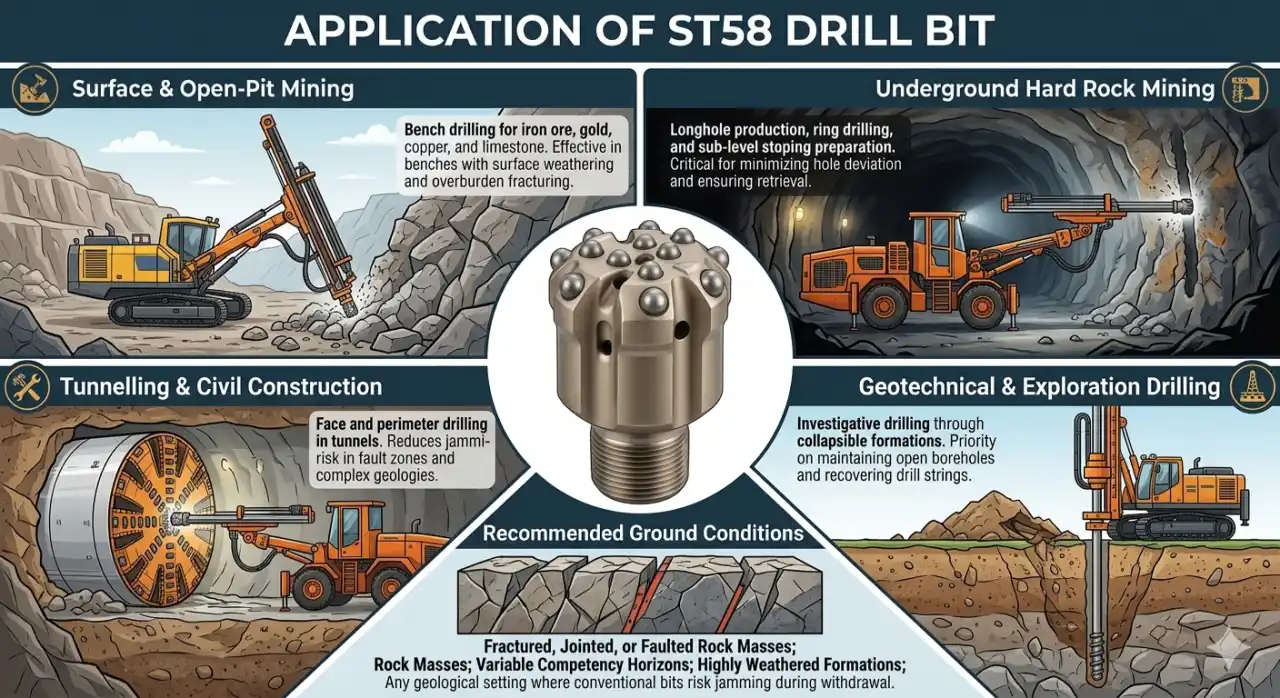
Surface & Open-Pit Mining
Bench drilling for iron ore, gold, copper, and limestone quarrying operations. The Retrac design is particularly effective in benches with surface weathering, high clay content in joints, or significant overburden fracturing.
Underground Hard Rock Mining
Longhole production drilling, ring drilling, and sub-level stoping preparation in underground metalliferous mines where hole deviation and bit retrieval are critical production constraints.
Tunnelling & Civil Construction
Face drilling and perimeter drilling in medium-to-large cross-section tunnels, especially through mixed-face ground conditions where unexpected fault zones create jamming risk.
Geotechnical & Exploration Drilling
Investigative drilling through collapsible formations where maintaining open boreholes and recovering the drill string are priorities.
Recommended Ground Conditions
Fractured, jointed, or faulted rock masses; variable competency horizons; highly weathered formations; any geological setting where conventional bits risk jamming during withdrawal.
Maintenance Guidelines
Following a structured maintenance programme is the single most effective way to maximise return on your bit investment. For a comprehensive reference, see our guide: Top Hammer Button Bit: How It Works, Uses & Maintenance.
Button Regrinding
Inspect carbide buttons at regular intervals. When the wear flat (the flat area appearing on the crown of a carbide insert) reaches approximately one-third of the button diameter, the bit must be withdrawn and reground using a dedicated button bit grinder. Drilling with dull buttons increases bending stress on the inserts and significantly raises the risk of carbide fracture and body fatigue cracking.
Thread Maintenance
Before each connection, clean the ST58 thread with a wire brush and apply a manufacturer-approved thread grease or anti-seize compound. After each shift, visually inspect threads for signs of galling, deformation, or flank wear. Replace bits showing thread damage immediately — a loose or damaged connection wastes percussive energy and can cause shank breakage.
Operating Parameter Matching
Always confirm that the drill rig’s percussive pressure, rotation speed, and feed force are within the ranges specified for the bit diameter and rock strength. Operating outside these parameters — particularly with excessive feed force at low rotation — accelerates gauge button wear and can cause premature body fatigue. Never operate without adequate flush flow; dry drilling destroys carbide inserts within minutes.
Storage
Store bits in a dry environment, off the ground, and away from direct contact with corrosive materials. Inspect threads and bit faces before returning to service after extended storage.
How to Choose the Right ST58 Bit
Selecting the correct configuration for your specific application will significantly impact penetration rate, hole quality, and overall bit cost-per-metre. For a detailed breakdown of design variables, refer to our technical article: Top Hammer Drill Bit Types: Face Design & Button Shape.
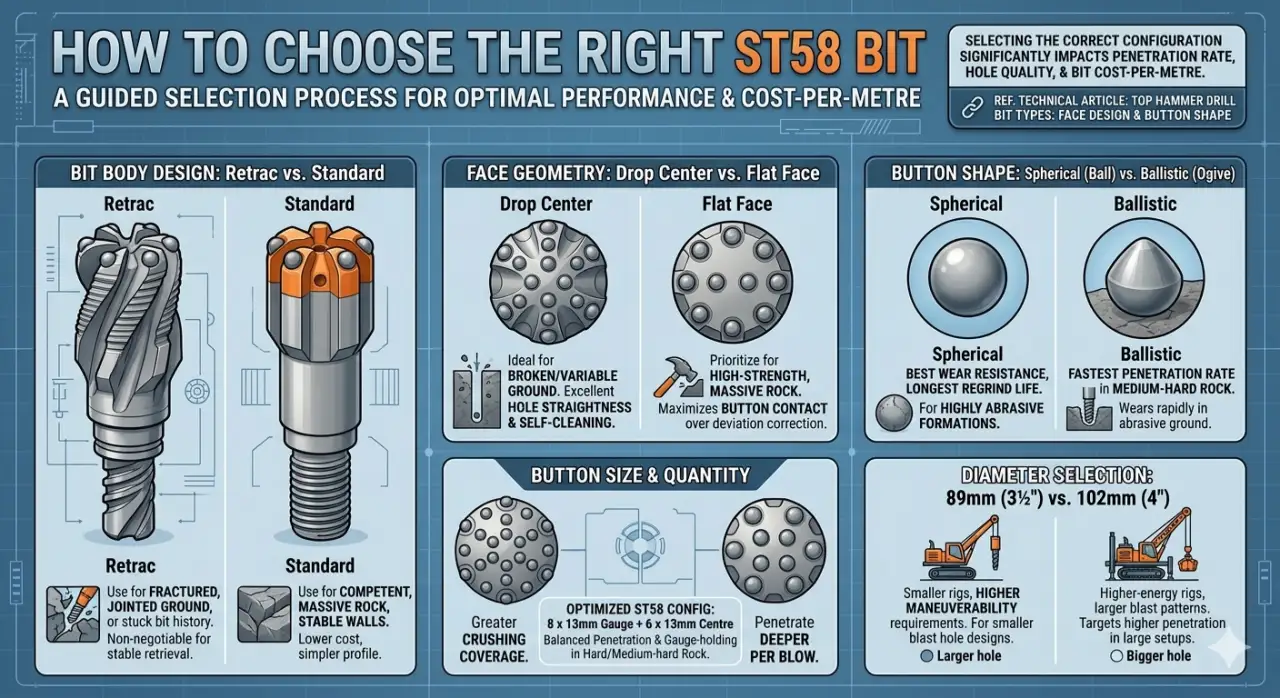
Bit Body Design — Retrac vs. Standard
If your ground conditions involve significant fracturing, jointing, or any history of stuck bits, the Retrac design is non-negotiable. If you are drilling competent, massive rock with stable hole walls, a standard spherical face bit will offer a marginally simpler profile and equivalent performance at lower cost.
Face Geometry
The Drop Center face (as featured in product code 176-8914-2905) creates a convex button layout that provides excellent hole straightness and self-cleaning properties — ideal for broken or variable ground. A Flat Face configuration is preferred for high-strength, massive rock where button contact is prioritised over deviation correction.
Button Shape
Spherical (ball) buttons provide the best wear resistance and longest regrind life — the preferred choice for highly abrasive formations. Ballistic (ogive) buttons penetrate faster in medium-hardness rock but wear more rapidly in coarse-grained abrasive formations.
Button Size & Quantity
More buttons of smaller diameter provide greater crushing coverage; fewer buttons of larger diameter penetrate deeper per blow. The 8 × 13 mm gauge + 6 × 13 mm centre configuration on these bits is optimised for balanced penetration and gauge-holding in hard to medium-hard rock.
Diameter Selection
Match the bit diameter to your blast hole design, charge diameter, and rig capability. The 89 mm (3½”) variant is ideal for smaller rigs with higher manoeuvrability requirements; the 102 mm (4″) variant suits higher-energy rigs targeting larger blast patterns.
Related Production
- ST58 Coupling Sleeves
FAQ
A Retrac button bit has cutting flutes machined into the rear face of the bit skirt, behind the gauge buttons. When hole collapse or rock wedging traps the bit during withdrawal, these rear-facing flutes allow the bit to cut its way back out by rotating under normal drill pressure — just as it drills forward. Standard bits lack this feature and must be extracted by brute force, which frequently results in rod decoupling or permanent tool loss in badly fractured ground.
45CrNiMoVa is a premium chromium-nickel-molybdenum-vanadium alloy steel that responds exceptionally well to heat treatment, allowing manufacturers to develop a hard, wear-resistant outer case with a tough, fatigue-resistant core in a single component. Compared to simpler alloy steels, it offers significantly better resistance to the high-cycle bending and torsional fatigue that is the primary failure mode for percussion drill bit bodies. Read more in our dedicated material guide: Top Hammer Drill Bit Material: 45CrNiMoV & YK05.
The standard rule of thumb across the industry is to regrind when the wear flat on any button reaches one-third of that button's diameter. For the 13 mm buttons used in the ST58 series, this means regrinding should be triggered when you observe a flat area of approximately 4–4.5 mm across the crown of the insert. At this point, penetration rate will have already declined noticeably. Delaying further increases the stress concentration at the carbide-steel interface and significantly raises the risk of insert fracture or body cracking.
Service life is primarily determined by rock abrasiveness (measured as Cerchar Abrasivity Index), compressive strength, and operational discipline (parameter matching, regrind frequency). However, due to RockHound's 20-hour controlled heat treatment process and the use of YK05 carbide, our ST58 bits consistently demonstrate 15–20% longer metric service life (metres drilled per bit) compared to standard market alternatives in equivalent geological conditions, based on field trial data across multiple mining operations.
Both compressed air and water flush are compatible with the ST58 flushing port design. Air flush is generally preferred for surface bench drilling in dry conditions as it provides faster cuttings evacuation and keeps the hole dry for reliable charging. Water flush (or water mist) is recommended in underground environments or dusty surface conditions where dust suppression is legally required, and in hot formations where carbide cooling is a priority. Never drill without active flush — loss of flush medium causes rapid thermal degradation of carbide inserts and premature gauge wear.