Why Heat Treatment is Critical for Threaded Button Bits
In high-impact rock drilling, threaded button bits endure extreme compressive stress, abrasive wear, and cyclic dynamic loading simultaneously. The bit body must exhibit a “hard but tough” characteristic — high surface hardness to resist wear, combined with excellent core toughness to suppress fatigue crack initiation and propagation.
For 45CrNiMoV alloy steel — the industry gold standard for premium-grade bits owing to its superior hardenability, high strength, and excellent toughness balance — the heat treatment cycle is the single most decisive factor governing service life in the field.
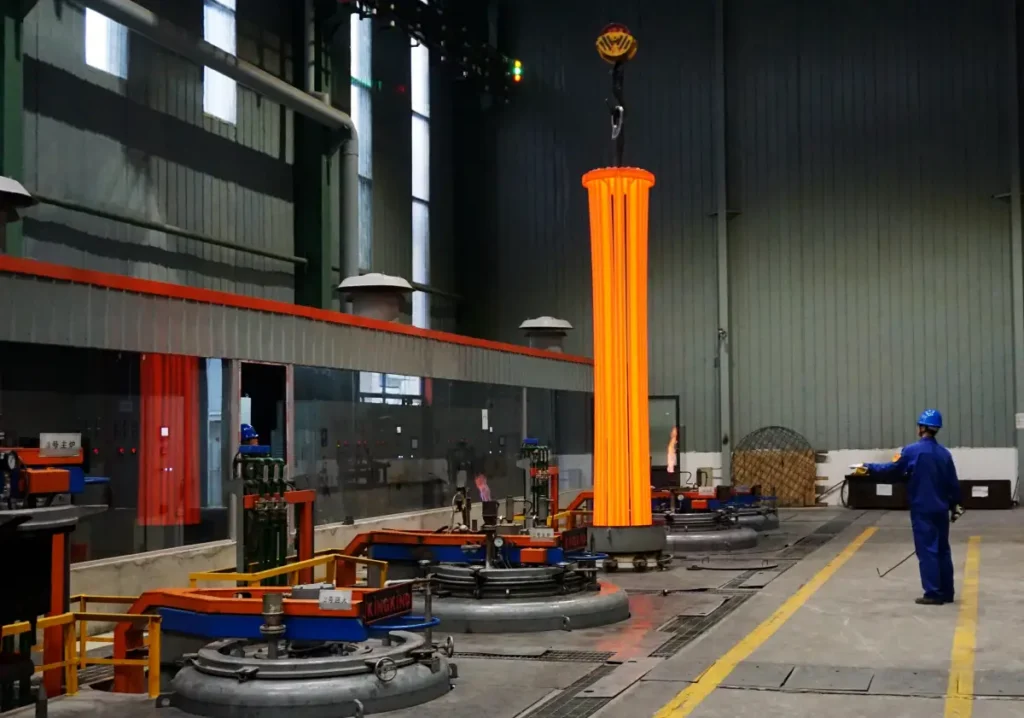
Pre-Heat Treatment & Material Preparation
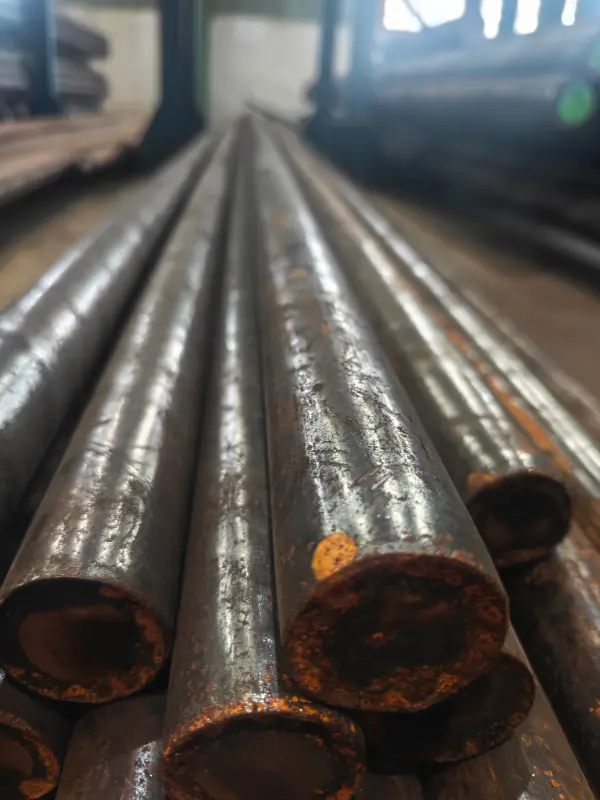
1. Material Consistency & Batch Verification
While 45CrNiMoV is the preferred choice for high-performance bits due to its exceptional through-hardenability, every incoming batch must be verified against the specified chemical composition tolerances — particularly for chromium, nickel, molybdenum, and vanadium content.
Substitution Note: When using 42CrMo as an alternative grade, quenching temperature and cooling rate parameters must be recalibrated to account for the lower carbon equivalent and reduced hardenability depth.
2. Preliminary Heat Treatment: Normalizing or Isothermal Annealing
Before final hardening, forged bit blanks must undergo either Normalizing or Isothermal Annealing to refine coarse dendritic grains inherited from the forging process and relieve residual forging stresses.
Key Point: Proper pre-annealing directly improves thread machinability and ensures a homogeneous, predictable austenitization response during final quenching — reducing hardness scatter across a production batch.
3. Surface Decontamination
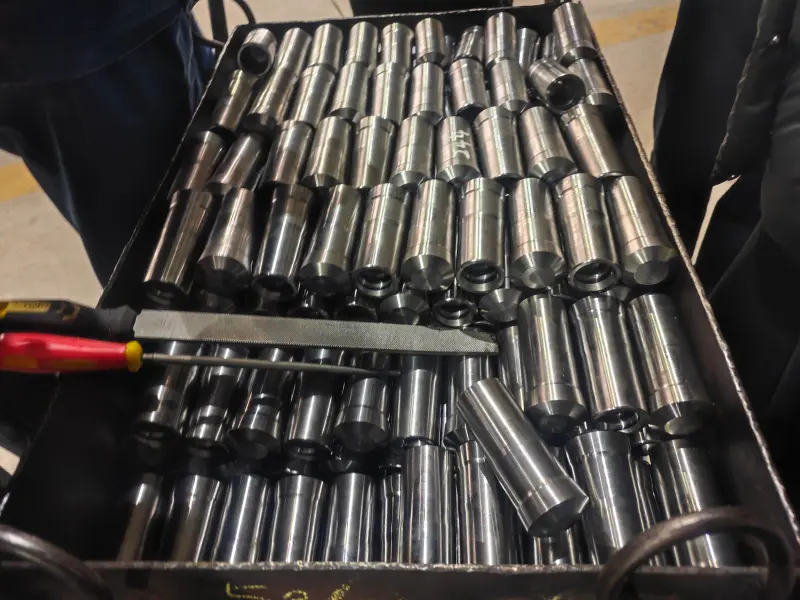
All oxide scale, industrial lubricants, and machining coolant residues must be removed prior to furnace loading. Residual surface contamination is a primary cause of soft spots (localized areas of inadequate hardness), surface decarburization (carbon loss that critically weakens the bit body skin), and non-uniform hardness distribution from impaired heat transfer.
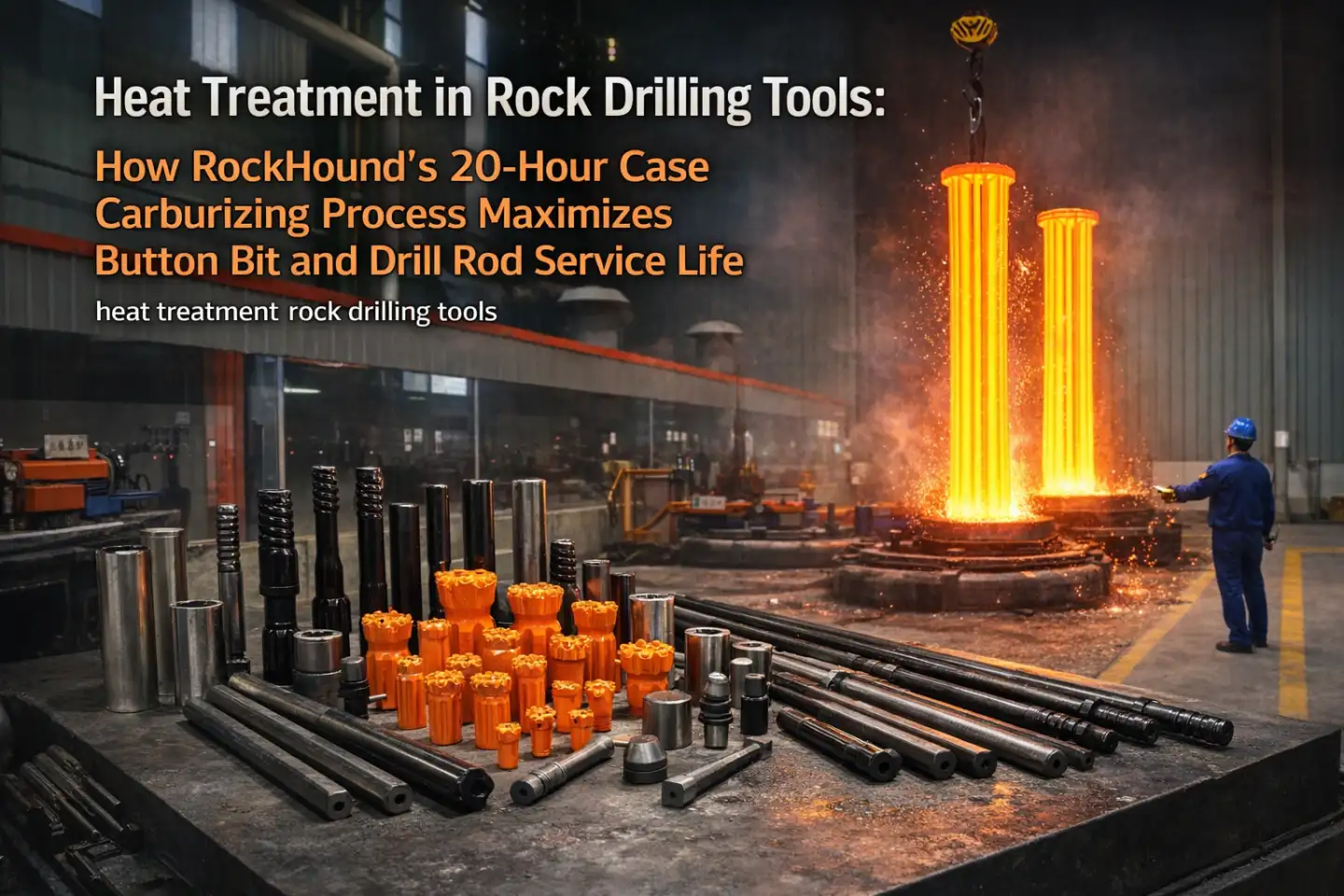
20-Hours Heat Treatment:Rock Drill Bits Manufacturing Process
Precision Heating & Atmosphere Control
1. Controlled-Atmosphere Furnace Technology
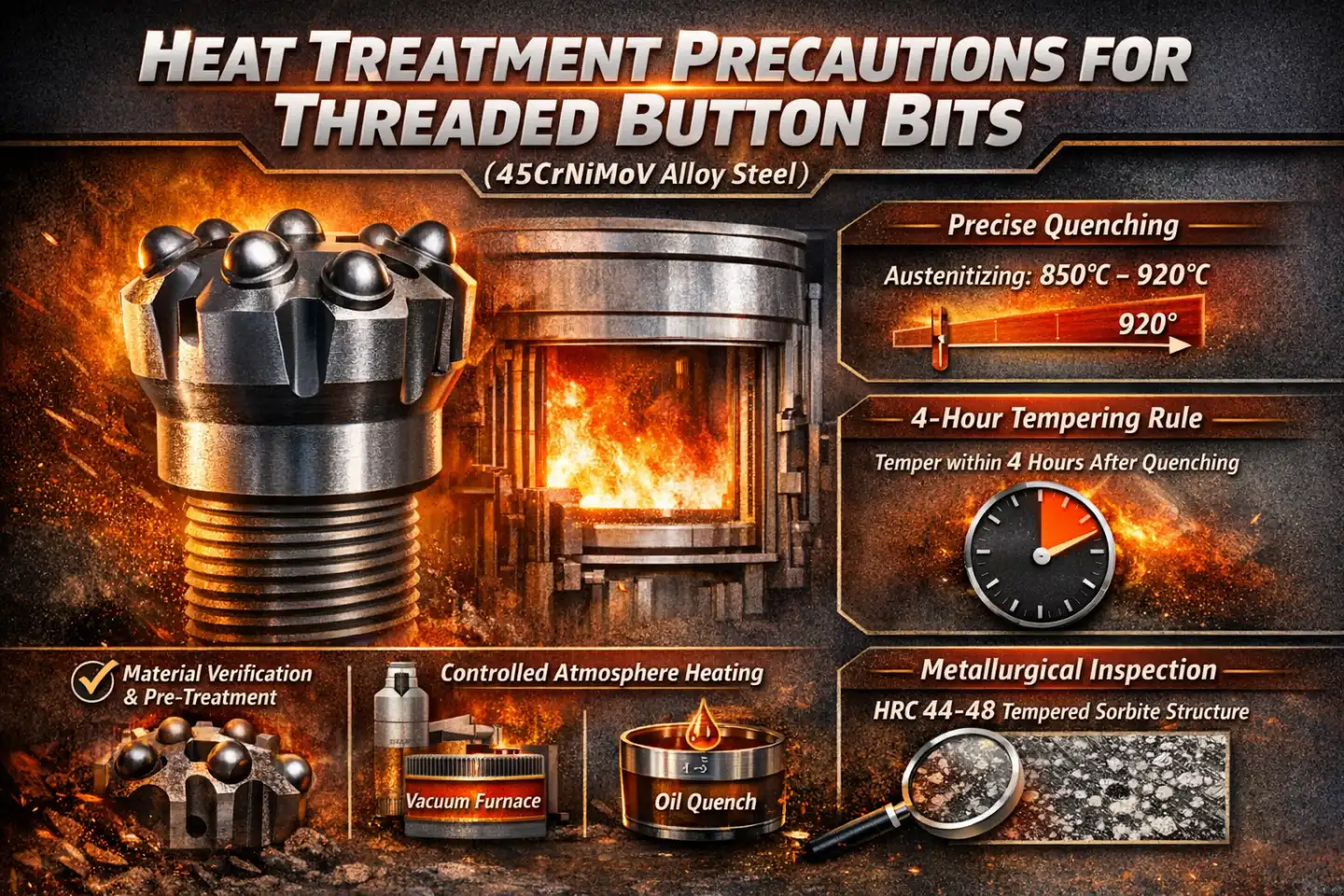
Open-fire furnace heating is incompatible with the quality requirements of globally competitive rock drilling tools. Recommended options include vacuum furnaces (highest quality, zero decarburization, ideal for tight-tolerance thread geometries) and sealed-quench multi-purpose furnaces (protective endothermic atmosphere, industry standard for volume production). Both eliminate oxidation and decarburization, preserving thread dimensional accuracy and surface carbon integrity.
2. Austenitizing (Quenching) Temperature: 850°C – 920°C
For 45CrNiMoV, the austenitizing temperature window must be strictly respected. This is the most process-critical parameter in the entire heat treatment sequence.
| Temperature Range | Value |
|---|---|
| Lower Limit (Min. Austenitizing) | 850°C |
| Optimal Working Range | 870°C – 900°C |
| Upper Limit (Hard Ceiling) | 920°C |
Overheating Risk: Sustained temperatures exceeding 920°C cause rapid austenite grain coarsening (grain growth). This is irreversible during the subsequent quench and manifests as a marked reduction in impact toughness — potentially causing premature shank fracture under dynamic drilling loads.
3. Staged Heating Protocol
Due to the geometrical complexity of threaded button bits — featuring flushing holes, thread relief grooves, and variable cross-sections — direct charging into a high-temperature furnace creates severe thermal gradients and risks distortional or even thermal shock cracking before the main cycle begins.
Preheating Stage: Slow-heat to 550°C – 650°C and hold for temperature equalization before ramping to the final austenitizing temperature. This eliminates steep cross-sectional thermal gradients and prevents distortional cracking.
Quenching Dynamics
1. Quenching Medium Selection
Fast Quench Oil (Recommended): The industry standard for 45CrNiMoV. Provides a cooling rate sufficient for complete martensitic transformation while minimizing thermal gradient stresses that cause quench cracking in thread roots and around flushing holes.
Water Quenching (Prohibited): Water’s dramatically higher heat extraction rate is incompatible with the complex geometry of threaded button bits. It virtually guarantees catastrophic quench cracking in thread roots, flushing hole edges, and other geometric stress concentration points.
2. Bath Agitation & Bit Orientation
Quenching oil must be actively circulated throughout the process. Bits should be submerged in an orientation that allows oil to flow freely through flushing holes. Stagnant oil pockets create localized vapor barriers (Wiki:Leidenfrost effect), resulting in soft spots and hardness non-uniformity that compromise fatigue resistance.
The Tempering Phase: Finding the "Sweet Spot"
1. The 4-Hour Tempering Rule
Tempering must commence within 4 hours of quench completion. The as-quenched martensite structure contains extremely high residual stresses. Delaying tempering beyond this critical window allows these stresses to accumulate and release as delayed longitudinal (quench) cracking — a failure mode that can manifest several hours after quenching, even in a part that appeared intact at the quench tank.
2. Avoiding Temper Embrittlement
45CrNiMoV is susceptible to Temper Embrittlement when held or slowly cooled through the 350°C – 500°C range. This phenomenon causes a significant reduction in notch toughness (ScienceDirect:Charpy impact energy) without any visible change in hardness — making it a particularly insidious failure mode.
| Parameter | Specification |
|---|---|
| Target Microstructure | Homogeneous Tempered Sorbite |
| Optimal Tempering Temperature | > 550°C (High-Temperature Tempering) |
| Target Hardness | HRC 44 – 48 |
Target Hardness Rationale: HRC 44–48 represents the engineering optimum for rock drilling — providing the best balance between fatigue strength (resisting cyclic crack initiation) and impact resistance (absorbing shock energy without brittle fracture). Hardness above HRC 50 introduces excessive brittleness; values below HRC 42 sacrifice critical abrasive wear resistance.
Managing Stress Concentrations
The geometric design of the bit body directly influences heat treatment outcomes and must be actively controlled:
Radius Transitions (Fillets): All sharp internal corners — particularly at thread relief grooves and flushing hole entries — must incorporate generous radius fillets. Sharp corners concentrate stress by factors of 2–5× and serve as preferred sites for quench crack initiation.
Thread Root Surface Finish: A fine surface finish (Ra ≤ 1.6 μm) in the thread root area minimizes micro-notch stress concentrations that can nucleate fatigue cracks under cyclic loading — even in a correctly heat-treated part.
Quality Assurance (QA) Checklist
| Testing Parameter | Specification / Requirement | Priority |
|---|---|---|
| Hardness Uniformity | Multi-point Rockwell testing (thread zone vs. face zone). Allowable deviation: ±2 HRC within a single part. | Critical |
| Microstructural Verification | Metallographic examination confirming homogeneous Tempered Sorbite. No retained austenite islands or untempered martensite zones permitted. | Critical |
| Decarburization Depth | Must remain within industry tolerances: typically < 0.1 mm effective decarburized layer depth on all critical surfaces. | Required |
| Non-Destructive Testing (NDT) | Magnetic Particle Inspection (MPI / MT) to detect surface and near-surface cracks in thread roots and flushing holes. | Required |
| Dimensional Inspection | Thread gauge inspection (Go/No-Go) post-heat treatment to confirm dimensional stability after thermal processing. | Required |
Conclusion
For manufacturers of Rock Drilling Tools, the heat treatment of 45CrNiMoV threaded button bits is a discipline of precision engineering. By controlling the furnace atmosphere, respecting the austenitizing temperature ceiling, selecting the correct quenching medium, and executing tempering within the critical 4-hour window, manufacturers can achieve the Tempered Sorbite microstructure that delivers the optimal hardness-toughness balance — and maximize service life in the field.
Related Product
FAQ
The recommended austenitizing temperature range is 850°C to 920°C, with an optimal working range of 870–900°C. Exceeding 920°C causes irreversible austenite grain coarsening that significantly reduces impact toughness and increases the risk of shank fracture under dynamic drilling loads.
Tempering must begin within 4 hours of quench completion. Delaying beyond this window allows untempered martensite stresses to accumulate, significantly increasing the risk of delayed longitudinal cracking.
industry-standard target for 45CrNiMoV is HRC 44–48, delivering the optimal balance between fatigue strength and impact toughness for demanding rock drilling applications.
Fast quench oil provides sufficient cooling for full martensitic transformation while maintaining manageable thermal gradient stresses. Water's dramatically higher heat extraction rate virtually always causes catastrophic quench cracking in the complex geometry of threaded bits.
A successful cycle produces homogeneous Tempered Sorbite (fine tempered martensite) throughout the cross-section. The presence of retained austenite, untempered martensite, or bainite patches indicates a process deviation requiring investigation before batch release.