
Description
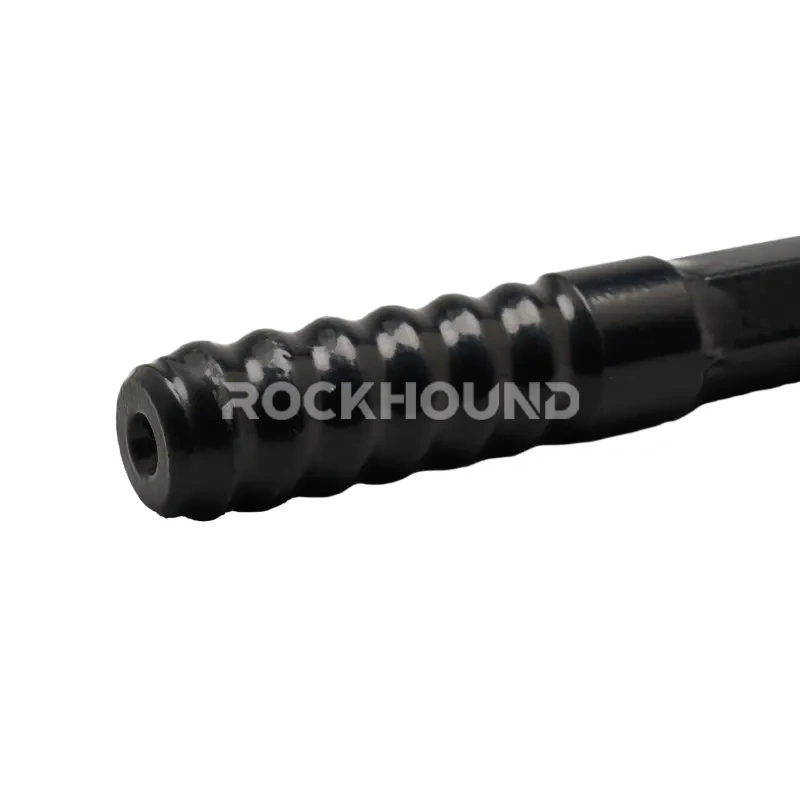
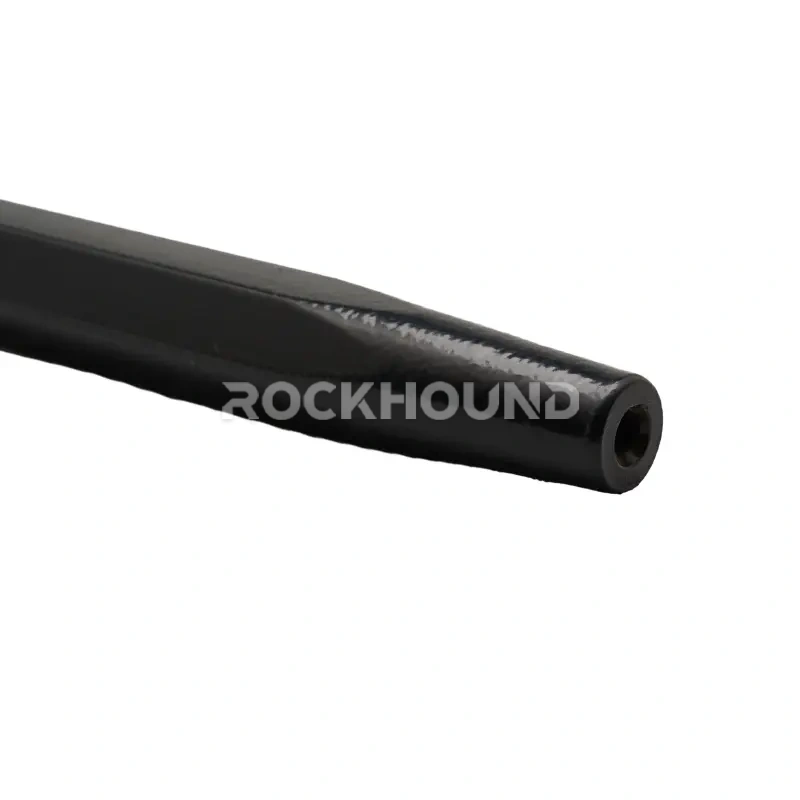
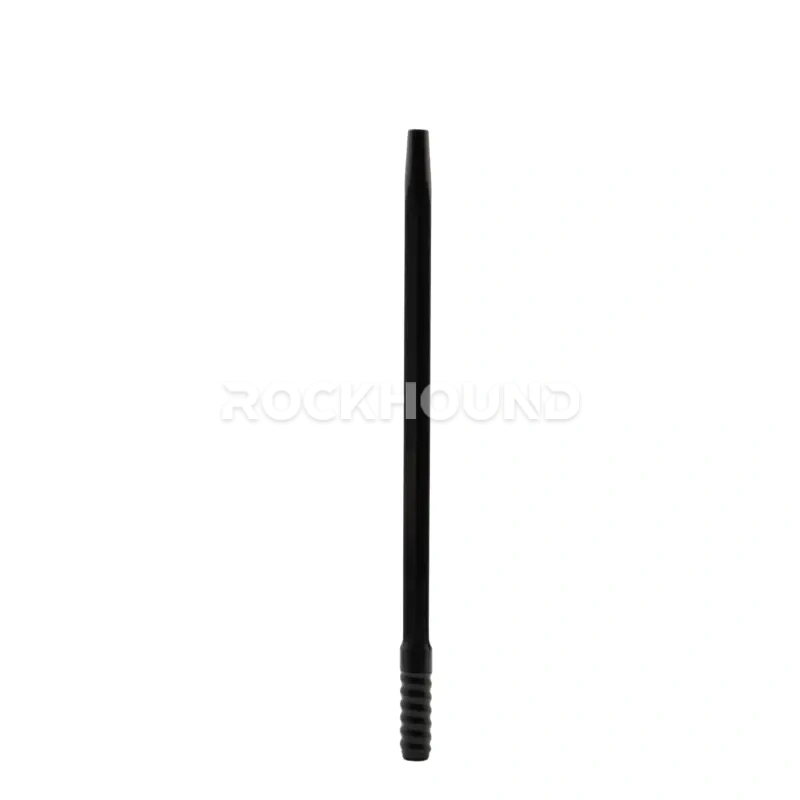
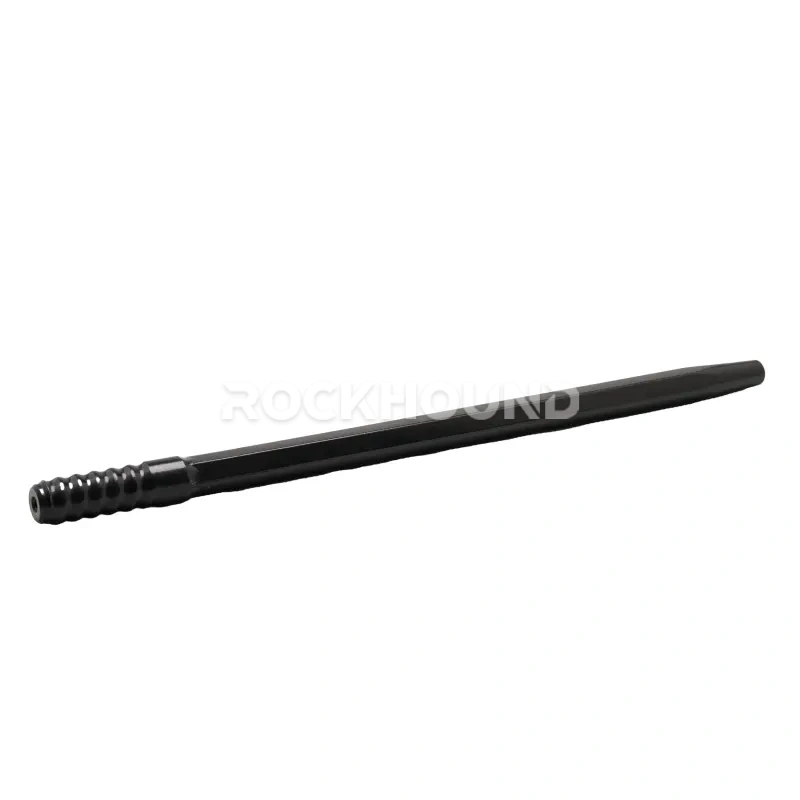
The R22-H22-R22(R25) Extension Rod from RockHound is an engineered light-duty rock drilling component designed to extend the drilling string between the shank adapter and the drill bit. Built around a 22mm hexagonal (H22) cross-section, it delivers consistent energy transfer, minimal hole deviation, and long service life across demanding underground and surface applications.
The rod is available with R22 threads for shorter lengths (500–600mm) and transitions to the heavier-duty R25 thread for lengths of 1000mm and above, accommodating the increased torque and bending stress that longer rods experience. This makes the R22-H22-R22(R25) series a versatile, scalable solution for drifting, tunneling, bench drilling, and narrow-vein mining operations.
Manufactured from ZK22CrNi3Mo (23CrNiMo) alloy steel and subjected to a proprietary 20-hour heat treatment cycle, every RockHound extension rod achieves a precise balance of surface hardness and core toughness — reducing the risk of premature breakage and thread galling that commonly plagues lower-grade rods.
🔗 Want to understand how extension rods fit into the full drilling string? Read: What Is an Extension Drill Rod? Types, Materials & Selection Guide
Features
ZK22CrNi3Mo (23CrNiMo) Alloy Steel
Sourced from certified steel mills, this premium chromium-nickel-molybdenum alloy delivers high core toughness and excellent surface hardness response — critical for absorbing the high-frequency impact of modern hydraulic rock drills without fatigue cracking.
Proprietary 20-Hour Heat Treatment
Each rod undergoes a controlled, 20-hour heat treatment process — far exceeding industry-standard cycles — ensuring uniform hardness distribution from the thread roots to the rod body. This directly translates to a longer service life and fewer mid-shift failures. 🔗 Learn more about our 20-hour heat treatment process
H22 Hexagonal Rod Section
The hexagonal profile provides superior rotational rigidity compared to round rods, reducing drill string torque loss and improving hole straightness — especially important in deep or deviated holes.
Dual Thread Compatibility: R22 & R25
Shorter rods (500–600mm) use the R22 thread, while longer rods (1000–1800mm) use the more robust R25 thread to handle elevated stress. This dual-thread design ensures compatibility across a wide range of shank adapters and coupling sleeves. 🔗 Explore how thread profiles are precision-machined
Optimized Flushing Channel Design
The H22 section geometry provides adequate annular space around the rod, enabling efficient air or water flushing to clear cuttings and cool the bit — extending both bit and rod service life.
CNC-Precision Thread Machining
Threads are machined to tight tolerances on CNC equipment, ensuring consistent make-up torque, reliable coupling engagement, and resistance to thread stripping under cyclic loading.
Specification
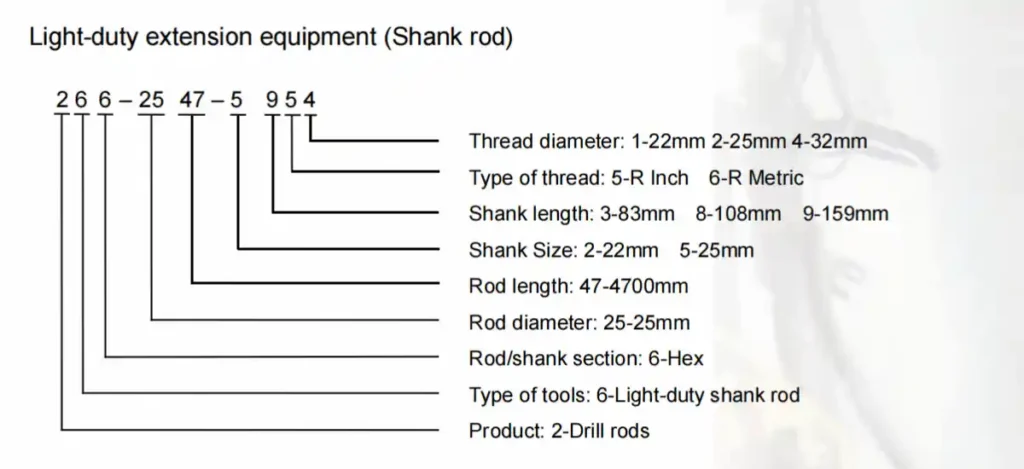
| Product Code | Length (mm) | Length (ft/in) | Section (H, mm) | Section (H, inch) | Thread | Weight (kg) |
|---|---|---|---|---|---|---|
| 256-2205-5151 | 500 | 1′ 7 5/8″ | 22 | 7/8″ | R22 | 1.6 |
| 256-2206-5151 | 600 | 1′ 11 5/8″ | 22 | 7/8″ | R22 | 1.9 |
| 256-2210-5252 | 1000 | 3′ 3 3/8″ | 22 | 7/8″ | R25 | 3.1 |
| 256-2212-5252 | 1200 | 3′ 11 1/4″ | 22 | 7/8″ | R25 | 3.7 |
| 256-2216-5252 | 1600 | 5′ 3″ | 22 | 7/8″ | R25 | 5.1 |
| 256-2218-5252 | 1800 | 5′ 10 7/8″ | 22 | 7/8″ | R25 | 5.8 |
Note: Rods ≤600mm use R22 threads; rods ≥1000mm use R25 threads to handle increased bending and torque loads at longer extensions.
All specifications subject to change without notice. For the latest product data or OEM inquiries, please contact RockHound directly.
- Material: ZK22CrNi3Mo (23CrNiMo) alloy steel
- Heat Treatment: 20-hour proprietary cycle
- Compatible Bits: Button bit, Cross bit, Chisel bit, X bit
- Compatible Components: Shank adapter, Coupling sleeve
Material — ZK22CrNi3Mo (23CrNiMo)
Material selection is the single most important factor in extension rod longevity. RockHound uses ZK22CrNi3Mo, also known commercially as 23CrNiMo, a chromium-nickel-molybdenum low-alloy steel specifically chosen for its dual capability: high surface hardness after heat treatment and excellent core toughness that resists brittle fracture.
Why 23CrNiMo outperforms standard alternatives:
| Property | ZK22CrNi3Mo (23CrNiMo) | Standard Carbon Steel |
|---|---|---|
| Core Toughness | High | Low–Medium |
| Fatigue Resistance | Excellent | Moderate |
| Response to Heat Treatment | Uniform & Controllable | Variable |
| Resistance to Premature Snapping | Very High | Low |
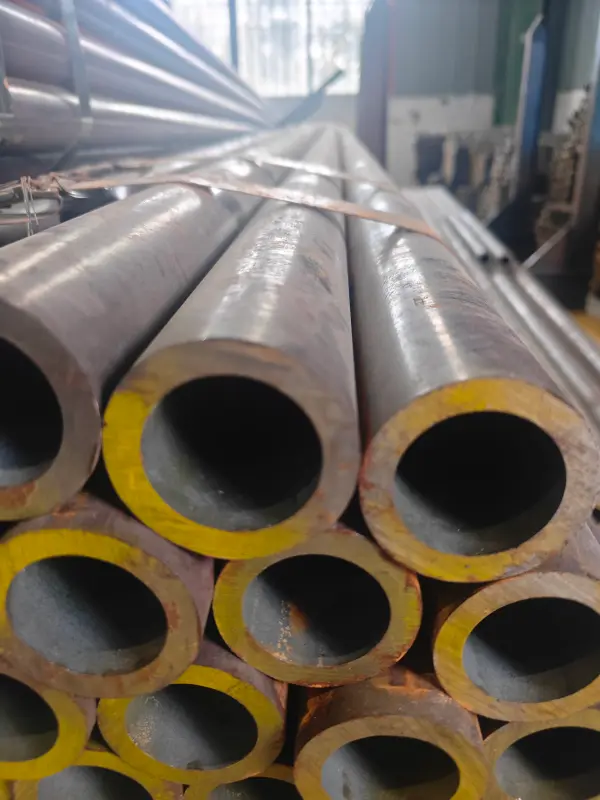
In high-frequency impact environments — typical of pneumatic and hydraulic drifters — carbon steel rods tend to develop micro-cracks at thread roots, leading to sudden snapping. 23CrNiMo’s molybdenum content significantly improves hardenability and resistance to temper brittleness, making it the material of choice for professional rock drilling operations.
🔗 Deep dive: 23CrNiMo vs Sanbar64 — which material is right for your application?
Application
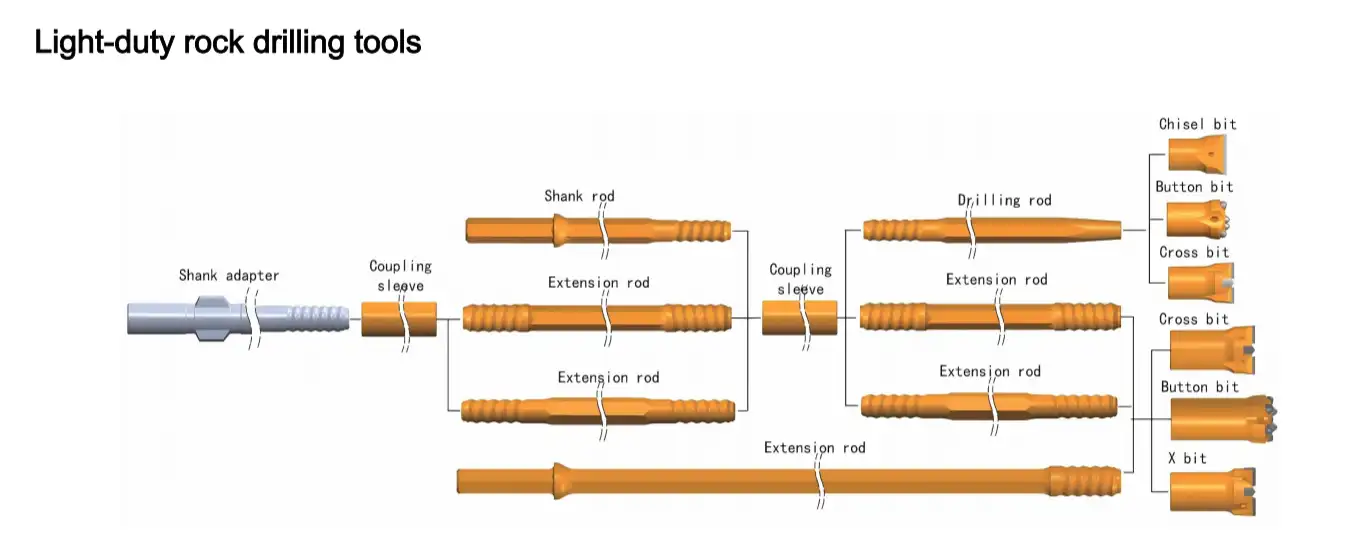
The R22-H22-R22(R25) Extension Rod is a core component in the light-duty rock drilling tool string, connecting the shank adapter (via coupling sleeve) through one or more extension rods to the drill bit. As shown in the system diagram, multiple extension rods can be coupled in series to reach the required drilling depth.
Typical use scenarios include:
- Underground Drifting & Tunneling: Ideal for small-to-medium cross-section headings where maneuverability and hole accuracy are critical. The H22 section’s rigidity helps maintain straight holes in variable rock conditions.
- Narrow-Vein Underground Mining: The compact H22 dimensions allow operation in restricted stope widths, making this rod the preferred choice for selective narrow-vein extraction.
- Small-Hole Bench Quarrying: For quarries drilling smaller-diameter blast holes (28–45mm range), the R22/R25 extension rod string provides a cost-effective, efficient solution.
- Construction Tunneling & Pipe Roofing: Used for pre-support bolt holes and probe drilling in civil tunneling projects.
- Compatible Drill Bits: Button bits (spherical & ballistic), cross bits, chisel bits, and X bits — all standard R22 or R25 female thread pattern.
Maintenance
Proper maintenance is the most cost-effective way to extend your rod service life. Follow these RockHound-recommended practices:
1.Thread Lubrication — Every Connection
Apply a premium thread grease (copper-based or molybdenum-disulfide type) to all male threads before make-up. This prevents galling, reduces friction-induced wear, and makes disassembly easier in cold or wet conditions.
2.Regular Thread Inspection
After every 50–100 operational hours (or as conditions dictate), inspect thread profiles for flattening, chipping, or deformation. A thread gauge is the most reliable inspection tool. Replace rods when the thread form is visibly degraded — do not attempt to re-cut threads in the field.
3.Rotation of Rod Ends
If your operation allows, rotate the “female” and “male” ends of the rod periodically to equalize wear across both thread interfaces.
4.Flushing Discipline
Maintain adequate flushing medium (water or air) flow at all times during drilling. Dry drilling rapidly overheats the coupling zone, accelerating thread wear and increasing the risk of thermal fatigue cracking.
5.Correct Storage
Store rods horizontally on dedicated rod racks, never stacked loosely in a pile where rod-to-rod impact can cause surface micro-cracks. Keep storage areas dry and away from corrosive fumes.
6.Avoid Re-using Visibly Damaged Rods
A rod with a visible bend, cracked body, or stripped thread is a safety hazard. The high-frequency stress of rock drilling will cause any existing defect to propagate rapidly. Remove it from service immediately.
How to Choose
Use this guide to select the correct R22-H22 extension rod configuration for your application:
Step 1 — Determine Required Hole Depth
The total drilling depth dictates how many rods you need and what lengths to combine. For depths up to ~2m, a single 1800mm rod may suffice. Deeper holes require multiple rods coupled in series.
Step 2 — Match Thread Type to Rod Length
- R22 thread: Use for 500mm and 600mm rods (lower torque, shorter string).
- R25 thread: Mandatory for 1000mm and longer rods to safely handle elevated bending moments and rotational torque without thread fatigue.
Step 3 — Verify Equipment Compatibility
Confirm that your shank adapter and coupling sleeves are spec’d for R22 or R25 threads. Mismatched thread profiles will cause immediate failure and safety risks.
Step 4 — Assess Rock Conditions
- Soft to medium rock (granite <100MPa): Standard 23CrNiMo rods perform excellently.
- Hard to very hard rock (>150MPa, abrasive): Prioritize rods from our 20-hour heat treatment batch — the superior fatigue resistance is essential in this environment.
Step 5 — Consider Flushing Requirements
In dusty or dry-drilling environments, ensure your drill rig can deliver sufficient flushing air pressure through the H22 rod’s annular space to prevent chip packing and overheating.
🔗 Still unsure? Read our comprehensive guide: What Is an Extension Drill Rod? Types, Materials & Selection Guide
FAQ
R22 and R25 refer to the thread profile size (diameter and pitch), with R25 being physically larger and stronger. RockHound uses R22 threads on shorter rods (500–600mm) where stress is lower, and R25 threads on rods 1000mm and above to safely manage the greater torque and bending loads that longer extension strings generate.
Not directly. You would need a transition coupling sleeve to connect between R22 and R25 components. In most light-duty operations, we recommend keeping the entire string consistent — either all-R22 (for short, shallow work) or all-R25 (for deeper holes). Contact our technical team for string design advice.
Standard carbon steels lack the hardenability and toughness combination required for high-frequency percussive drilling. ZK22CrNi3Mo (23CrNiMo) contains chromium, nickel, and molybdenum alloying elements that significantly improve fatigue strength and resistance to brittle fracture — especially at thread roots where stress concentration is highest. 🔗 Full comparison: 23CrNiMo vs Sanbar64
Service life depends heavily on rock hardness, drilling parameters, and maintenance discipline. Under normal light-duty conditions with proper lubrication and flushing, RockHound rods treated with our 20-hour heat treatment process consistently outperform industry averages. Many customers report 20–40% longer service life versus competitor rods. 🔗 Why our heat treatment makes the difference
Any drill bit with an R22 or R25 female thread is compatible, including: spherical button bits, ballistic button bits, cross bits (X-type), chisel bits, and X bits. Please confirm the thread size matches your chosen rod length (R22 for 500–600mm; R25 for 1000–1800mm).
Yes. RockHound can manufacture extension rods in custom lengths, thread combinations, or with alternative hex sizes upon request. Minimum order quantities apply. Please use the Request a Quote form below or contact our sales team directly.
Store rods horizontally on padded or wooden rod racks, away from moisture, direct sunlight, and sources of chemical corrosion. Never allow rods to contact each other without padding during transport — impact-induced surface micro-cracks are a common cause of premature in-service failure.