
Description
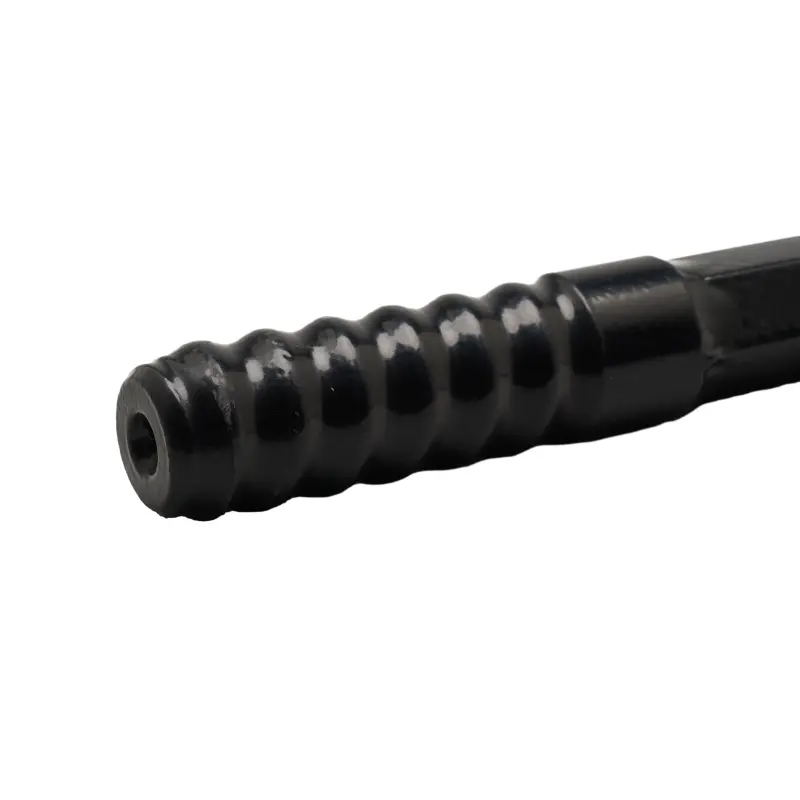
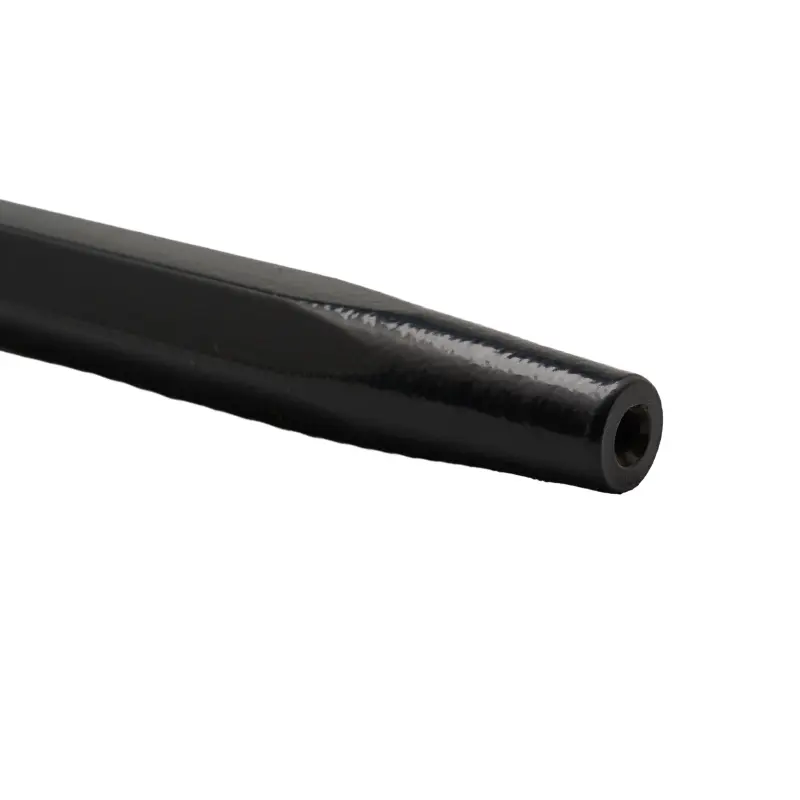
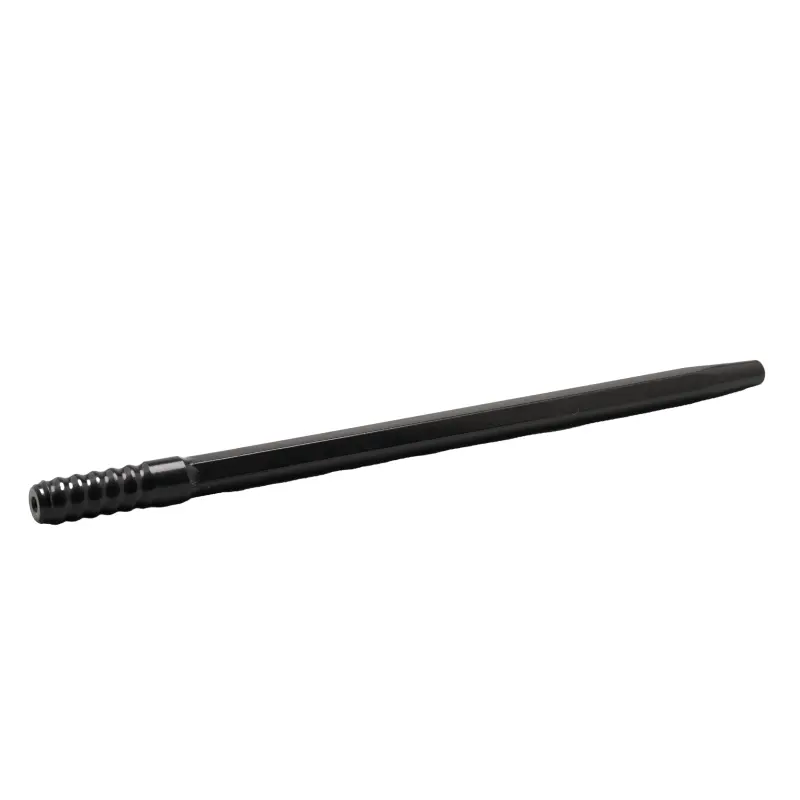
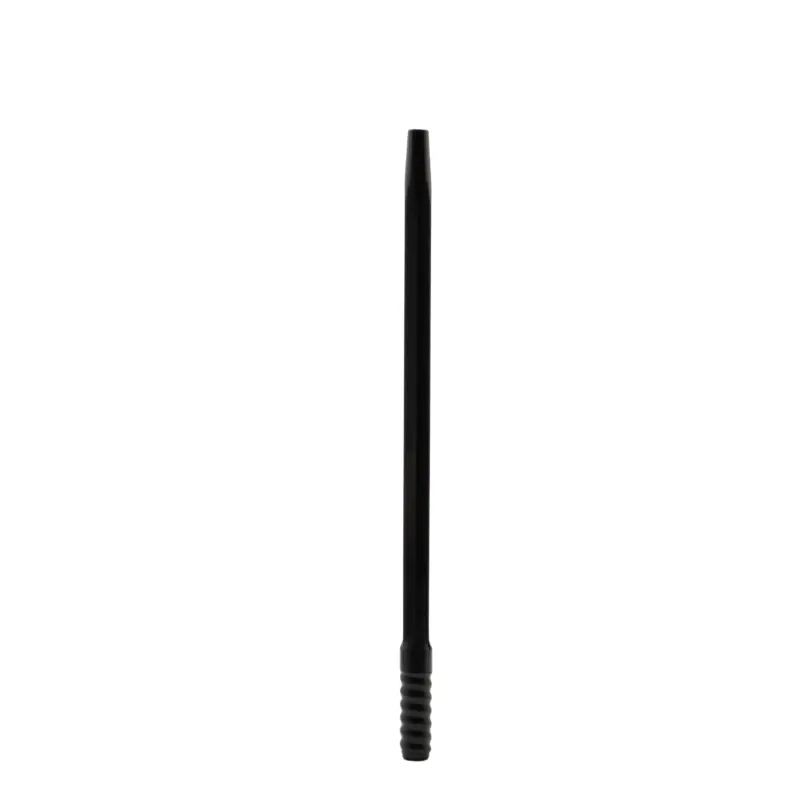
The RockHound H25-R25(R32) 7° Tapered Rock Drilling Rod is a precision-engineered, light-duty rock drill rod designed for consistent penetration performance in small-hole drilling applications. Manufactured from 23CrNiMo alloy steel with a full-length carburizing heat treatment process, this 25mm (1″) hex rod delivers the toughness, fatigue resistance, and bending strength that demanding rock drilling environments require.
Available in four standard lengths — 1000mm, 2200mm, 2600mm, and 2800mm — with compatible R25 and R32 thread profiles and a 7° taper, the H25-R25(R32) rod integrates seamlessly into light-duty top hammer drill systems. Whether you’re operating in a quarry, underground tunnel, or construction excavation site, this drill rod for hard rock is built to reduce downtime and extend service intervals.
At RockHound, every rod begins with verified 23CrNiMo steel billets and undergoes a controlled 20-hour deep carburizing heat treatment — a process that creates a hard, wear-resistant outer case while preserving a tough, impact-absorbing core. The result is a mining drill rod that resists fatigue cracking under high-frequency percussion stress while maintaining dimensional accuracy at the thread and taper connection points.
Key Features
| Key Features | Description |
|---|---|
| ① 23CrNiMo Alloy Steel | The rod body is made from premium 23CrNiMo alloy steel, offering superior toughness, fatigue strength, and hardenability for high-impact drilling environments. |
| ② 7° Standard Taper Connection | Provides reliable mechanical locking, efficient energy transfer, and quick assembly/disassembly in the field. |
| ③ R25 / R32 Thread Compatibility | Available in both R25 and R32 threads, compatible with a wide range of light-duty drill rigs and coupling sleeves. |
| ④ 20-Hour Deep Carburizing | Proprietary 20-hour heat treatment creates a hardened surface layer with a tough core, ideal for cyclic stress and bending loads. |
| ⑤ Precision Thread Processing | CNC-machined threads with tight tolerances for excellent fit and durability. Learn more about thread processing → |
| ⑥ Multiple Lengths Available | Standard lengths from 1000mm to 2800mm, perfect for light-duty quarry, tunneling, and construction applications. |
Specifications
| Product Code | Length (L) mm | Length (L) ft/in | Hex Size (H) | Thread | Taper | Weight (kg) |
|---|---|---|---|---|---|---|
| 246-2510-5207 | 1000 | 3′ 3 3/8″ | 25mm (1″) | R25 | 7° | 3.7 |
| 246-2522-5407 | 2200 | 7′ 2 5/8″ | 25mm (1″) | R32 | 7° | 8.7 |
| 246-2526-5407 | 2600 | 8′ 6 3/8″ | 25mm (1″) | R25 | 7° | 10.1 |
| 246-2528-5407 | 2800 | 9′ 2 1/4″ | 25mm (1″) | R25 | 7° | 10.9 |
Custom lengths and OEM marking available on request. Logo printing is supported; maximum logo print area: 100 × 100 mm.
Applications
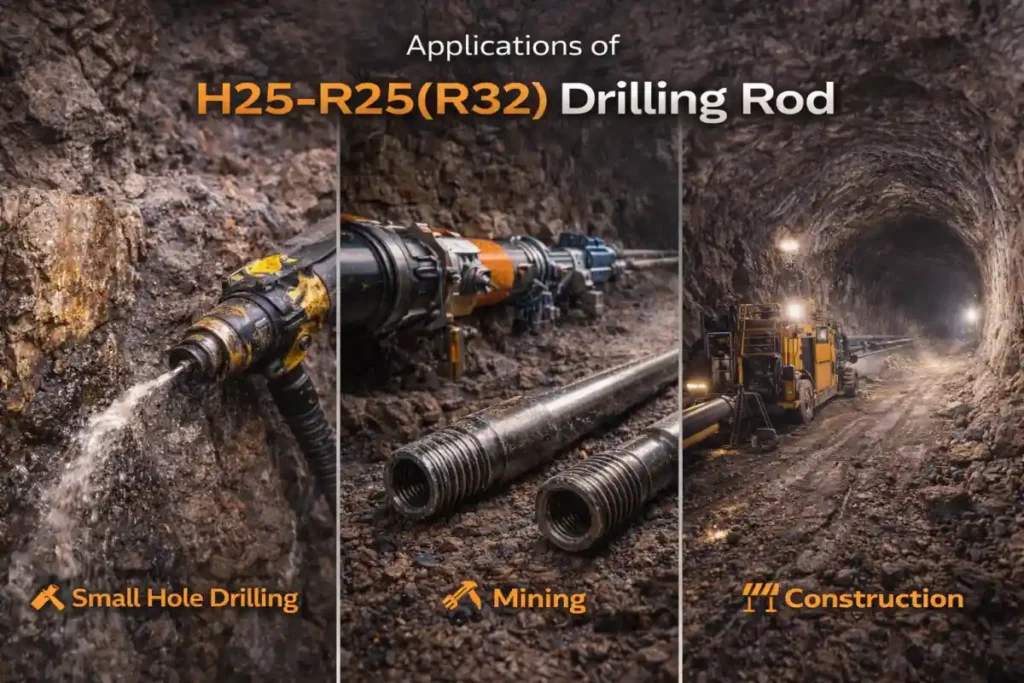
The H25-R25(R32) 7° Tapered Rock Drilling Rod is designed for light-duty top hammer drilling applications across a broad range of industries:
- Quarrying — small-diameter blasthole drilling in limestone, granite, and sandstone formations
- Underground Mining — development headings, drifting, and production drilling in narrow-vein ore bodies
- Construction Excavation — rock anchoring, foundation drilling, and slope stabilization
- Infrastructure Tunneling — face drilling and perimeter holes in tunnel cross-sections
- Geotechnical Investigation — lightweight drill strings for exploration boreholes
- Demolition & Secondary Breaking — connecting to hand-held and rig-mounted hydraulic rock breakers
This drill rod for hard rock is particularly well-suited to formations with a uniaxial compressive strength (UCS) ranging from 80–200 MPa, including granite, basalt, quartzite, and hard limestone — rock types where tapered connection geometry outperforms screw-thread systems in speed of coupling and ease of rod removal under confined conditions.
Maintenance & Care
Proper maintenance of mining drill rods directly impacts drill string service life, energy efficiency, and total cost per meter drilled.
In-Field Inspection Checklist
- ✅ Inspect taper sockets for galling, wear rings, or deformation before each shift
- ✅ Check hex cross-section for cracks, bends, or corrosion at coupling zones
- ✅ Verify thread form integrity — worn threads reduce energy transfer and risk of rod jamming
- ✅ Measure rod straightness — bent rods increase borehole deviation and accelerate coupling wear
- ✅ Check flushing hole is clear and unrestricted
Lubrication Apply a light film of rock drill oil or equivalent lubricant to the taper and thread connections before coupling. This reduces fretting wear at the connection interface and prevents corrosion bonding that makes rod disassembly difficult in wet underground environments.
Rotation & Reversal Protocol To prevent taper jamming, always apply a brief reverse-rotation impulse before withdrawing the rod from the hole. This breaks the interference fit before pulling, protecting both the taper socket and the bit shank.
Storage Store rods horizontally on padded racks in a dry environment. Avoid standing rods vertically unsupported for extended periods — this can induce gradual bending in longer lengths (2600mm+).
Retirement Criteria Retire a rock drill rod when:
- Visible fatigue cracks appear at the hex-to-taper transition zone
- Taper socket wear exceeds manufacturer tolerance (typically >0.3mm radial wear)
- Rod straightness deviation exceeds 1mm per 1000mm of length
- Thread flanks show erosion or loss of form
How to Choose the Right H25 Tapered Drill Rod
Selecting the correct drill rod for hard rock involves matching four key parameters to your application:
① Rod Length Choose the shortest rod that reaches your target depth. Longer rods increase bending stress and borehole deviation risk. For holes deeper than 2800mm, consider transitioning to an extension rod system with threaded connections.
| Hole Depth Target | Recommended Length |
|---|---|
| Up to 1.2m | 1000mm |
| 2.0m – 2.5m | 2200mm |
| 2.5m – 3.0m | 2600mm |
| 2.8m – 3.2m | 2800mm |
② Thread Profile: R25 vs R32 R25 thread is the standard for most light-duty drill rigs in the 25mm hex class. R32 thread offers a larger contact area and is preferred when your rig or coupling sleeve is specified for R32. Always confirm your drill rig and bit thread specification before ordering.
③ Taper Angle The 7° taper is the industry standard for light-duty tapered rock drilling systems worldwide. It is compatible with the vast majority of tapered button bits, cross bits, and chisel bits used in H25 hex drill systems.
④ Rock Type & Hardness For rock with UCS above 150 MPa (very hard granite, quartzite), ensure your bit selection matches the rod — a premium carbide button bit paired with a 23CrNiMo rod provides the optimal hard rock drilling system. The 23CrNiMo steel rod body resists the higher stress waves generated when drilling into extremely hard formation.
Need help deciding between a tapered and threaded rod system for your project? Read our comparison guide: Tapered vs Threaded Drill Rods: Which One Should You Choose?
FAQ
"H25" refers to the hexagonal shank size of 25mm (1 inch), which defines the cross-sectional shape and dimension of the rod body. "R25" and "R32" indicate the two available thread connection standards at the rod end. R25 is suited for lighter drilling setups, while R32 handles slightly more demanding applications. When ordering, confirm which thread type matches your drill bits and equipment.
The 7-degree taper refers to the angle of the tapered end that connects to your drill bit. This is an industry-standard angle that ensures a secure, self-centering fit between the rod and the tapered button or chisel bit. A precise 7° taper minimizes wobble during percussion drilling, reduces energy loss at the connection point, and extends the working life of both the rod and the bit.
The decision comes down to your existing drill bits and drilling equipment. R25 threads are typically used in lighter handheld rock drills and pair with R25 tapered bits. R32 threads are slightly larger and used where higher percussive energy or heavier equipment is involved. Always match the rod thread to your bit thread — mismatching will cause connection damage and safety risks. If you are unsure, check the thread specification printed on your existing bits or contact us with your drill model for confirmation.
Four practices make the biggest difference in rod longevity. First, always apply high-quality thread grease to the R25 or R32 threads before connecting the bit — dry threading accelerates wear and galling. Second, use proper water or air flushing during drilling to keep the rod cool and prevent heat buildup that can alter the steel's mechanical properties. Third, periodically check the rod for straightness — even slight bending puts uneven stress on the rod and bit, leading to early failure. Fourth, store unused rods in a dry location away from moisture to avoid stress corrosion.
These rods are made from ZK22CrNi3Mo alloy steel — a chromium-nickel-molybdenum grade specifically selected for percussive drilling tools. This material delivers high impact toughness to withstand thousands of percussive blows per minute, superior fatigue resistance to prevent cracking under cyclic stress, and good overall durability in medium-to-hard rock conditions. It is one of the most commonly specified steels for professional-grade taper rods.