
Description
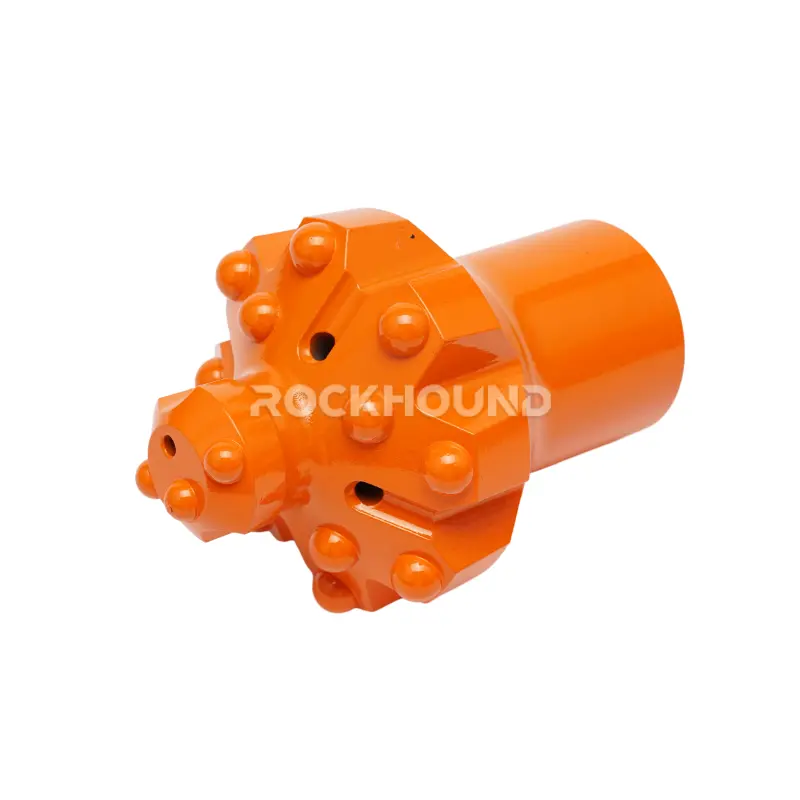
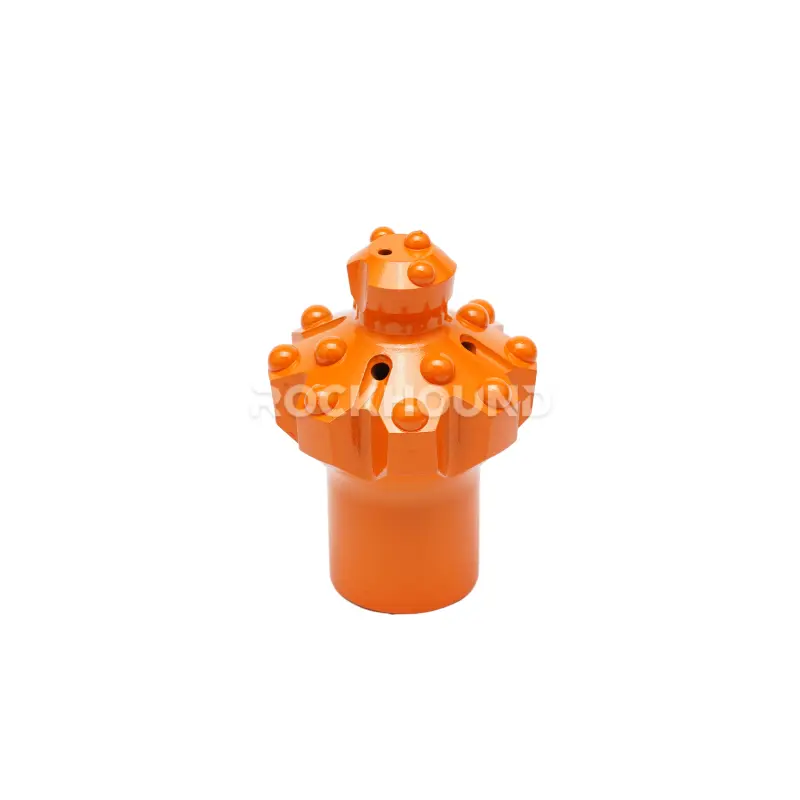
R35 reaming bits enlarge a pre-drilled pilot hole to a larger final diameter in a single pass. RockHound builds these bits for underground mining, drifting, and tunneling operations where top hammer drill systems run at high impact energy. The R35 thread shank connects directly to your existing drill string — no adapter needed on compatible rigs.
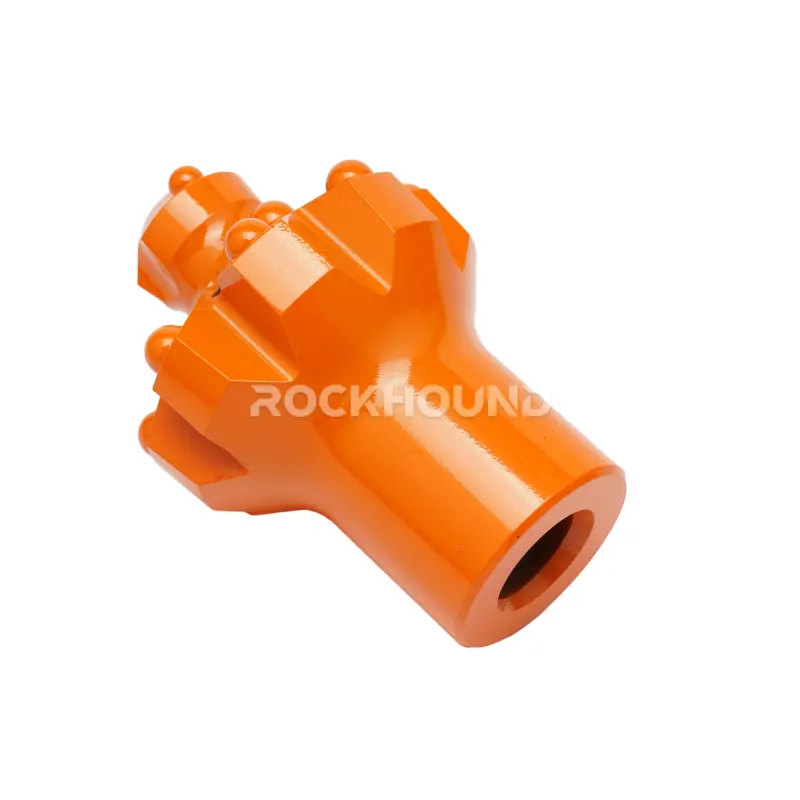
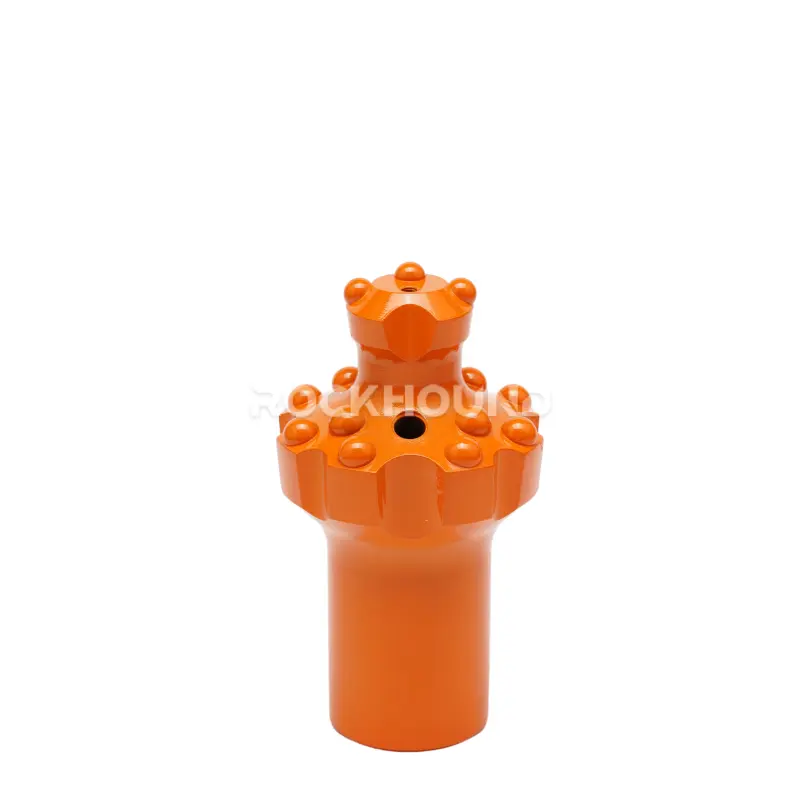
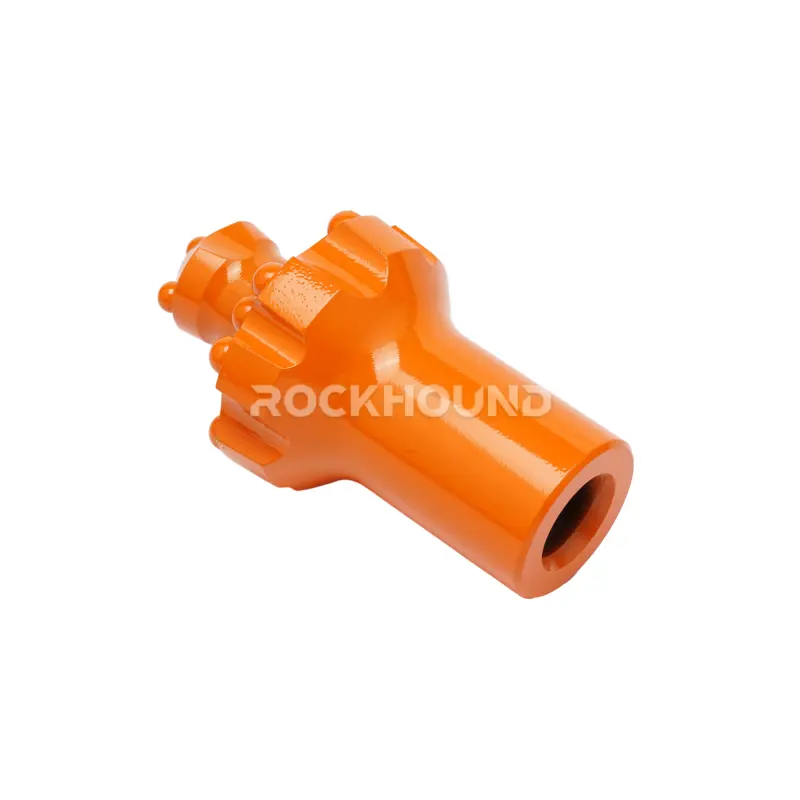
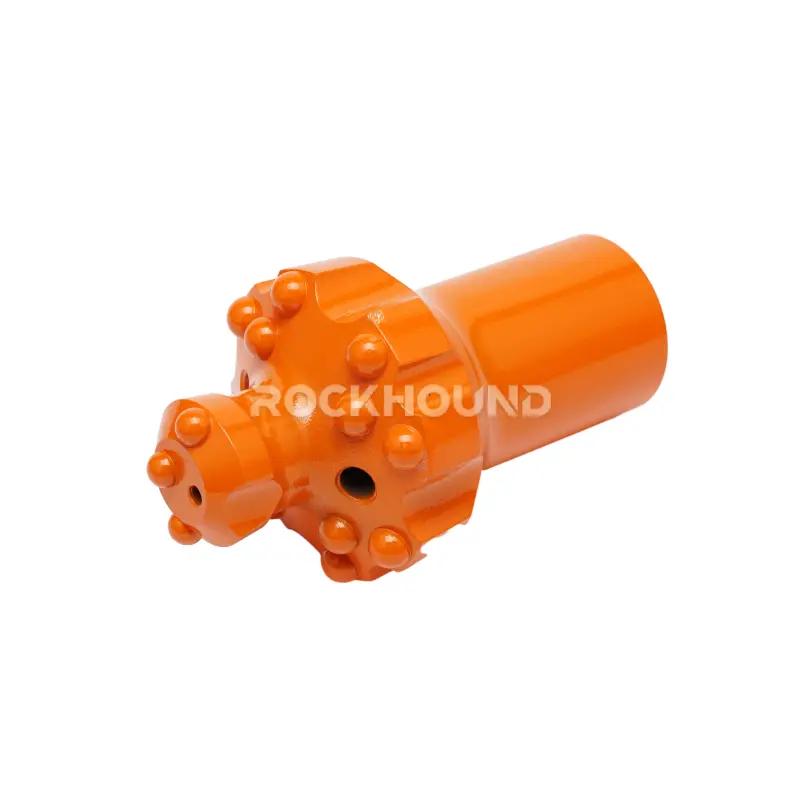
Two face designs are available: the pilot reaming bit uses a protruding guide that centers the tool inside the pilot hole, and the dome reaming bit uses a rounded face suited to specific rock types and blasting configurations. Both designs use YK05 tungsten carbide buttons and 45CrNiMoVa alloy steel bodies.
Features
45CrNiMoVa alloy steel body
High-strength vanadium alloy with strong toughness and fatigue resistance. Handles the repeated shock of top hammer impact without body fracture.
YK05 tungsten carbide buttons
Grade YK05 balances hardness with wear resistance. Well-suited to abrasive and hard rock formations where softer carbide grades wear down fast.
Wide flushing grooves
Large flushing channels clear rock cuttings quickly. This keeps the bit face clean, lowers drilling temperature, and reduces the risk of jamming.
CNC-machined R35 thread
Precise thread geometry creates a tight fit with drill rods. Less thread slop means less energy loss per hammer blow and better hole straightness.
Pilot guide or dome face
Choose a pilot design for controlled hole alignment, or a dome design for different rock structures and blasting requirements
Custom logo marking
Laser etching and stamping available. Maximum logo area: 100 × 100 mm. Supports distributor and OEM branding on the bit body.
Specifications
| Type | Diameter (mm) | Diameter (inch) | Gauge Buttons | Centre Buttons | Angle | Thread | Product Code | Weight (kg) |
|---|---|---|---|---|---|---|---|---|
| Pilot Reaming Bit | 89 | 3 1/2″ | 12 × 12 mm | 3 × 10 mm | 35° | R35 | 100-8915-5505 | 3.2 |
| Pilot Reaming Bit | 102 | 4″ | 12 × 13 mm | 3 × 10 mm | 35° | R35 | 100-0215-5505 | 3.6 |
| Dome Reaming Bit | 127 | 5″ | 12 × 13 mm | 3 × 13 mm | 35° | R35 | 107-2715-5505 | 4.8 |
How Does R35 Reaming Drill Bits Work?
A standard button bit opens a smaller-diameter hole first. This guide hole sets the alignment axis for the reaming pass.
Thread the reaming bit onto your drill rod using the R35 connection. The pilot guide (on pilot-type bits) enters the existing hole and centers the tool.
The surface drill rig or underground jumbo delivers repeated hammer blows down the drill string. The YK05 carbide buttons crush and chip rock in a 360° ring around the pilot hole, expanding the diameter to the final required size.
Compressed air or water travels down the drill string and exits through the flushing holes on the bit face. Cuttings are carried back up the annulus and out of the hole, keeping penetration rate high.

For a full breakdown of the impact-rotation-flushing cycle, see: How Top Hammer Button Bits Work →
Application Scenarios
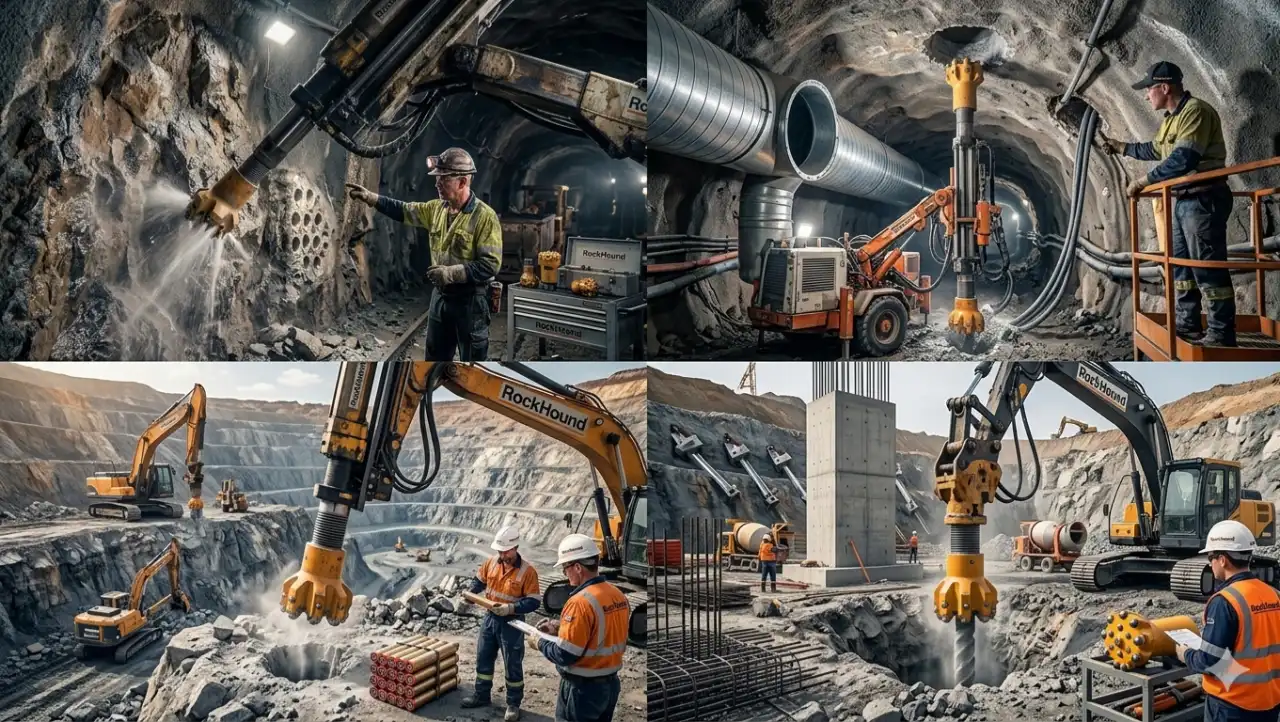
Tunneling
Enlarges relief holes in tunnel faces to improve blast fragmentation and reduce fly-rock.
Drifting
Creates large-diameter holes for ventilation ducts, cable routing, or drainage in horizontal mine drives.
Civil rock excavation
Foundation drilling, rock anchoring, and infrastructure construction where hard rock requires oversized holes.
Production drilling
Used in stopes and open faces where final hole diameter must match explosive cartridge size exactly.
Materials & Manufacturing
The bit body is forged from 45CrNiMoVa alloy steel — a chromium-nickel-molybdenum-vanadium composition widely used in top hammer tooling because vanadium refines grain structure and increases fatigue strength under cyclic impact. Each bit goes through a 20-hour heat treatment process that builds a tough core while keeping the surface hard. That combination resists both chipping and brittle fracture.
YK05 carbide buttons are press-fitted into pre-drilled sockets on the bit face. Grade YK05 sits at around 89–90 HRA hardness with controlled cobalt binder content, giving it enough toughness to handle intermittent hard inclusions without the button shattering.
How to Choose the Right R35 Reaming Bit
Final hole diameter
Match the bit diameter to your required blast hole or installation size: 89 mm (3 1/2″), 102 mm (4″), or 127 mm (5″).
Rock hardness
For rock above 200 MPa UCS, the dome reaming bit with larger centre buttons (3 × 13 mm) handles the higher contact stress better.
Face design
Pilot bits work best where hole direction control matters. Dome bits suit face drilling patterns where no guide hole is pre-drilled.
Pilot hole size
Check that your existing pilot hole diameter is compatible with the reaming bit’s guide section. Wrong sizing causes guide wear and poor alignment.
Maintenance
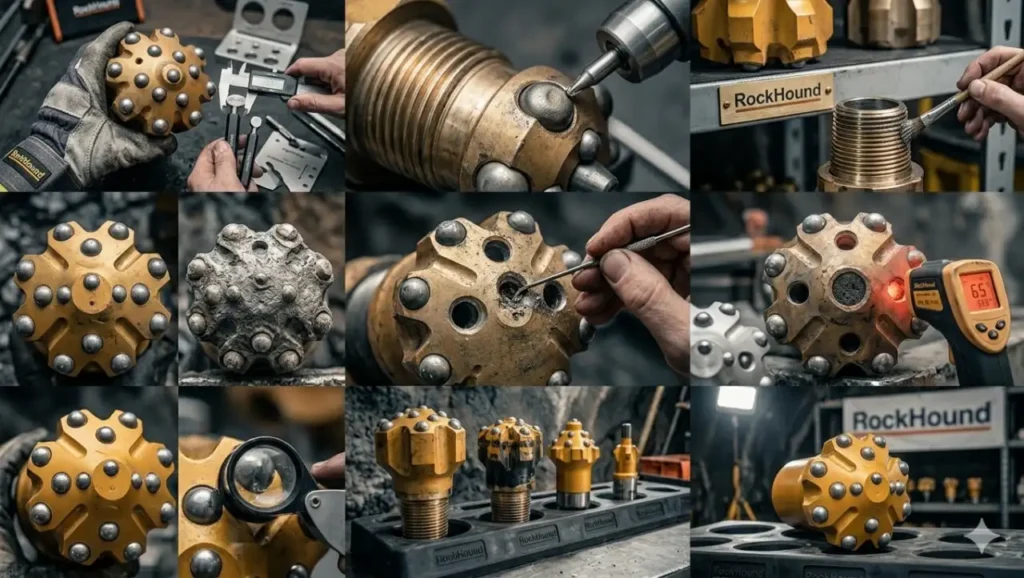
- Check gauge and centre buttons after each shift. Look for flat spots, “snakeskin” surface cracking, or chipping — any of these means the button needs regrinding before the next run.
- Regrind buttons before wear reaches the button shank. Waiting too long forces the steel body to contact the rock, which causes rapid body erosion and shortens bit life sharply.
- Clean the R35 thread after each use. Remove grit and rock dust from the thread faces, then apply thread grease before storage. Dry threads gall on the first re-make.
- Inspect flushing holes for blockage each shift. A blocked flushing channel raises bit face temperature and accelerates carbide wear — clear any blockages with a wire pick before drilling.
- Store bits standing upright on rubber racks, not stacked flat. Contact between button faces causes chipping during transport and handling.
Custom Branding
Logo marking for distributors and OEM customers
We support laser etching and mechanical stamping on the bit body. Maximum logo area: 100 × 100 mm. Available on all standard R35 sizes. Minimum order quantities apply — contact us for details.
FAQ
A reaming bit expands an existing pilot hole to a larger final diameter in one drilling pass. In underground mining, this is used to create holes for explosives, ventilation pipes, cable routing, and drainage — anywhere a standard button bit is too small for the final application.
A pilot reaming bit has a protruding guide pin that centres the tool inside a pre-drilled hole. This controls direction and reduces deviation in long holes. A dome reaming bit has a rounded, convex face without a guide, making it a better fit for specific blasting geometries or where no pilot hole is pre-drilled. Both use the same R35 thread and YK05 carbide buttons.
These bits use an R35 thread — a 35 mm rope thread standard common on small-to-mid diameter top hammer drill rigs. It is compatible with standard R35 drill rods and shank adapters. If your rig uses R32, T38, or T45 connections, you need a different bit range.
Replace or regrind the bit when gauge buttons show flat spots larger than 1/3 of the button diameter, when snakeskin cracking appears on the carbide surface, or when penetration rate drops more than 30% from your baseline. Running a worn bit increases fuel consumption and risks getting the string stuck in the hole.
The bit body is forged from 45CrNiMoVa alloy steel and heat-treated for 20 hours to build core toughness and surface hardness. The cutting buttons are YK05 grade tungsten carbide, press-fitted into the body. This material pairing is the current industry standard for top hammer tooling in hard and abrasive rock.
Yes. RockHound supports laser etching and mechanical stamping on the bit body for distributors and OEM customers. The maximum logo area is 100 × 100 mm. Contact us with your artwork file for a quote and lead time.