Table of Contents
Introduction: Why Manufacturing Quality Defines Drilling Performance
In demanding applications — hard-rock mining, underground tunneling, geological exploration, and civil construction — the performance ceiling of any rock drill bit is set long before it reaches the jobsite. It is determined in the foundry, the CNC machine shop, and the heat treatment furnace.
At RockHound, every button bit we produce is engineered around four non-negotiable performance criteria:
- Penetration Rate (ROP): Optimal bit geometry to maximize footage per shift
- Impact Toughness: Resistance to carbide shattering under high-frequency percussion
- Flushing Efficiency: Streamlined cuttings-evacuation geometry to prevent borehole plugging
- Service Life: Extended wear resistance to minimize bit changes and downtime costs
The following technical breakdown details each stage of RockHound’s 7-step manufacturing process — from raw material certification through final protective coating.
Step 1 — Raw Material Qualification & Preparation
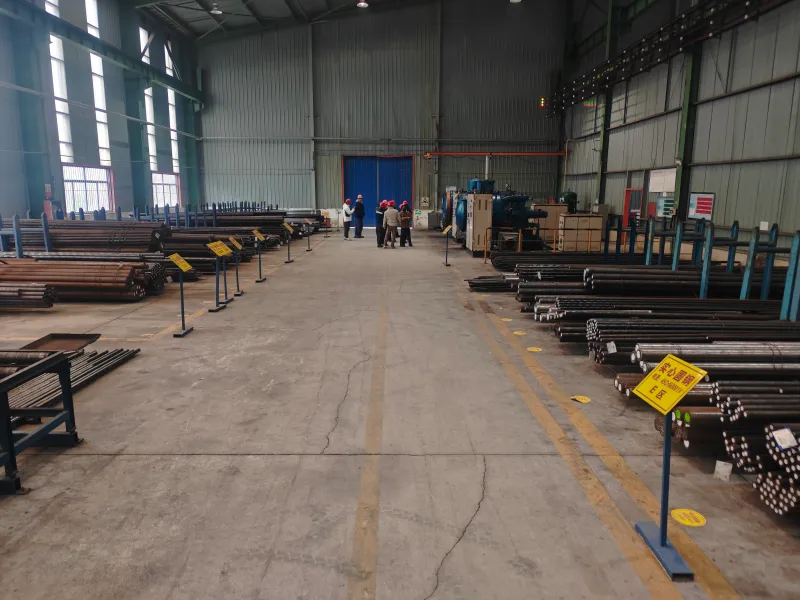
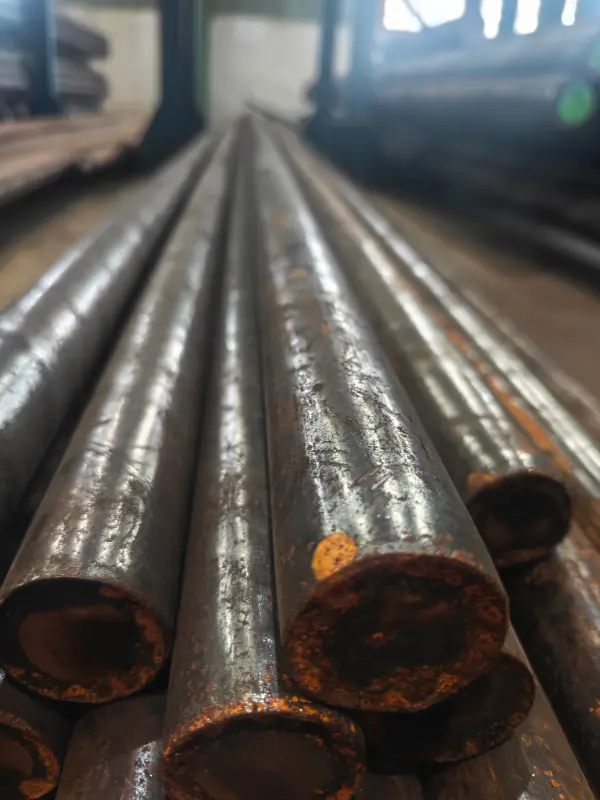
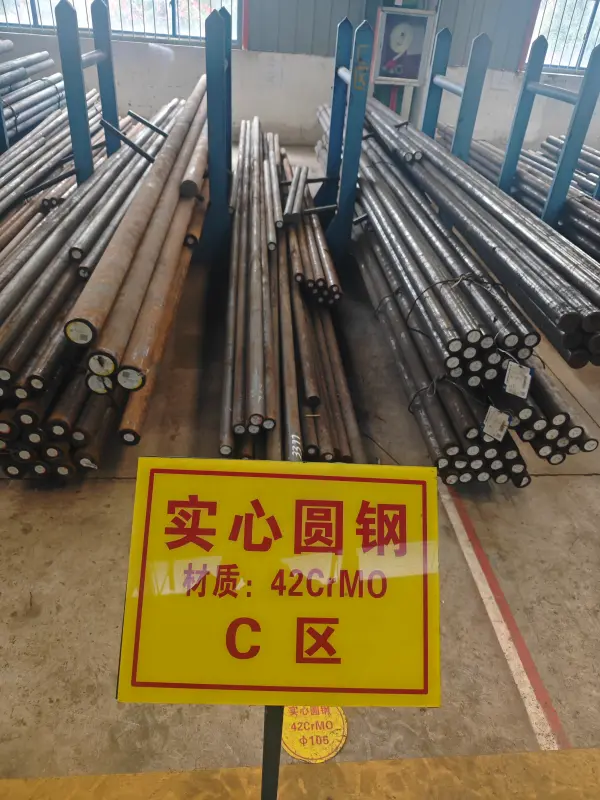
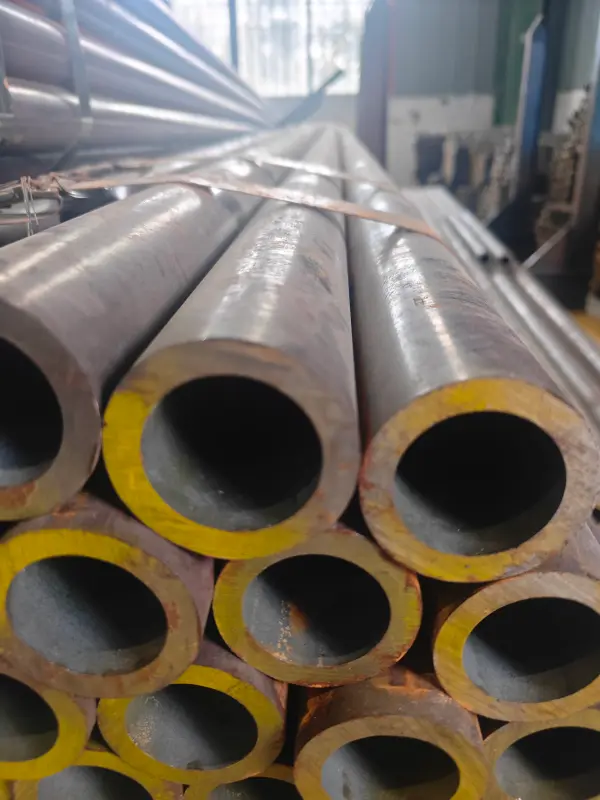
Bit Body (Shank) Alloy Selection
45CrNiMo1V: High-strength Chromium-Nickel-Molybdenum-Vanadium Alloy Steel.
Alloy Grade: YK05
Cutting Process: High-precision CNC metal band saw is used. Cutting is performed according to standard tolerance requirements to ensure end-face flatness.Provide a reference for subsequent processing.
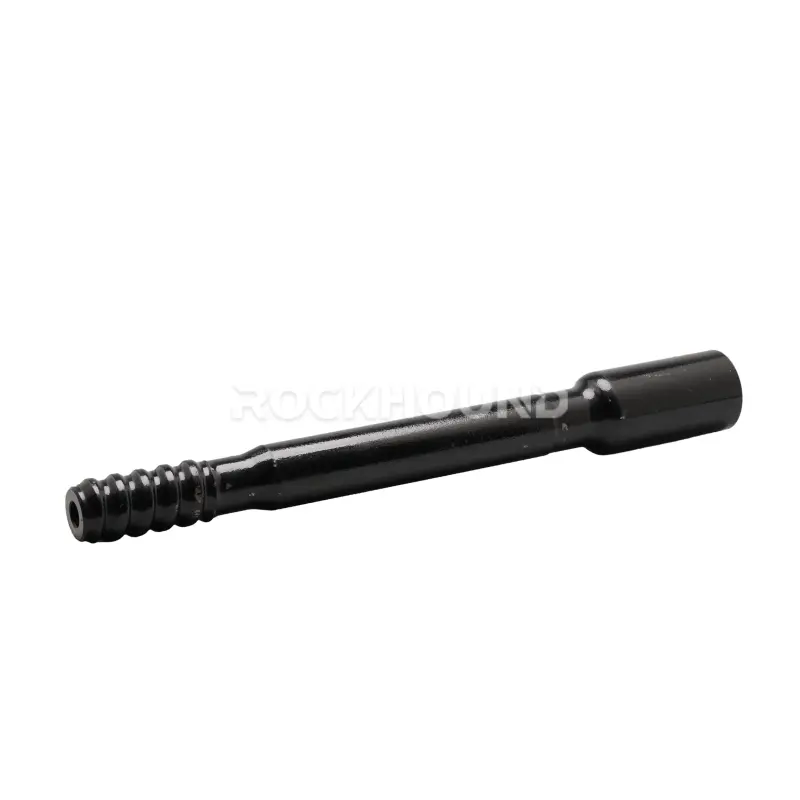
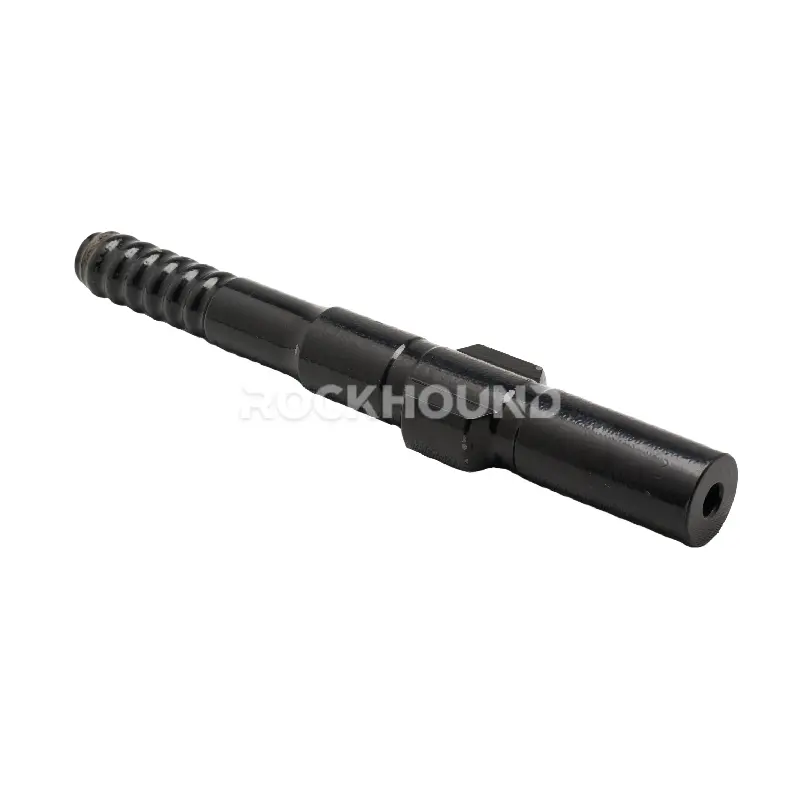
The structural integrity of a button bit begins with steel grade selection. RockHound uses the following alloy steel specifications depending on bit type:
| Bit Type / Component | Steel Grade | Key Alloying Elements & Purpose |
|---|---|---|
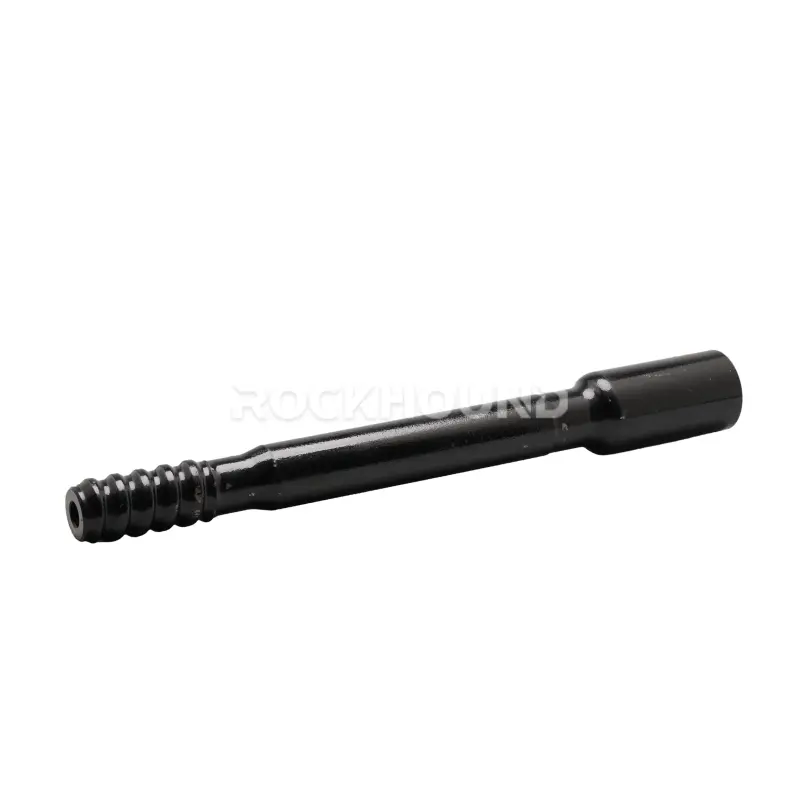
| Drifting / Extension Rods | 22CrNi3Mo / 23CrNi3Mo | Cr, Ni, Mo – enhanced fatigue resistance, high toughness in thread roots, excellent resistance to cyclic loading and crack propagation in top hammer drilling |
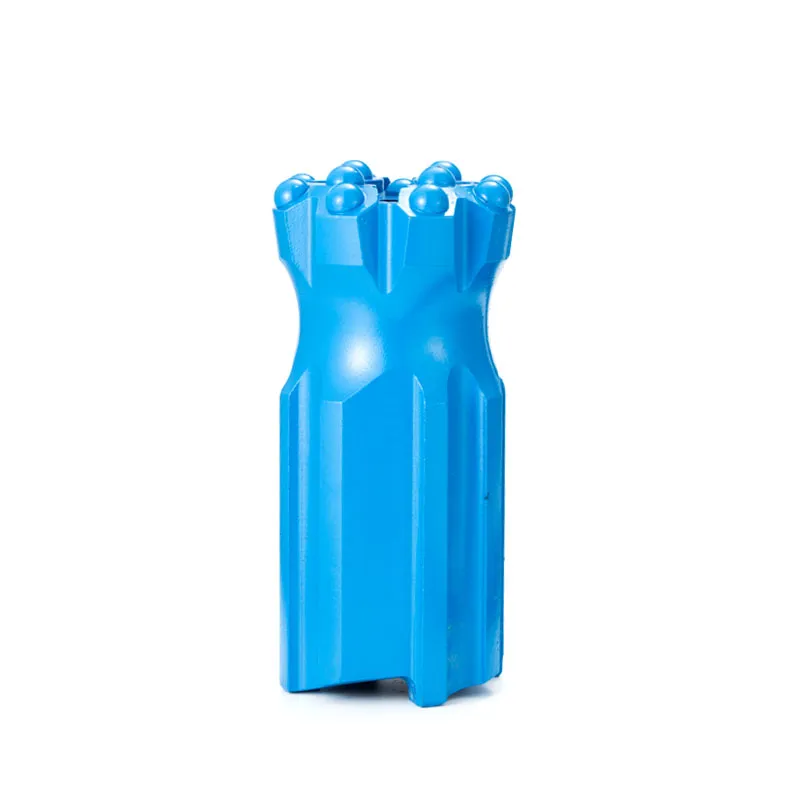
| Threaded Button Bits | 45CrNiMo1V | Cr-Ni-Mo-V – superior high-impact toughness, deep hardenability, excellent wear resistance after carburizing, ideal for heavy percussion in hard/abrasive rock |
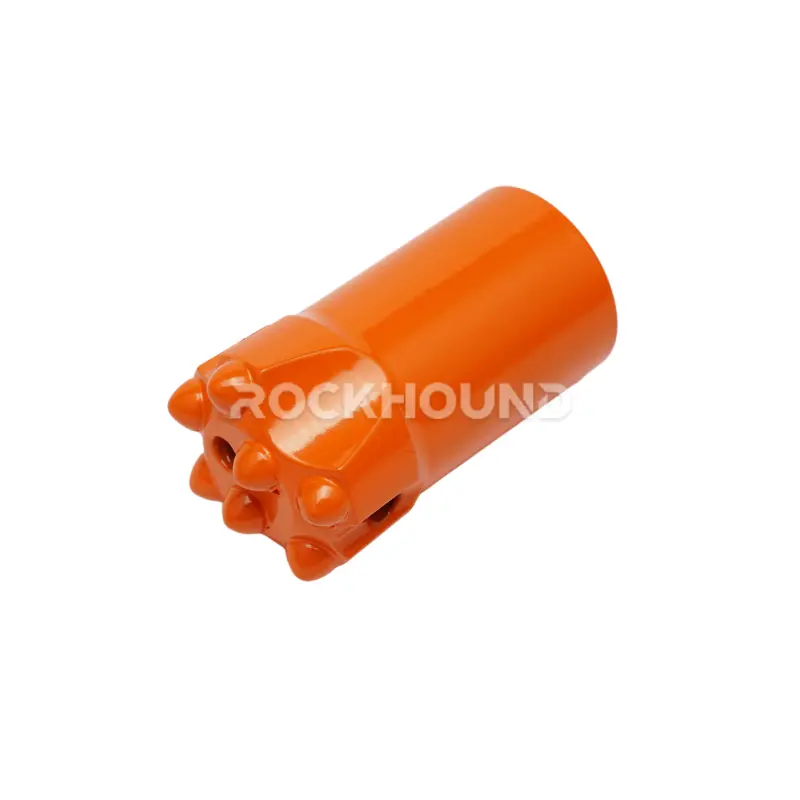
| Tapered Button Bits | 42CrMo / 35CrMo | Mo (primary) + Cr – high-temperature strength, good temper resistance, balanced hardness and toughness for smaller tapered bits in medium-hard formations |
Incoming Material Certification Example (22CrNi3Mo Round Bar):
| Element | C | Si | Mn | Cr | Mo | Ni | S | P |
|---|---|---|---|---|---|---|---|---|
| Chemical Composition (%) | 0.22 | 0.30 | 0.73 | 1.34 | 0.25 | 3.05 | 0.014 | 0.010 |
All incoming steel is subject to full spectrographic chemical composition analysis and mechanical property verification prior to production release. Trace elements (S, P, Cu, As, Sn) are controlled within international standard tolerances to prevent embrittlement.
Bar Stock Preparation
Material is cut to length using high-precision CNC metal band saws, with tolerances held to ±0.1 mm on face flatness. Precise cut-off geometry at this stage serves as the datum reference for all downstream CNC operations.
Step 2 — Precision CNC Machining
Rough turning (“peeling”) removes the decarburized surface layer and subsurface defects inherent to hot-rolled bar stock. This operation also performs outer-diameter rough machining, leaving controlled stock allowance for final finishing. The following features are subsequently machined on multi-axis CNC turning/milling centers:
Flushing Groove Geometry
Streamlined, aerodynamically profiled flushing channels are CNC-machined to ensure unrestricted cuttings removal and optimized air/water flow to the drill face. Groove geometry is formation-specific and available in standard or enlarged-flow configurations.
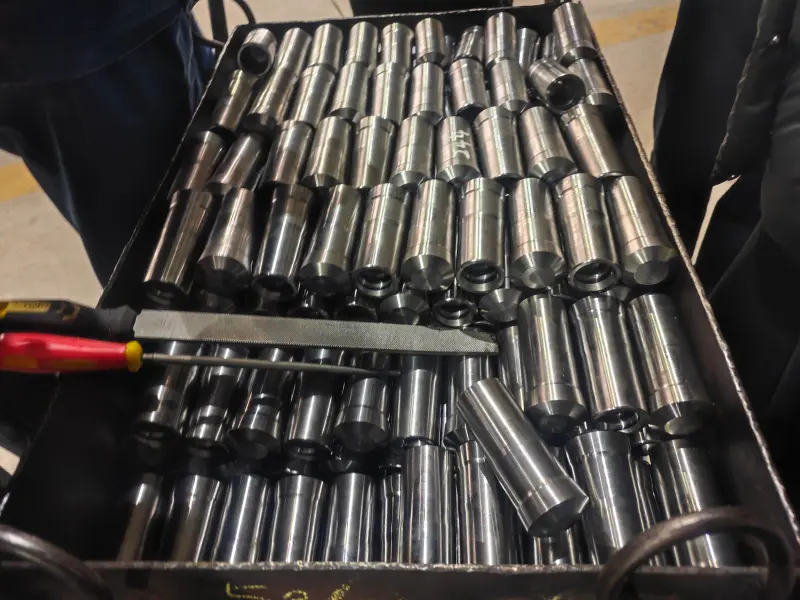
Central Flushing Hole (CFH)
Deep-hole drilling produces the central bore with center-axis symmetry controlled to minimize imbalance under high-RPM rotation.
Thread Form Machining
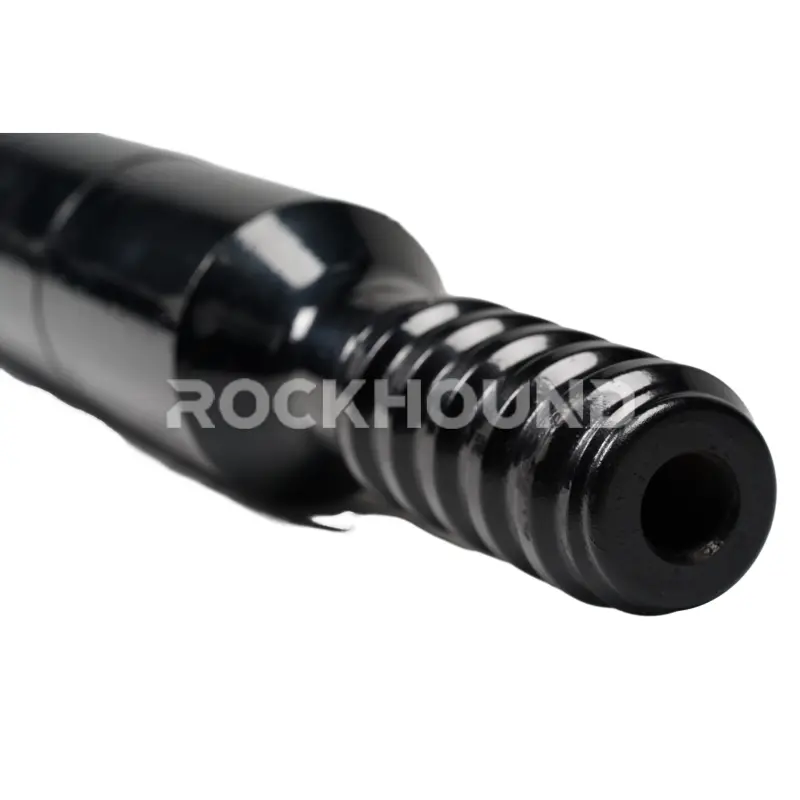
Threaded connections (R-thread, T-thread, or ST-thread profiles per order) are cut to ISO/SANDVIK standard thread gauges, ensuring full thread engagement and consistent torque transmission.
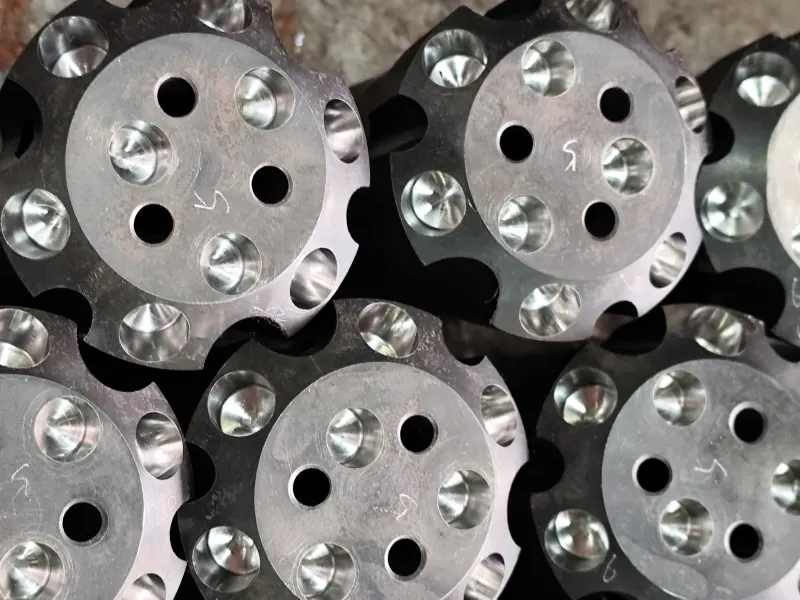
Carbide Button Seat Boring
Button seat (press-fit bore) diameter is machined to ±0.02 mm tolerance, which is critical to achieving the specified interference fit between the tungsten carbide insert and the steel body — the primary mechanical bond that resists button pullout.
Step 3 — Vacuum Heat Treatment
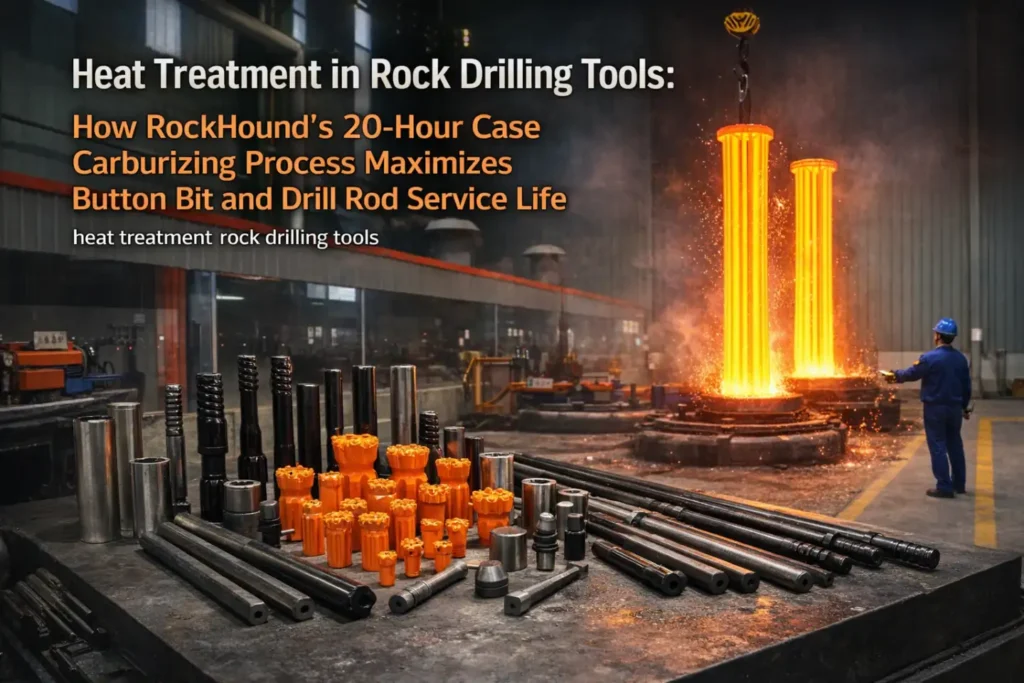
Heat treatment governs the core mechanical properties of the finished bit body — hardness, toughness, and fatigue life. RockHound uses dedicated vacuum furnace equipment (chamber pressure < 10⁻² Pa) to fully eliminate oxidation and decarburization risk inherent to atmosphere-based furnaces.
Vacuum Quenching
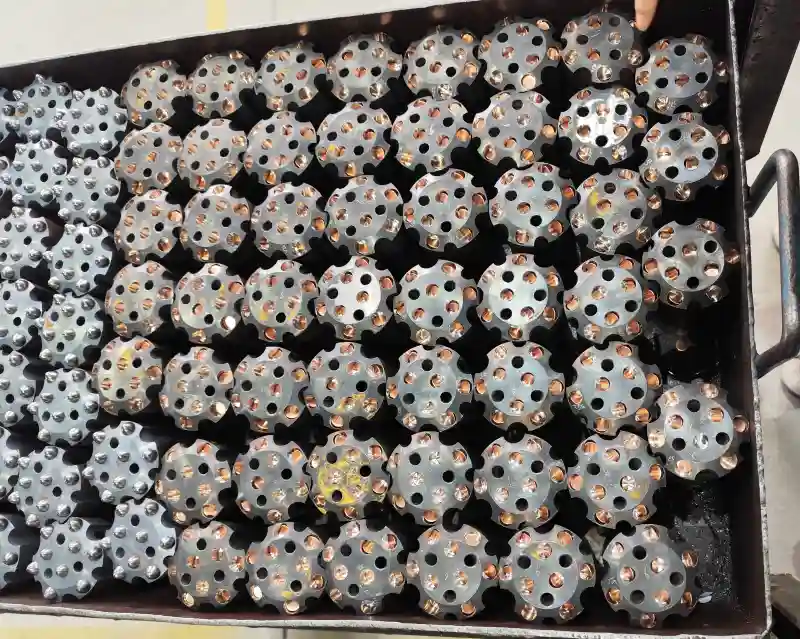
The bit body is austenitized and oil-quenched under controlled heating and cooling curves. Target hardness: HRC 45–50 (adjusted per bit model and application). Vacuum quenching ensures clean surface metallurgy and a reproducible hardened case depth.
High-Temperature Tempering
Following quench, bits undergo high-temperature tempering to relieve quench-induced residual stress, improve core toughness (impact energy, KV), and eliminate the risk of brittle fracture under high-frequency percussive loading. The result is the ideal hardness-toughness balance for rock drilling service.
Explore Detail:20 Hour Heat Treatment In Rock Drilling Tools
Step 4 — Carbide Button Setting (Tooth Setting)
The carbide button setting process is the most mechanically critical stage of bit manufacture. All parameters are tightly controlled to ensure maximum button retention, impact resistance, and drilling geometry consistency.
Carbide Insert Grade
RockHound uses YG05 (ISO K05) cemented tungsten carbide — an ultra-fine grain grade optimized for:
- Extreme wear resistance (high WC content)
- Sufficient transverse rupture strength (TRS) to resist percussive fracture
- Hardness: HV ≥ 1580 (Vickers)
Button Geometry (Ballistic Profile)
Standard button apex angle: 35° — the industry-established optimum for balanced penetration rate and toughness. Application-specific geometries are available:
| Formation Type | Recommended Button Angle | Technical Rationale |
|---|---|---|
| Extremely Hard Rock (Granite, Basalt) | 38° – 42° | Blunter profile increases impact toughness and resistance to chipping/fracture under high-energy percussion; reduces premature button failure in UCS > 200 MPa rock |
| Medium-Hard Rock (Limestone, Sandstone) | 35° (Standard) | Optimal balance between rate of penetration (ROP) and tool life; delivers consistent performance in typical mining, quarrying, and construction drilling conditions |
| Soft / Abrasive Rock (Shale, Weathered) | 30° – 33° | Sharper, more aggressive geometry maximizes penetration speed in low-UCS formations; enlarged flushing grooves recommended to improve cuttings removal and prevent bit balling |
Interference Press-Fit Process
Button seat and carbide insert diameters are matched to an interference fit of ±0.01 mm (10 µm). The setting process uses induction heating to thermally expand the bit body bore, after which buttons are manually press-set and hammer-driven to final seating depth. Thermal contraction on cooling produces radial compressive clamping stress — the primary retention mechanism.
Copper Shim Buffer Layer
A precision-ground copper brazing shim is interposed between the button shank and the bore wall during assembly. The high ductility of copper (elongation ≥ 30%) acts as a sacrificial shock-absorption layer, distributing impact loads across the bore wall and preventing both button pullout and seat wall cracking during service.
Step 5 — Shot Blasting (Surface Conditioning)
Post-heat treatment scale and oxide layers are removed by high-velocity steel shot blasting, producing a uniform, clean surface profile. Shot blasting additionally induces surface compressive residual stress (shot peening effect), which significantly improves bending fatigue and contact fatigue resistance — a key factor in extending operational service life before regrinding becomes necessary.
Step 6 — Anti-Corrosion Coating & Finishing
RockHound’s dedicated painting line combines fully automated electrostatic spraying with manual touch-up to deliver a consistent, high-adhesion protective coating.
Coating Specifications:
- Technology: Electrostatic spray or rust-inhibiting primer coat
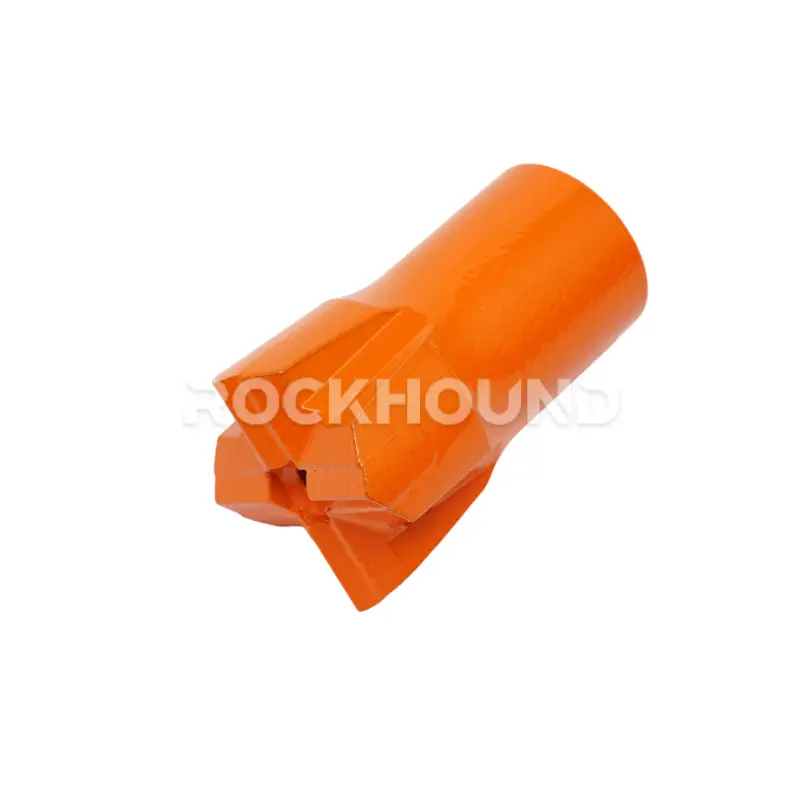
- Standard Colors: Blue, Orange, Black (custom colors available)
- Environmental Compliance: VOC emissions controlled within applicable standards — no site odor or pollution during jobsite storage
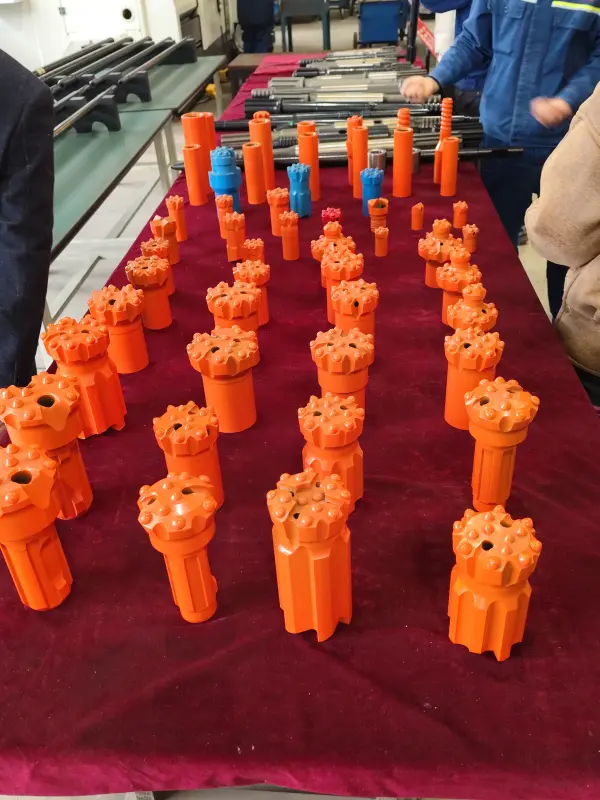
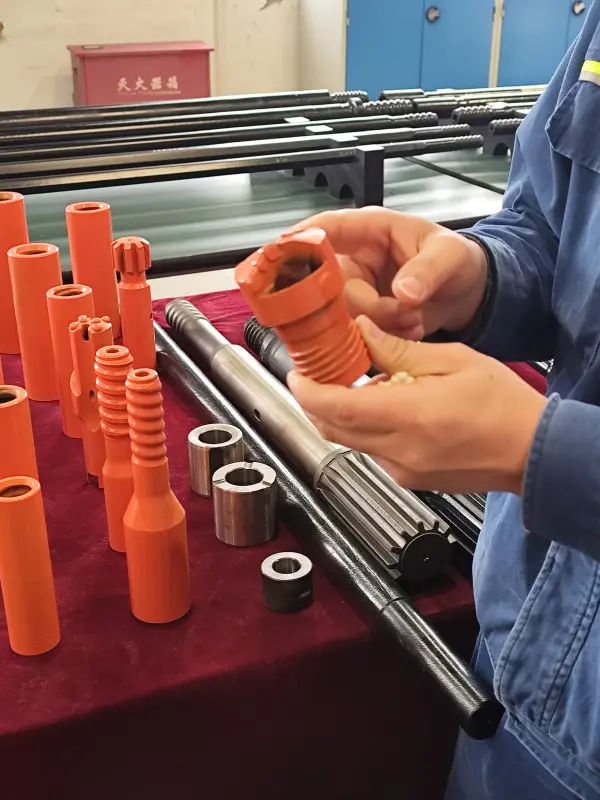
The coating provides corrosion protection during ocean freight transit, port storage, and field inventory — maintaining dimensional integrity of the thread profile and button seats until first use.
Step 7 — Packaging, Marking & Logistics
Unit Packaging
Individual bits are packed in reinforced custom cardboard boxes (5–10 pcs/box), cushioned with shock-absorbing internal packing material to prevent in-transit button-on-button contact damage.
Export Packaging
Full shipment lots are packed in export-grade fumigated wooden crates, internally lined with moisture-barrier film — compliant with ISPM 15 phytosanitary requirements for all major import markets.
Product Identification & Traceability
Each bit is laser-marked with:
- Brand logo
- Product specification (diameter, thread type, carbide grade)
- Production traceability code
Marking field: 100 mm × 100 mm. Laser marking is available as a value-added service (additional lead time and tooling charge may apply).
Summary: RockHound Quality Assurance by Process Stage
| Manufacturing Stage | Key Quality Control Parameter | Inspection Method |
|---|---|---|
| Raw Material | Chemical composition, mechanical properties | Spectroscopy, tensile testing |
| CNC Machining | Button seat diameter tolerance ±0.02 mm | CMM / air gauge |
| Vacuum Heat Treatment | Surface hardness HRC 45–50 | Rockwell hardness tester |
| Button Setting | Interference fit ±0.01 mm | Precision bore gauge |
| Shot Blasting | Surface cleanliness Sa 2.5 | Visual / comparative standard |
| Coating | Dry film thickness, adhesion | DFT gauge, cross-cut test |
| Final Inspection | Dimensional, visual, marking | Go/No-Go gauges, visual standard |
RockHound — Precision-Engineered Rock Drilling Tools for Mining, Tunneling & Construction.
Explore our full range of button bits, extension rods, and shank adapters, or contact our technical team for application-specific recommendations.
Related Readings:
Top Hammer Button Bit: How It Works, Uses & Maintenance
FAQ about Rock Drill Button Bits
Threaded button bit bodies are manufactured from 45CrNiMo1V — a chromium-nickel-molybdenum-vanadium alloy steel selected for its optimal combination of impact toughness and fatigue strength under percussive drilling conditions.
Vacuum furnace processing (chamber pressure < 10⁻² Pa) eliminates surface oxidation and decarburization, producing a clean, predictable hardened case with consistent HRC values across the entire production batch — critical for reproducible field performance.
Drill holes: Identify strategic points on the rock and drill holes to the required depth for the hydraulic splitter. Apply hydraulic pressure: Insert the hydraulic splitter into the holes. The splitter expands, applying force to create cracks and split the rock apart.
Yes. Button apex angle, button layout pattern (face and gauge), and flushing groove geometry are all configurable to suit the unconfined compressive strength (UCS) and abrasivity index (AI) of target formations. Contact our technical team with your geomechanical data for a customized bit specification.
Standard specification is YG05 (ISO K05 equivalent) — an ultra-fine grain cemented carbide grade offering high hardness (HV ≥ 1580) with sufficient transverse rupture strength for high-frequency percussive applications.