This article explores the mechanical and practical relationship between top hammer drill string configuration and hole straightness — drawing on published technical data, real-world quarrying and mining performance benchmarks, and over a decade of field observations across surface bench drilling, quarry production, and underground development applications.
For a foundational grounding in how top hammer systems work before diving into deviation mechanics, What Is Top Hammer Drilling? The Complete Guide is the logical starting point.
Hole Straightness:Why Tolerance Is Narrow
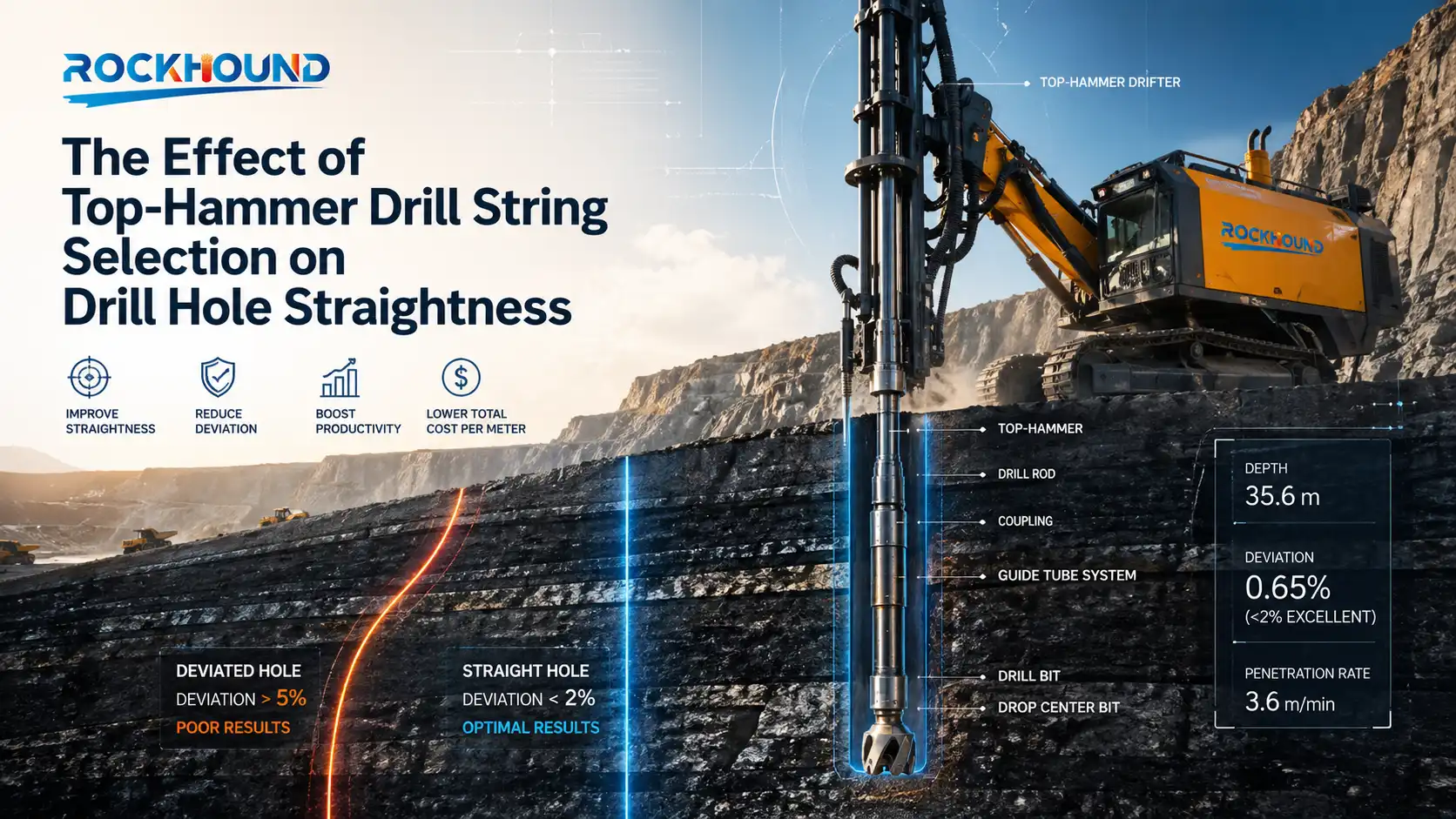
Hole straightness describes how closely a drilled borehole’s actual path tracks its intended trajectory. In top hammer drilling, deviation accumulates from three distinct sources: collaring error (the hole starts in the wrong direction), alignment drift (progressive angular wandering as the string advances), and in-hole deflection (sudden displacement caused by geological discontinuities).
Of the three, in-hole deflection is both the hardest to prevent and the most sensitive to drill string selection. It is also the one that compounds most aggressively with depth — a 0.3° angular error at 10 m translates to roughly 0.05 m of displacement, but that same angular error sustained through 35 m of hole becomes nearly 0.2 m, often enough to shift a blast row completely out of its designed burden geometry.
Industry practice generally classifies blast hole deviation performance as follows:
| Deviation Level | Blasting Impact | Economic Consequence | Safety Risk |
|---|---|---|---|
| Excellent (<2%) | Uniform burden; ideal fragmentation | 25% increase in loading efficiency | High stability; controlled fly-rock |
| Acceptable (2-5%) | Localized oversize rock | Moderate crushing costs | Standard monitoring required |
| Poor (>5%) | Extreme toe issues; energy loss | High equipment wear; 70% more secondary breakage | High risk of fly-rock & slope failure |
Benchmarking Performance: Rod vs Tube Systems
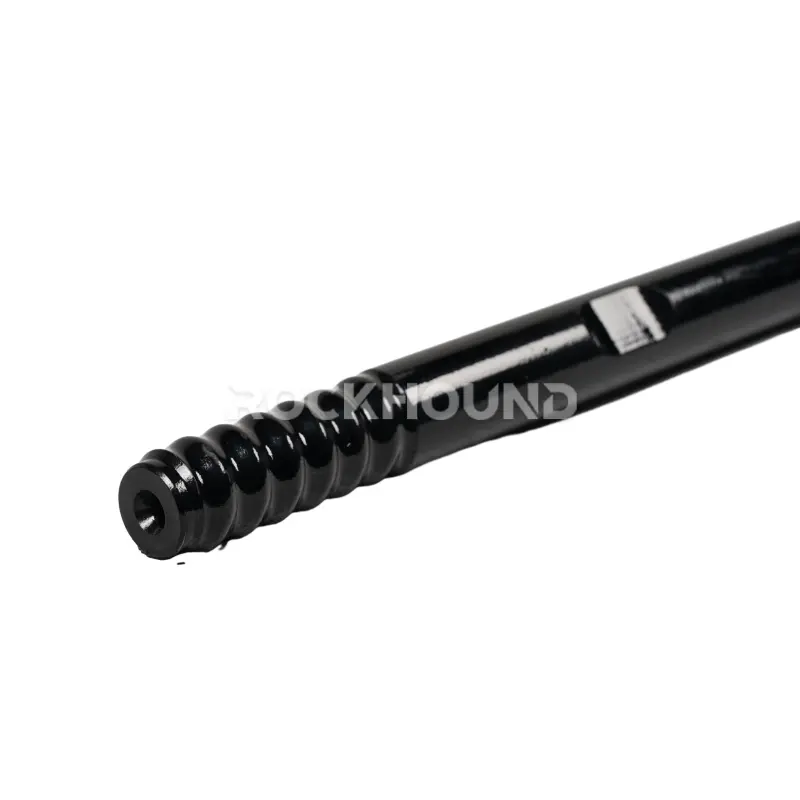
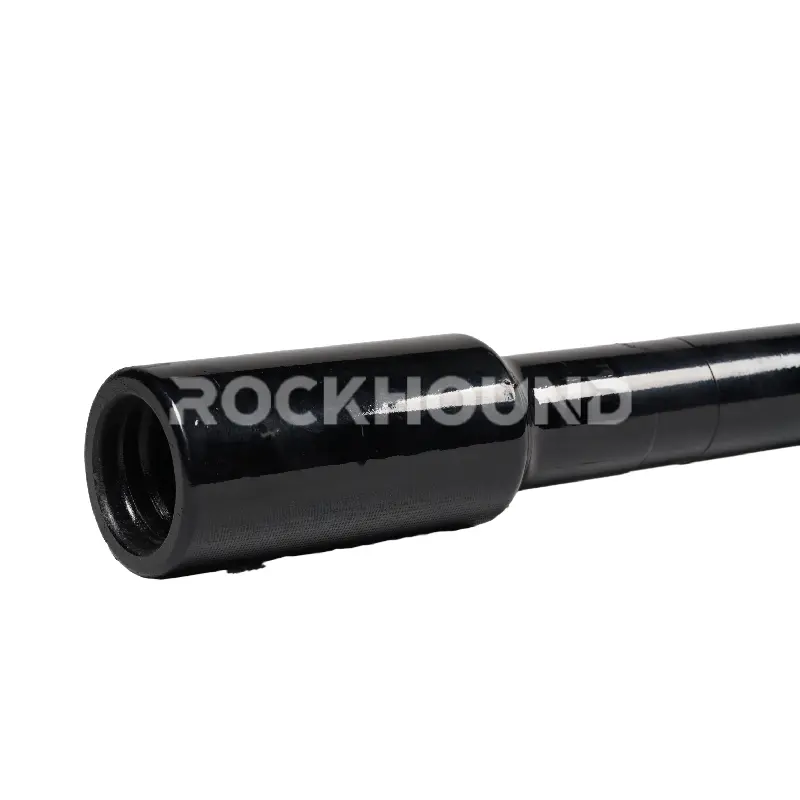
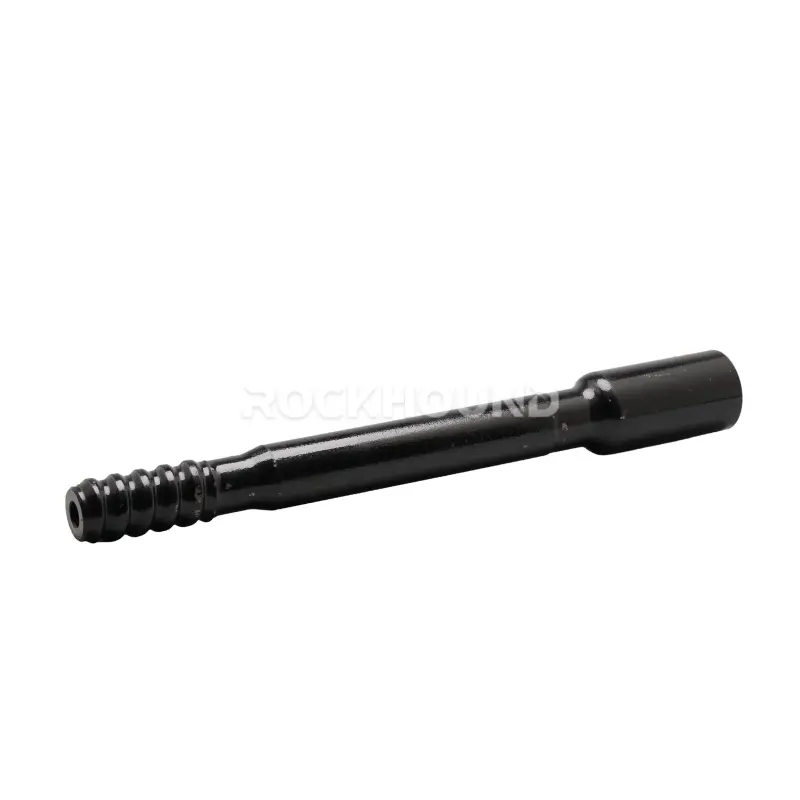
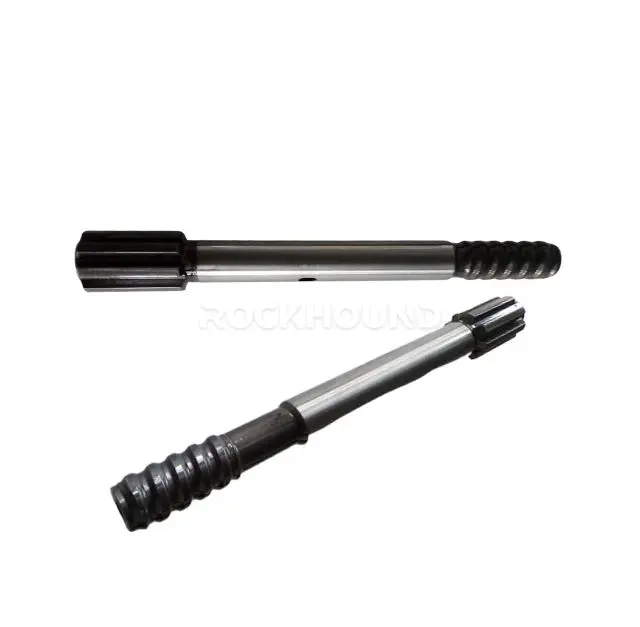
The most common decision point in top hammer drill string engineering is thread series selection — R-series (R32, R38) for lighter ground and smaller diameters, and T-series (T38, T45, T51) for production bench drilling and deeper holes. For the performance-straightness question, the comparison within the T-series is the most consequential for the majority of surface production operations.
The table below consolidates field-sourced performance data across typical deployment ranges:
| Drill String System | Typical Hole Ø | Depth Range | Dev. at 25m | Dev. at 40m | Anti-Deviation Performance | Recommended Application |
|---|---|---|---|---|---|---|
| T38 MF Speed Rod | 64–89 mm | Up to 25 m | > 1.0 m | > 2.0 m | Baseline | Shallow bench, road construction, small quarries |
| T45 MF Rod | 89–115 mm | 20–35 m | ~ 0.6–0.8 m | ~ 1.4 m | Moderate (+25–35%) | Mid-size open-pit bench, aggregate production |
| T45 MF Rod + TDS Guide Tube | 89–115 mm | 25–40 m | ~ 0.4–0.5 m | ~ 1.0–1.2 m | Good (+50–60%) | Iron ore, limestone bench, controlled blasting |
| T51 MF Rod | 102–127 mm | 25–40 m | ~ 0.35–0.45 m | ~ 0.8–1.0 m | Good–Strong (+55–65%) | Large open-pit production; hard rock benches |
| TDS 64 Guide Tube System | 102–140 mm | 30–50 m+ | < 0.3 m | < 0.5 m | Best (> 75% reduction) | Deep bench, fractured rock, ultra-high precision blasting |
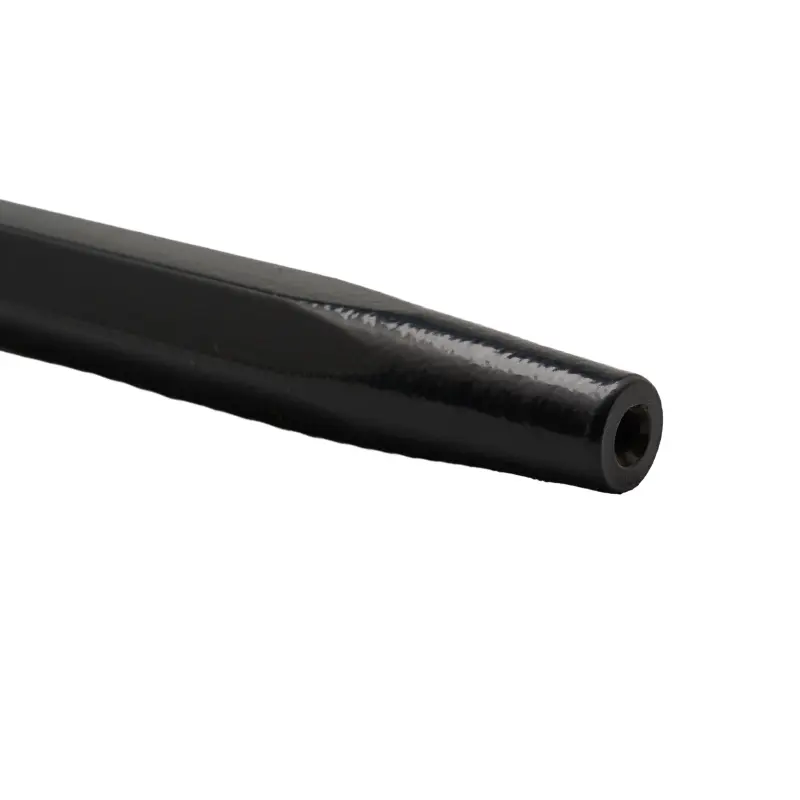
The TDS guide tube approach, exemplified by systems such as Epiroc’s ET Series — which Epiroc describes as delivering up to twice the structural strength of its predecessor — achieves deviation reduction by fundamentally changing the bending stiffness of the column, not merely by improving thread quality. The tube structure effectively eliminates annular clearance, so the borehole wall itself becomes a continuous lateral guide. Calling this a “drill rod” is almost a misnomer; it functions more like a rigid sleeve that constrains the entire column against lateral migration.
In practical terms, operations that have shifted from standard T38 rods to TDS tube systems for deep bench drilling — particularly in iron ore and large-scale limestone quarries — consistently report blast fragmentation improvements that reduce secondary crushing requirements and lower overall cost per processed tonne, even after accounting for the higher per-rod capital outlay.
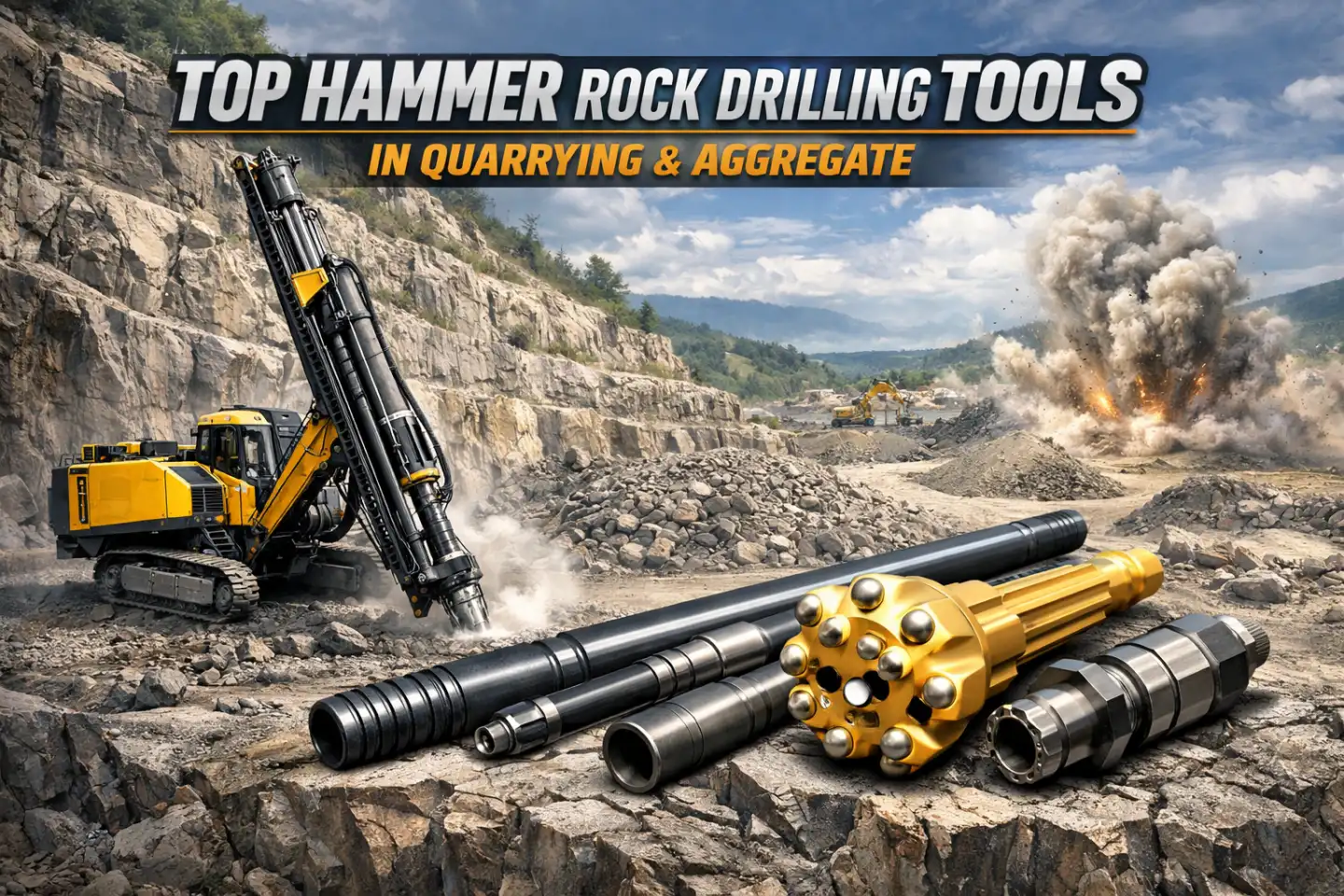
For a broader breakdown of how top hammer tools deliver value in surface quarry settings, see Top Hammer Rock Drilling Tools in Quarrying & Aggregate.
Where Good Equipment Gets Undermined
The best-specified drill string on the market cannot compensate for bad operating practice. Three parameters carry the most leverage over hole straightness in day-to-day drilling:
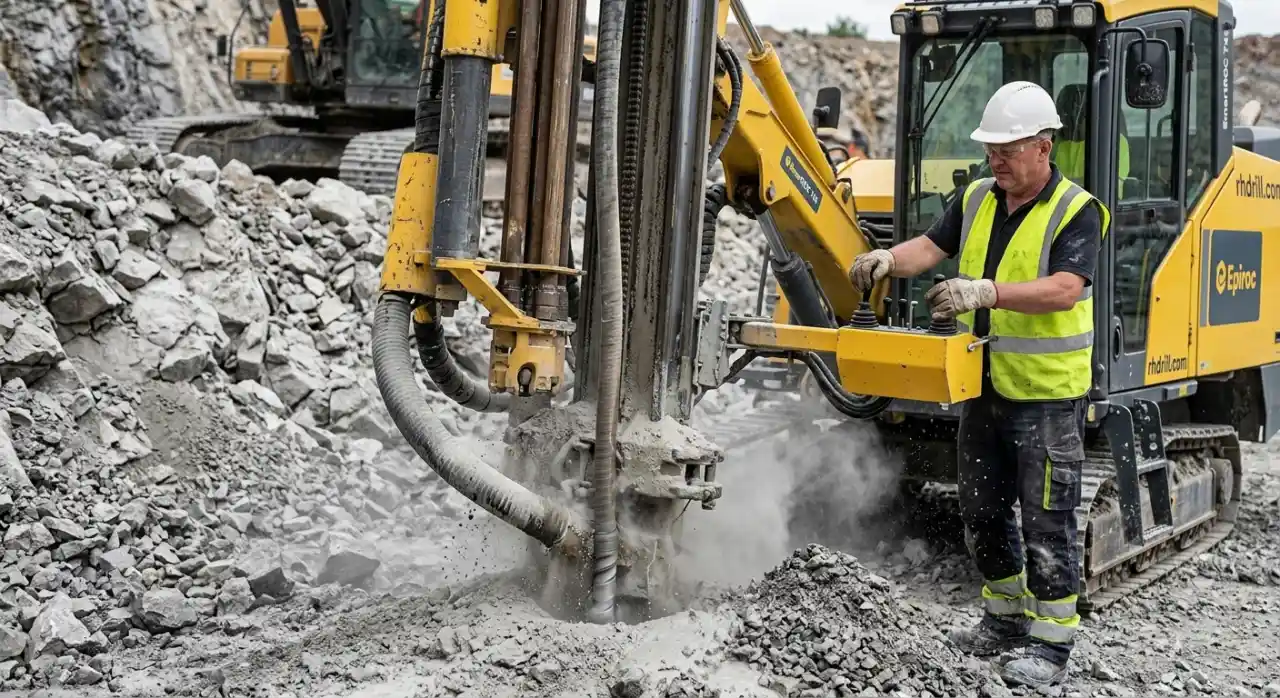
Feed pressure is the most commonly mismanaged. The instinct to push harder when penetration slows is understandable but counterproductive — it increases the compressive column load, moving the system closer to the buckling threshold. Feed pressure should be set to match rock compressive strength, not to maintain a fixed penetration rate target. In hard rock, this means accepting a slower advance rather than forcing the rod string beyond its lateral stability limit.
Collar procedure is where straightness is either protected or compromised before the string reaches 5 m. During the first two to three meters of each hole, the string has minimal downhole support and is most vulnerable to angular drift. Reducing percussion pressure by 20–30% during collaring, combined with careful initial alignment verification, is the single most cost-effective straightness intervention available to drillers — it costs nothing except a few seconds of reduced speed and prevents errors that compound through the full hole depth.
Flushing efficiency is underrated as a straightness factor. Accumulated drill cuttings between the bit face and the rock form a compressible bed that shifts the bit off-axis during percussion. A properly flushed hole gives the bit a clean, level surface to work against. Inadequate flushing simultaneously degrades carbide life, increases feed pressure requirements, and introduces the lateral bit instability described above — three straightness-negative effects from one operational shortcut.
The Role of the Drill Bit
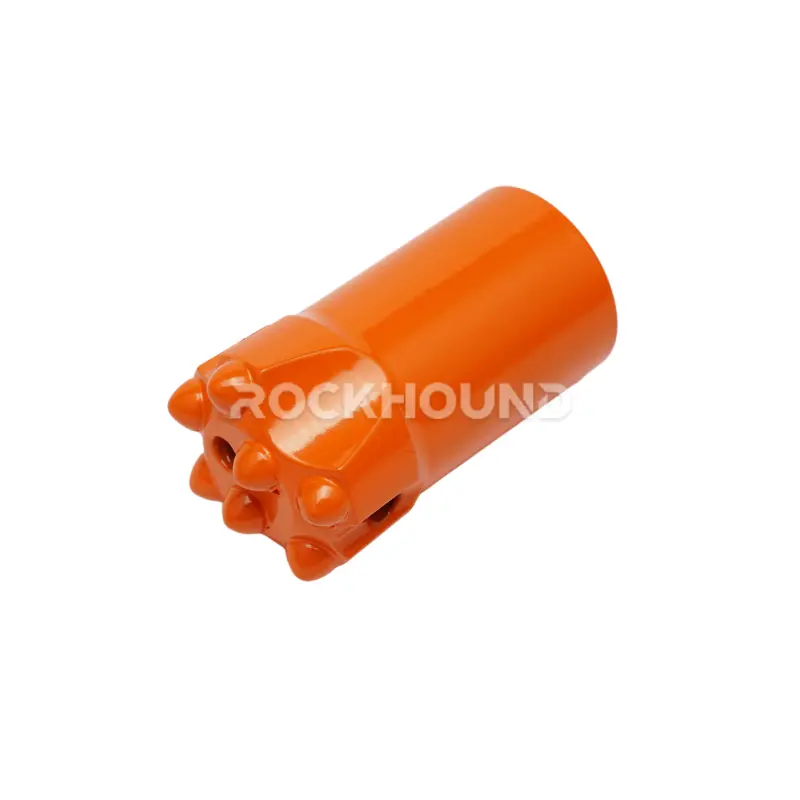
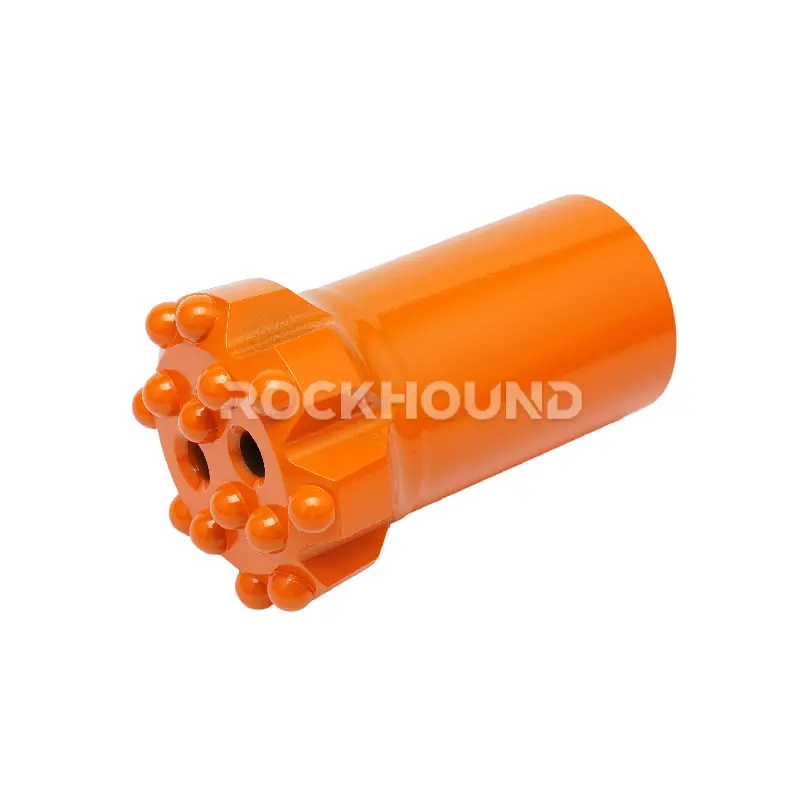
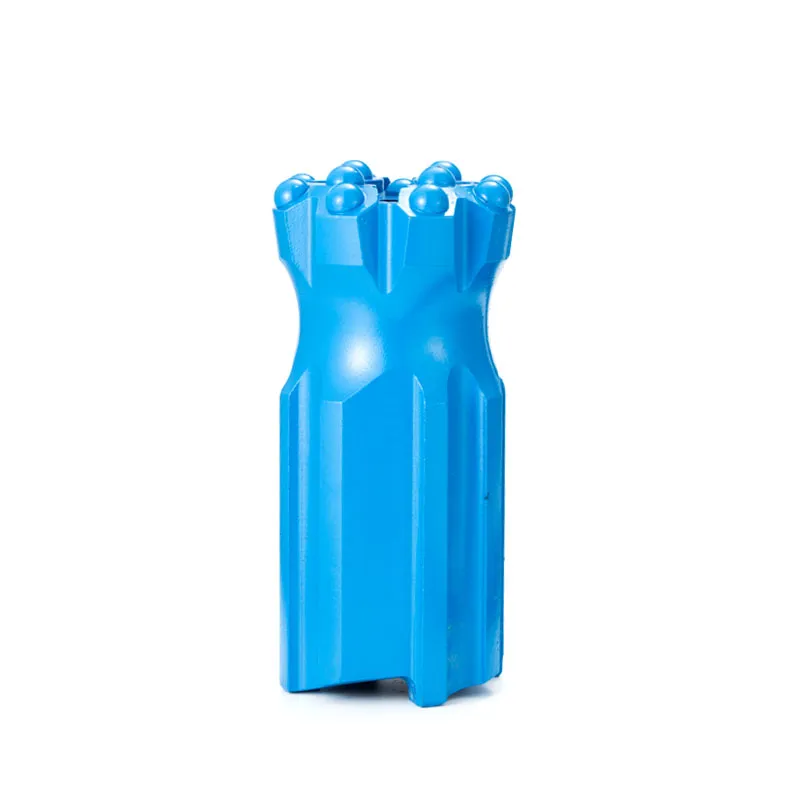
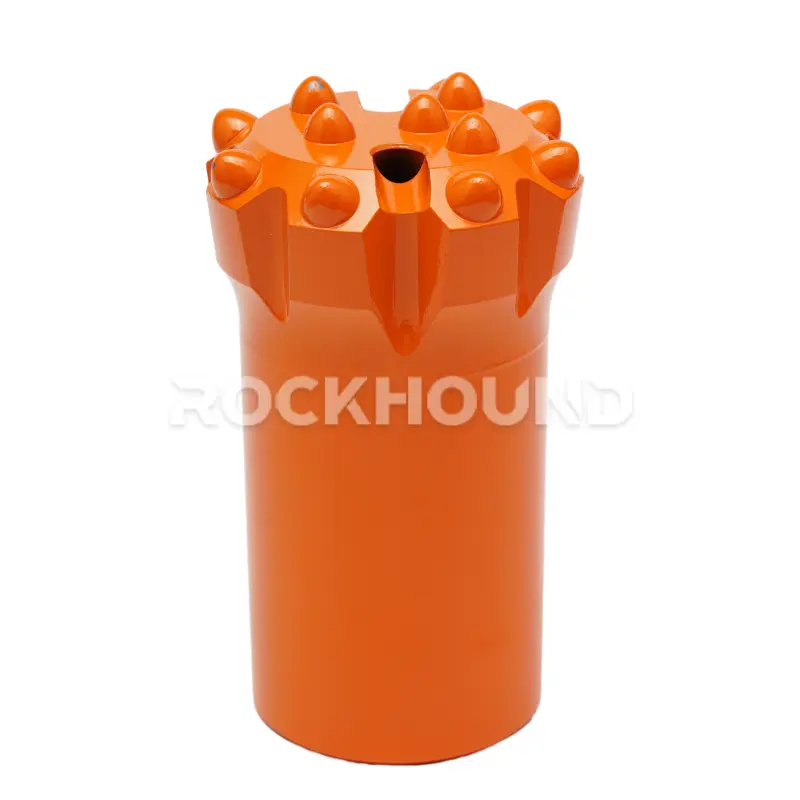
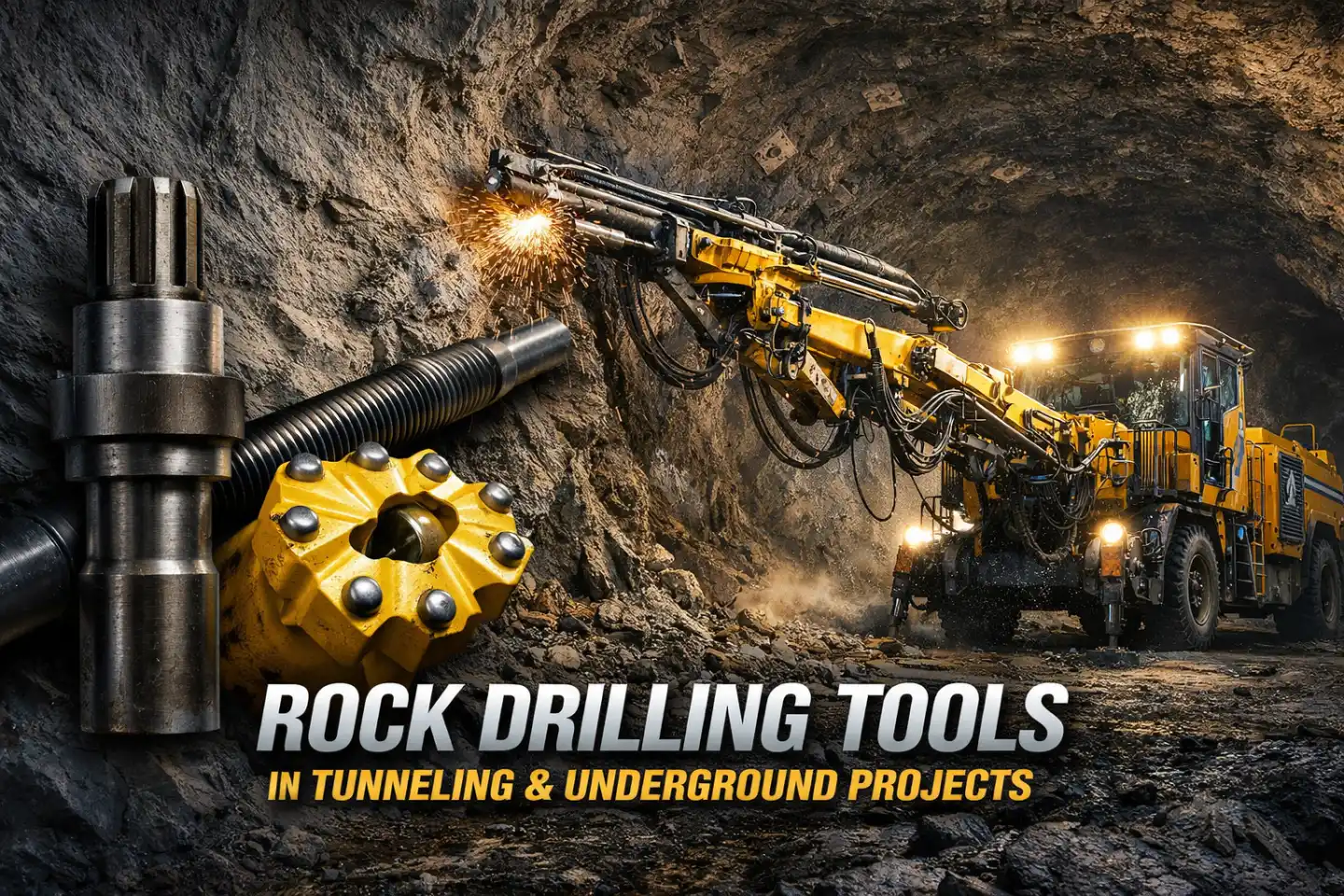
If the rod is the spine, the bit is the “guide.” Retrac Bits, with their long, winged skirts, act as short stabilizers that prevent the bit from “wandering” when hitting fractures or soft seams. In Tunneling & Underground Drifting, the choice of a Drop Center bit design is often preferred because it creates a “self-centering” effect during the high-impact pulse .
Where Straightness Becomes Profit
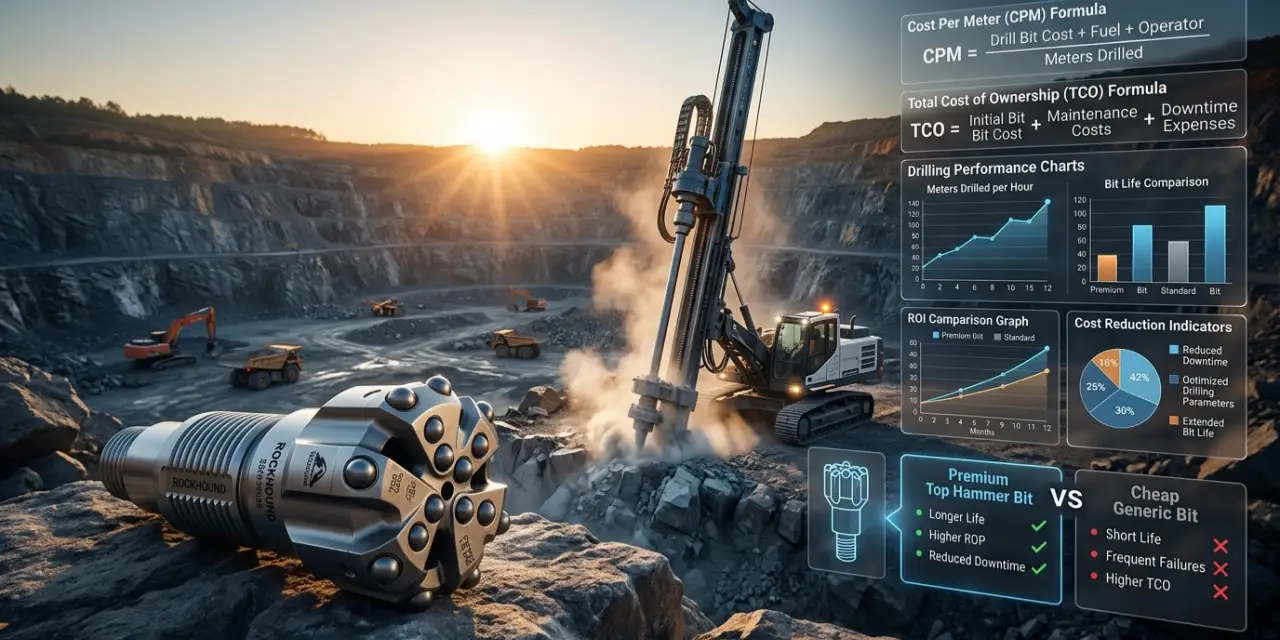
The commercial argument for investing in a higher-specification top-hammer drill string ultimately comes down to total drilling cost (TDC) per drilled meter — a figure that many purchasing decisions incorrectly simplify to unit tool price.
The formula is straightforward:

A TDS tube system carries a higher upfront tool cost than T38 speed rods. But the denominator on both sides shifts favorably: tube systems typically achieve better service life due to the absence of threaded coupling interfaces (which are the primary fatigue failure point), and the reduction in deviation-related redrills removes the dead penetration time that inflates the rig cost component.
| Performance Metric | Poor Straightness (>5% dev.) | Good Straightness (<2% dev.) | Estimated Improvement |
|---|---|---|---|
| Blast Fragmentation | 12–18% oversize by mass | 3–6% oversize by mass | 50–75% reduction in secondary breaking |
| Crusher Throughput | Baseline | +10–15% at same power | Significant reduction in kWh/tonne processed |
| Loading Efficiency | Baseline | +20–25% bucket fill factor | Reduced cycle times and lower fuel burn |
| Ore Dilution (UG) | 12–20% waste rock contamination | <5% with precision tools | 15%+ reduction in processing waste |
| Drifter Component Wear | Elevated — accelerated seal/bearing wear | Lower — reduced off-axis load | Extended drifter service life |
The “hidden” ROI line items — reduced crusher wear, lower drifter maintenance frequency, elimination of re-drill labor — rarely appear in a straightforward tool price comparison, but they consistently represent multiples of the incremental tool cost when quantified across a full drilling campaign. This economic logic is as applicable to aggregate producers as it is to iron ore operations. For a mining-specific breakdown of where top hammer efficiency translates to margin, Advantages of Top Hammer Drilling Tools in Mining covers the operational ROI in depth.
Drill String Selection Guide: A Practical Framework
No single drill string system is universally optimal. The right choice is always a function of hole depth, target diameter, geological complexity, and production scale. The following framework covers the most common decision scenarios:
| Drilling Scenario | Recommended Configuration | Application & Expectation |
|---|---|---|
| Shallow Bench / Low-Complexity (<25 m) | T38 MF Speed Rod + standard or drop-center bit | Best for: Road construction cuts, small quarry benches, non-abrasive formations. Deviation: Acceptable if depth stays under 20–22 m. |
| Mid-Depth Production (25–40 m) | T45 or T51 MF Rod + TDS guide tube + Retrac bit | Best for: Open-pit iron ore, limestone bench, aggregate production. Deviation: <2% achievable with proper collar technique. |
| Deep / High-Precision / Fractured Rock (>40 m) | TDS 64 / ET51 tube system + Retrac drop-center bit | Best for: Deep benches, underground stope drilling, karst zones. Deviation: <0.5 m at 40 m depth in competent rock. |
| Tunnel Face / Underground Drifting | T38/T45 with Retrac face bit; guide skirt configuration | Best for: Development rounds, fan drilling, perimeter holes. Deviation: Over-break control requires <1% deviation. |
Conclusion
Hole straightness in top hammer drilling is not an abstract engineering metric. It is a direct input into blast quality, fragmentation economics, equipment wear rates, and — in underground operations — ore recovery and dilution control. The top-hammer drill string is the primary mechanical lever through which operators influence that metric, and the performance gap between a T38 MF rod and a TDS 64 tube system is not incremental — it is structural.
The selection decision deserves the same analytical rigor as any capital equipment procurement. When the true cost-per-meter calculation incorporates rework drilling, secondary breakage, crusher throughput losses, and drifter maintenance, the premium for a higher-specification drill string routinely pays back within a single drilling campaign. The question most operations should be asking is not “can we afford the better string?” but “what has poor straightness been costing us that we haven’t been measuring?”
FAQ
Eros cubilia dui maecenas et facilisis at. Curae lacinia accumsan vulputate natoque ut luctus inceptos.
Eros cubilia dui maecenas et facilisis at. Curae lacinia accumsan vulputate natoque ut luctus inceptos.
Eros cubilia dui maecenas et facilisis at. Curae lacinia accumsan vulputate natoque ut luctus inceptos.
Eros cubilia dui maecenas et facilisis at. Curae lacinia accumsan vulputate natoque ut luctus inceptos.
Eros cubilia dui maecenas et facilisis at. Curae lacinia accumsan vulputate natoque ut luctus inceptos.