Selecting the wrong drilling method doesn’t just slow a project down — it inflates your cost-per-meter, accelerates bit wear, and introduces hole deviation that can compromise your entire blast pattern. At RockHound, we work with drillers across open-pit mining, underground development, and large-scale civil works every day. The single most common question we hear: Top Hammer or DTH — which is right for this job?
The honest answer is that neither method is universally superior. Each is engineered around a distinct set of physical principles, and matching those principles to your ground conditions, target diameter, and depth is what separates efficient drilling from costly guesswork.
This guide gives you the technical framework to make that call with confidence.
How Top Hammer Drilling Works
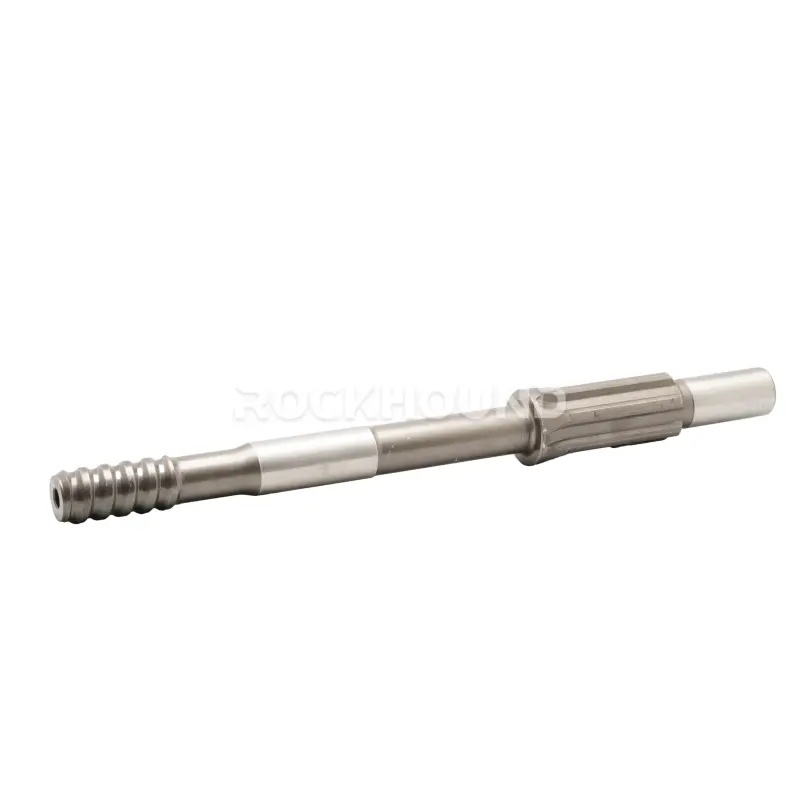
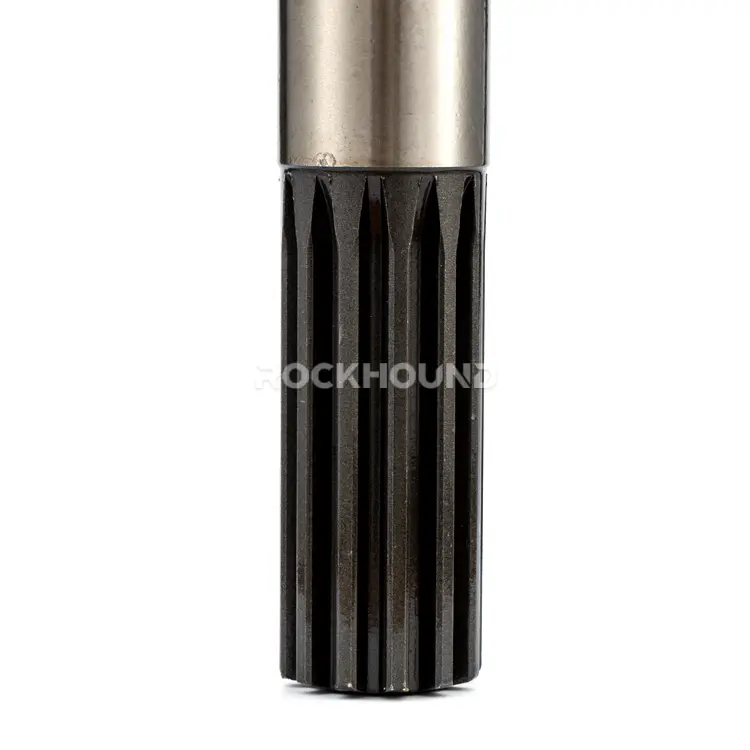
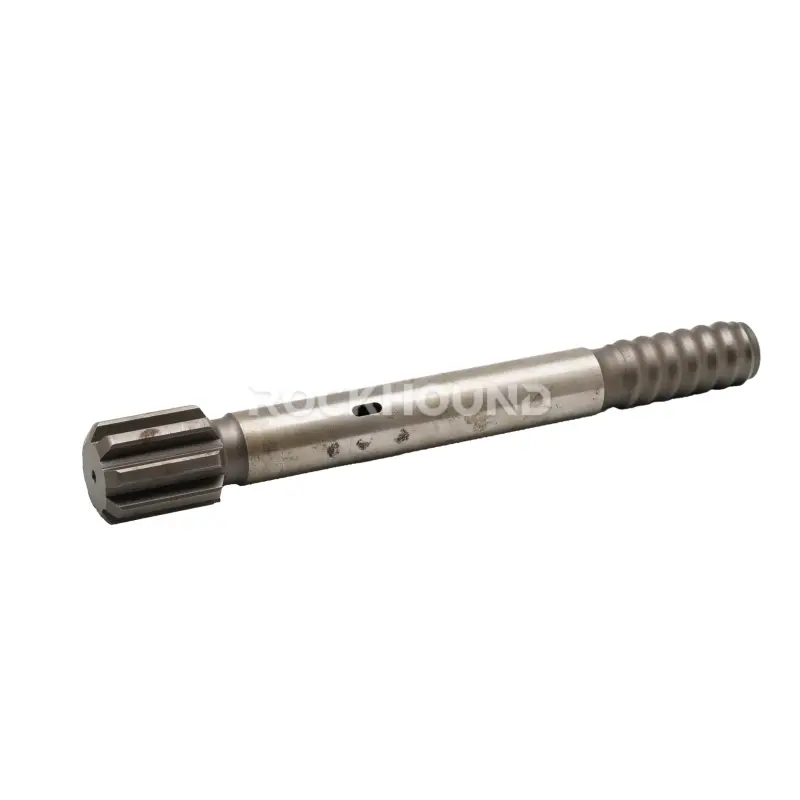
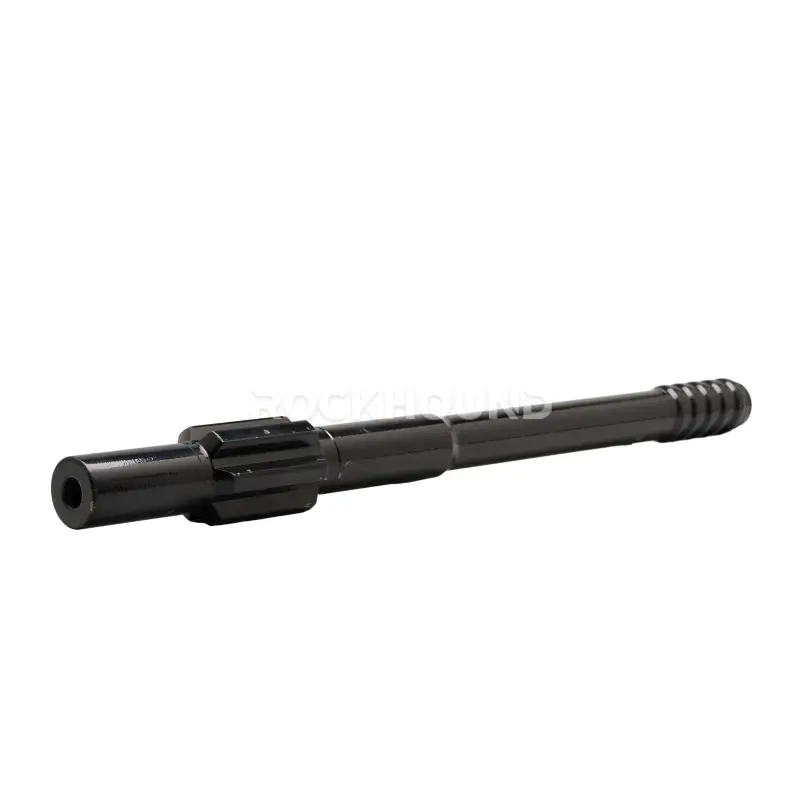
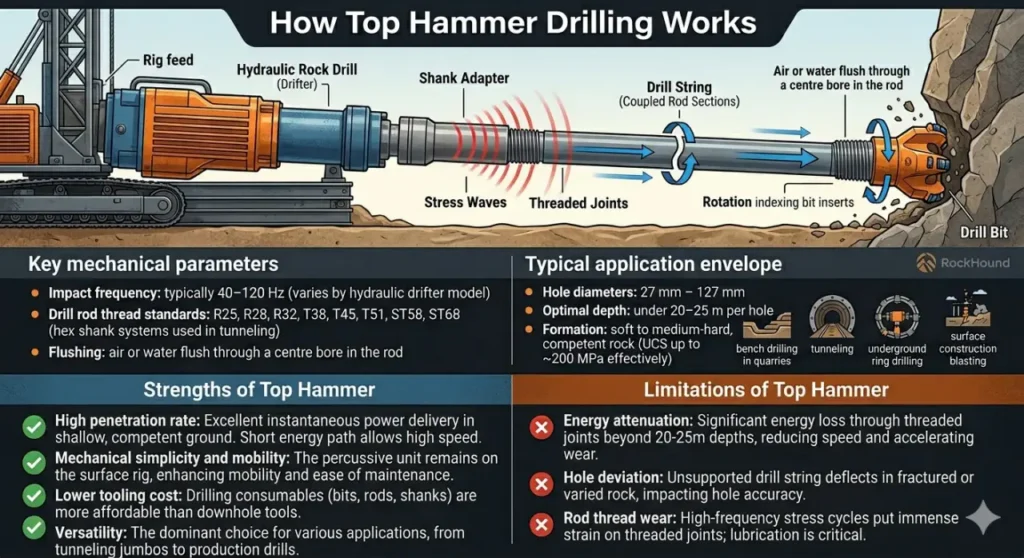
In a Top Hammer (TH) system, percussive energy is generated entirely above the hole. The hydraulic rock drill — commonly called a drifter or rock drill head — is mounted on the feed, where it delivers high-frequency impact blows to the shank adapter. Those stress waves propagate down the drill string (coupled rod sections) through threaded joints to the drill bit at the face.
Simultaneously, the drifter applies rotation through the drill string, indexing the bit inserts between each blow to ensure fresh rock is presented to the carbide buttons on every strike.
Key mechanical parameters
- Impact frequency: typically 40–120 Hz (varies by hydraulic drifter model)
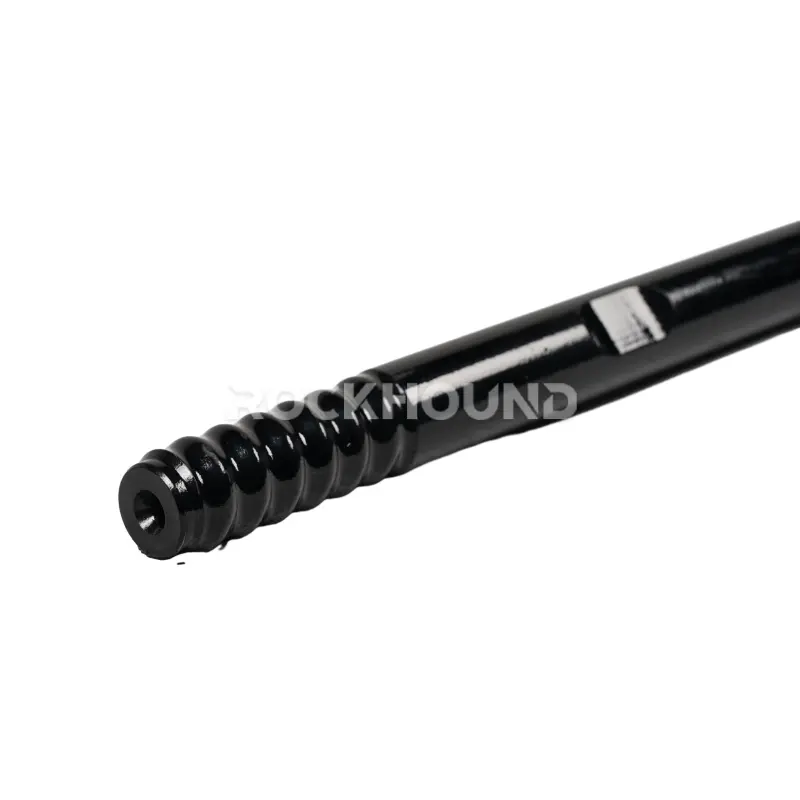
Drill rod thread standards: R25, R28, R32, T38, T45, T51, ST58, ST68 (hex shank systems used in tunneling)
- Flushing: air or water flush through a centre bore in the rod
Typical application envelope
- Hole diameters: 27 mm – 127 mm
- Optimal depth: under 20–25 m per hole
- Formation: soft to medium-hard, competent rock (UCS up to ~200 MPa effectively)
- Industries: bench drilling in quarries, tunneling, underground ring drilling, surface construction blasting
Strengths of Top Hammer
- High penetration rate in competent, shallow ground. Short energy transmission path means excellent instantaneous power delivery at shallow depths.
- Mechanical simplicity and mobility. The percussive unit remains on the rig; no downhole component to retrieve in the event of a jam.
- Lower tooling cost entry point. Drill bits, rods, and shank adapters represent a lower per-unit capital cost compared to DTH hammer assemblies.
- Versatility across small-diameter applications. The dominant choice for tunneling jumbos, face drilling rigs, and underground long-hole production drills.
Limitations of Top Hammer
- Energy attenuation with depth. Every threaded rod coupling introduces reflective energy loss. Beyond 20–25 m, a meaningful portion of the percussive energy never reaches the bit — penetration rate drops and rod wear accelerates.
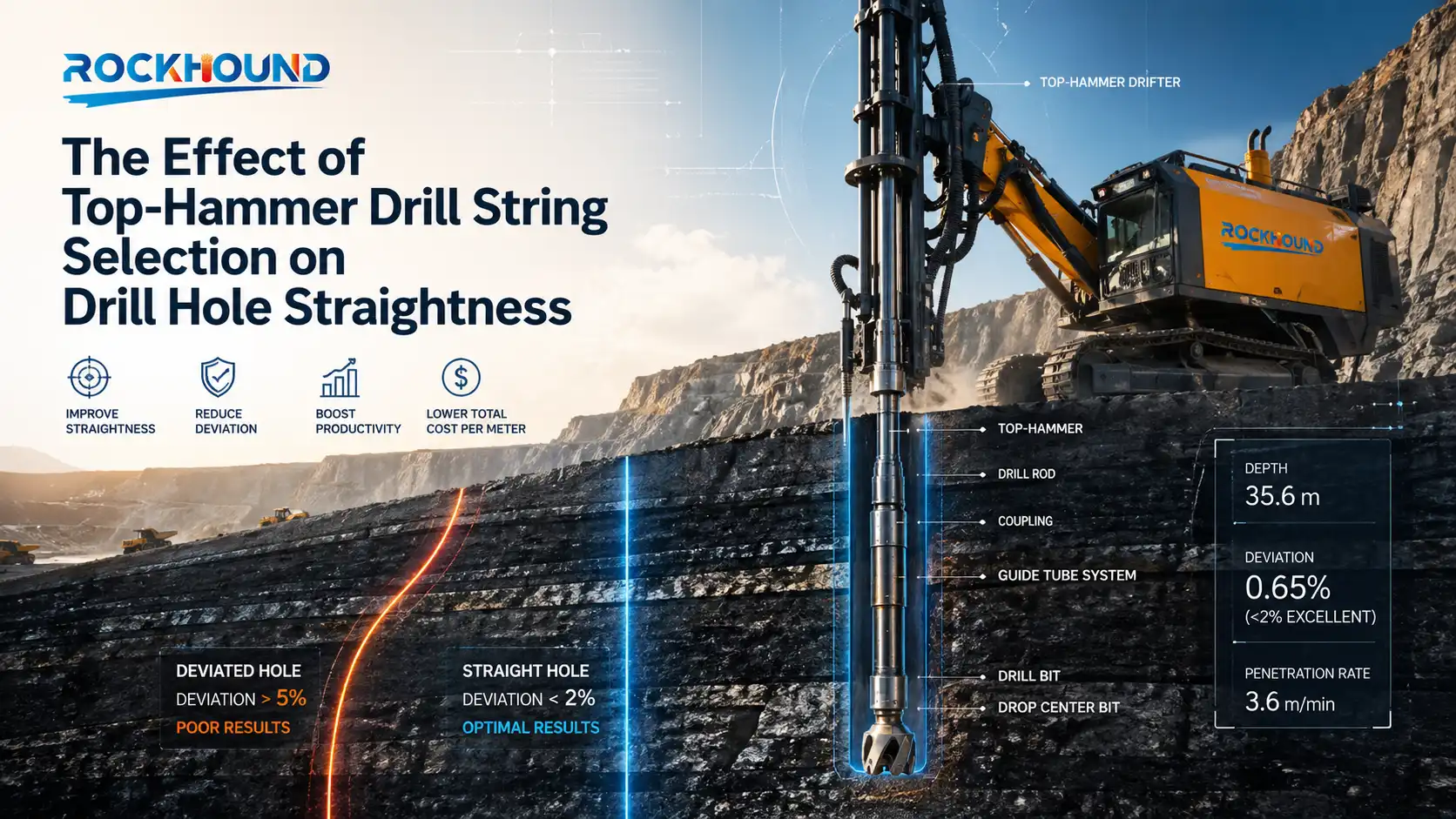
- Hole deviation. At depth, the unsupported drill string can deflect, particularly in fractured or anisotropic rock. This is critical where parallel-hole accuracy is required for controlled blasting.
- Rod thread wear. High-frequency stress cycling through threaded joints is the primary wear mechanism; rod management and thread lubrication are non-negotiable on TH operations.
How DTH (Down-The-Hole) Drilling Works
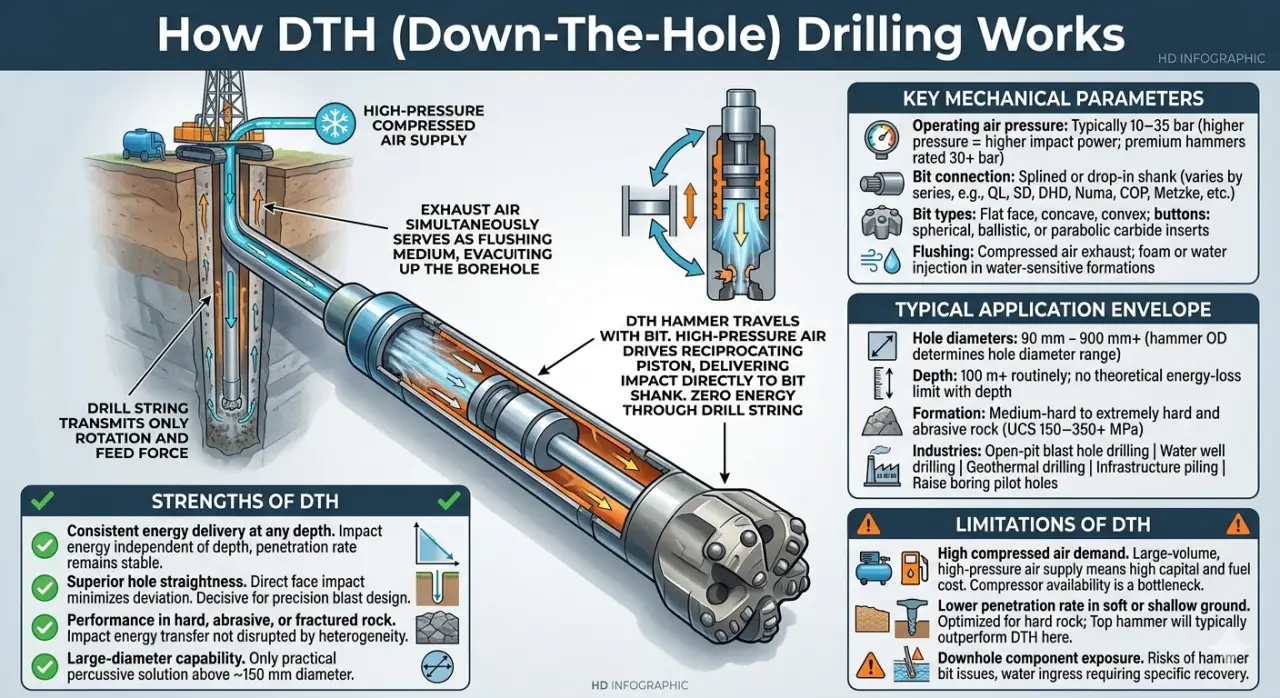
In a DTH system, the percussion mechanism travels with the bit. The DTH hammer — a self-contained pneumatic or hydraulic piston assembly — is positioned directly behind the DTH drill bit at the bottom of the hole. High-pressure compressed air (or hydraulic fluid in hydraulic DTH configurations) drives the piston in a reciprocating cycle, delivering the impact blow directly to the bit’s shank, with zero energy transmitted through the drill string.
The drill string transmits only rotation and feed force to the hammer body, plus carries compressed air downhole through a central bore. Exhaust air from the hammer simultaneously serves as the annular flushing medium, evacuating cuttings up the borehole.
Key mechanical parameters
- Operating air pressure: typically 10–35 bar (higher pressure = higher impact power; premium DTH hammers rated for 30+ bar)
- Bit connection: splined or drop-in shank (varies by hammer series — QL, SD, DHD, Numa, COP, Metzke, etc.)
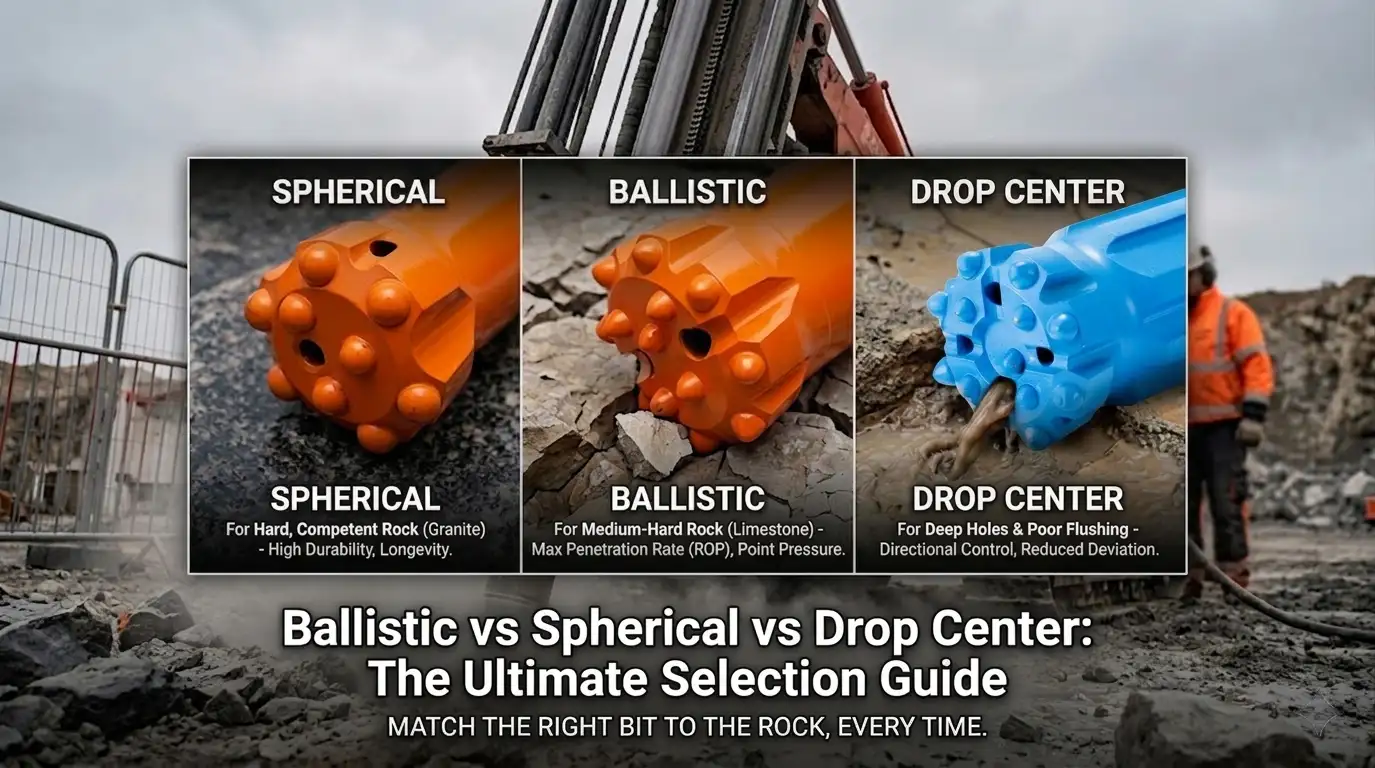
- Bit types: flat face, concave, convex; button configurations — spherical, ballistic, or parabolic carbide inserts
- Flushing: compressed air exhaust; foam or water injection in water-sensitive formations
Typical application envelope
- Hole diameters: 90 mm – 900 mm+ (hammer OD determines hole diameter range)
- Depth: 100 m+ routinely; no theoretical energy-loss limit with depth
- Formation: medium-hard to extremely hard and abrasive rock (UCS 150–350+ MPa)
- Industries: open-pit blast hole drilling, water well drilling, geothermal drilling, infrastructure piling, and raise boring pilot holes
Strengths of DTH
- Consistent energy delivery at any depth. Because the hammer is at the face, impact energy at the bit is independent of hole depth — penetration rate remains stable whether you are at 10 m or 200 m.
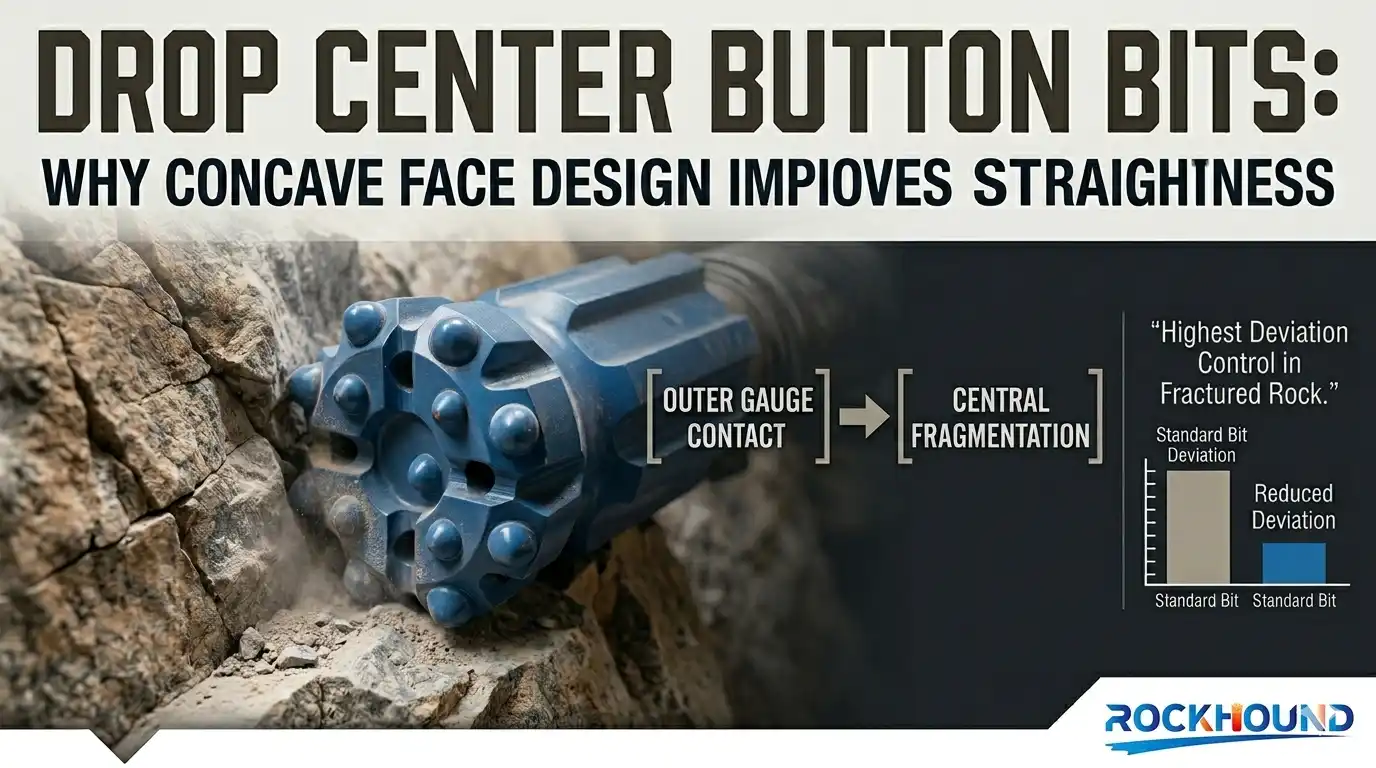
- Superior hole straightness. Direct face impact and the hammer’s self-stabilizing geometry minimise deviation. This is the decisive factor in precision blast design.
- Performance in hard, abrasive, or fractured rock. DTH impact energy is not disrupted by rock heterogeneity the way transmitted-wave energy is.
- Large-diameter capability. The only practical percussive solution above ~150 mm diameter.
Limitations of DTH
- High compressed air demand. Large-volume, high-pressure air supply (compressors rated at 17–35 bar, 20–60+ m³/min) represents significant capital and fuel cost. Air compressor availability is often the bottleneck on DTH sites.
- Lower penetration rate in soft or shallow ground. The volumetric efficiency of DTH is optimised for hard rock. In softer formations at shallow depth, a well-set-up top hammer system will typically outperform it on pure speed.
- Downhole component exposure. Hammer jams, bit retention issues, and water ingress in the hole represent risks that require specific recovery procedures, unlike top hammer where the percussive unit stays on the rig.
Head-to-Head Comparison
| Parameter | Top Hammer | DTH |
|---|---|---|
| Hole Diameter Range | 27 mm – 127 mm | 90 mm – 900 mm+ |
| Optimal Depth | < 20–25 m | 25 m – 200 m+ |
| Rock Hardness (UCS) | Soft to medium (~60–200 MPa) | Medium to extremely hard (150–350+ MPa) |
| Energy at Bit vs. Depth | Decreases with depth (rod attenuation) | Constant regardless of depth |
| Hole Straightness | Moderate (deviation risk increases with depth) | Excellent (direct face impact) |
| Air/Power Requirement | Lower (hydraulic drifter on rig) | High (high-pressure compressor essential) |
| Tooling Cost | Lower per-unit (bits, rods, shanks) | Higher (DTH hammer body + bits) |
| Penetration Rate — Shallow Soft Rock | ★★★★★★★★ | ★★★★ |
| Penetration Rate — Deep Hard Rock | ★★★ | ★★★★★★★ |
| Typical Application | Tunneling, quarry bench, u/g development | Open-pit blast holes, water wells, civil foundations |
Decision Framework: How to Choose
Choose Top Hammer
Choose DTH
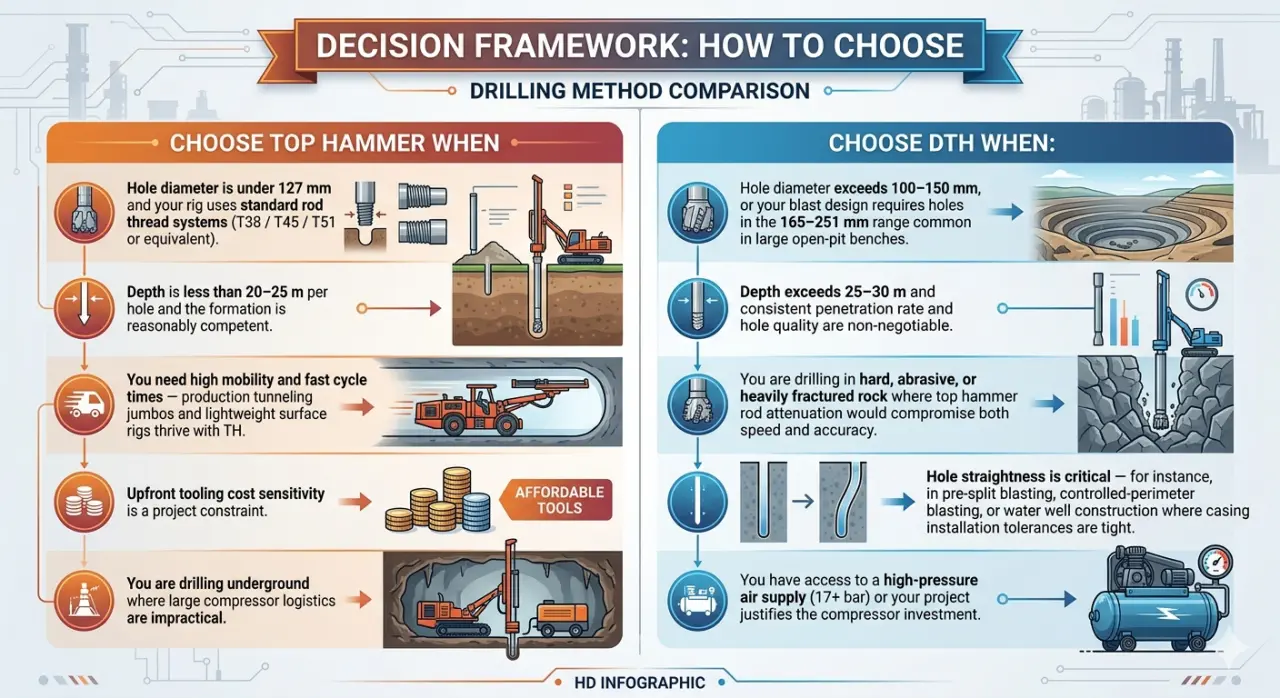
1.Hole diameter is under 127 mm and your rig uses standard rod thread systems (T38 / T45 / T51 or equivalent).
1.Hole diameter exceeds 100–150 mm, or your blast design requires holes in the 165–251 mm range common in large open-pit benches.
2.Depth is less than 20–25 m per hole and the formation is reasonably competent.
2.Depth exceeds 25–30 m and consistent penetration rate and hole quality are non-negotiable.
3.You need high mobility and fast cycle times — production tunneling jumbos and lightweight surface rigs thrive with TH.
3.You are drilling in hard, abrasive, or heavily fractured rock where top hammer rod attenuation would compromise both speed and accuracy.
4.Upfront tooling cost sensitivity is a project constraint.
4.Hole straightness is critical — for instance, in pre-split blasting, controlled-perimeter blasting, or water well construction where casing installation tolerances are tight.
5.You are drilling underground where large compressor logistics are impractical.
5.You have access to a high-pressure air supply (17+ bar) or your project justifies the compressor investment.
A Note on Tooling Quality and System Matching
Whichever method you choose, the performance gap between high-quality and generic tooling is significant in hard-rock drilling.
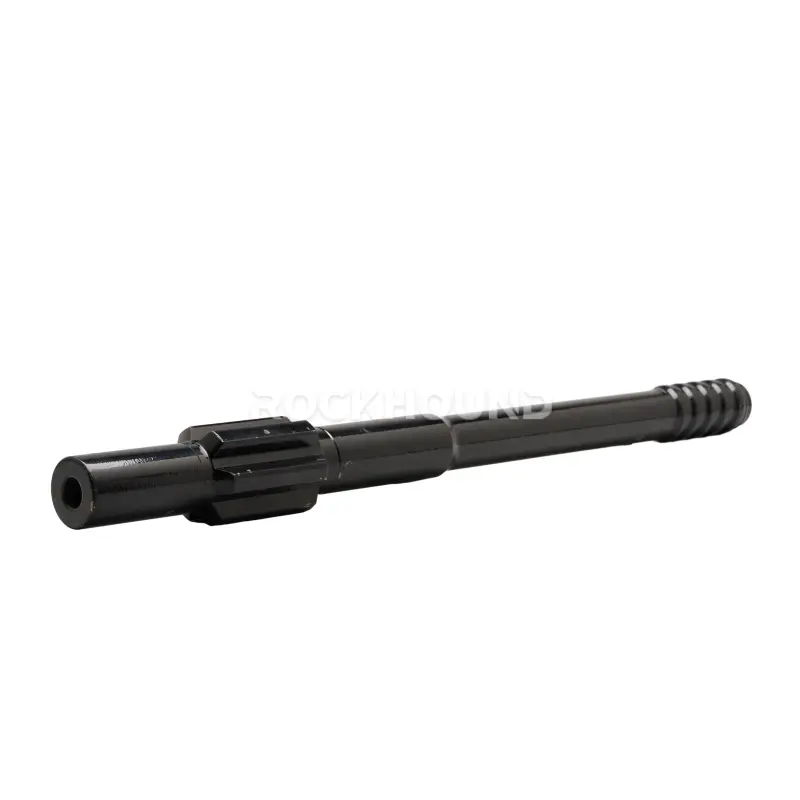
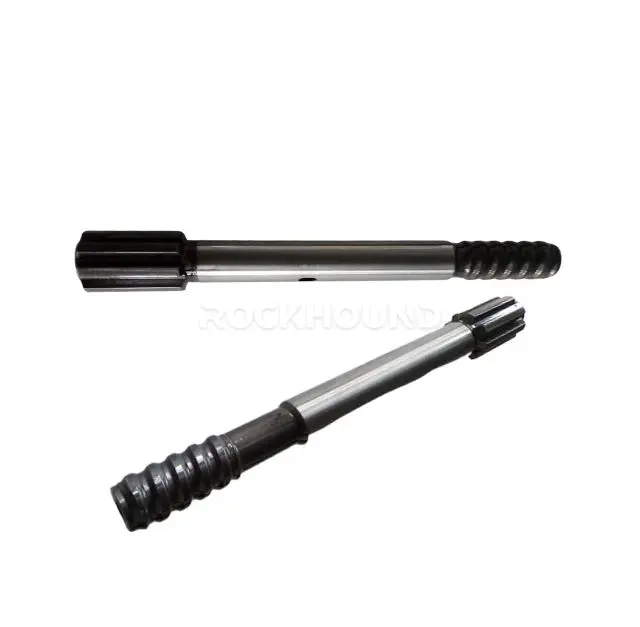
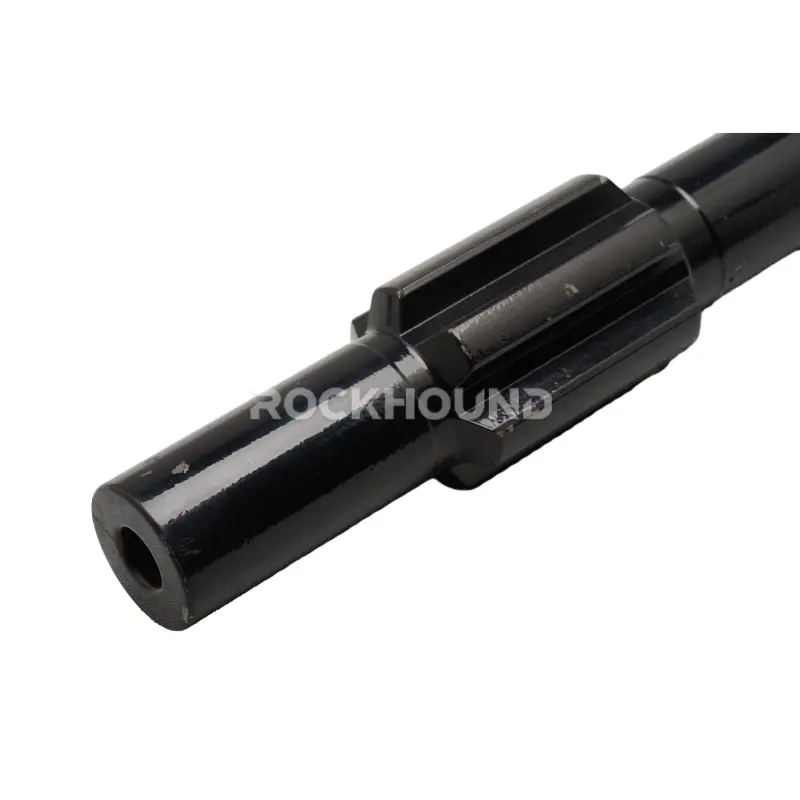
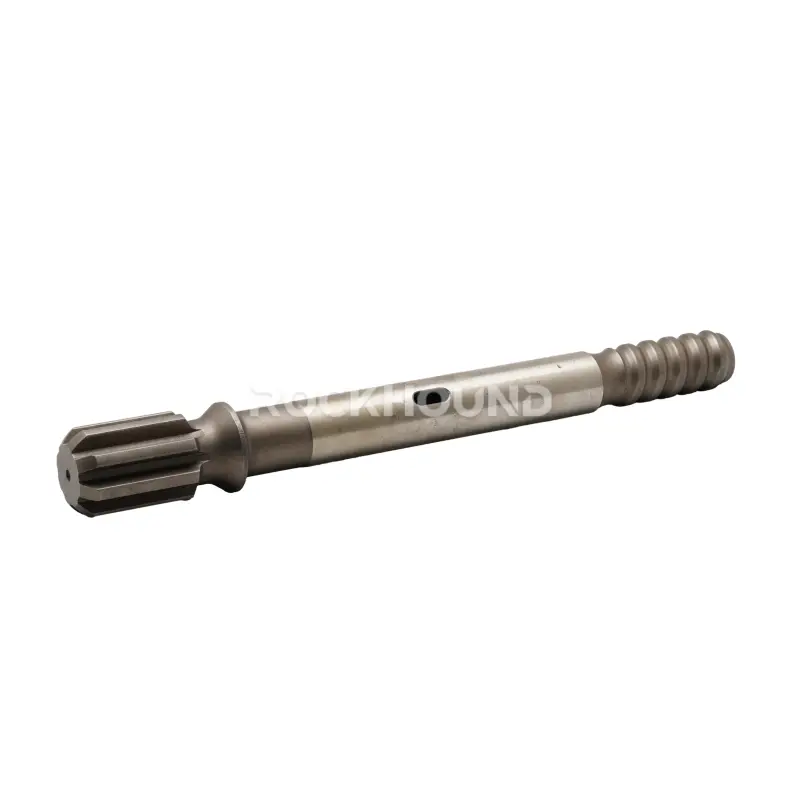
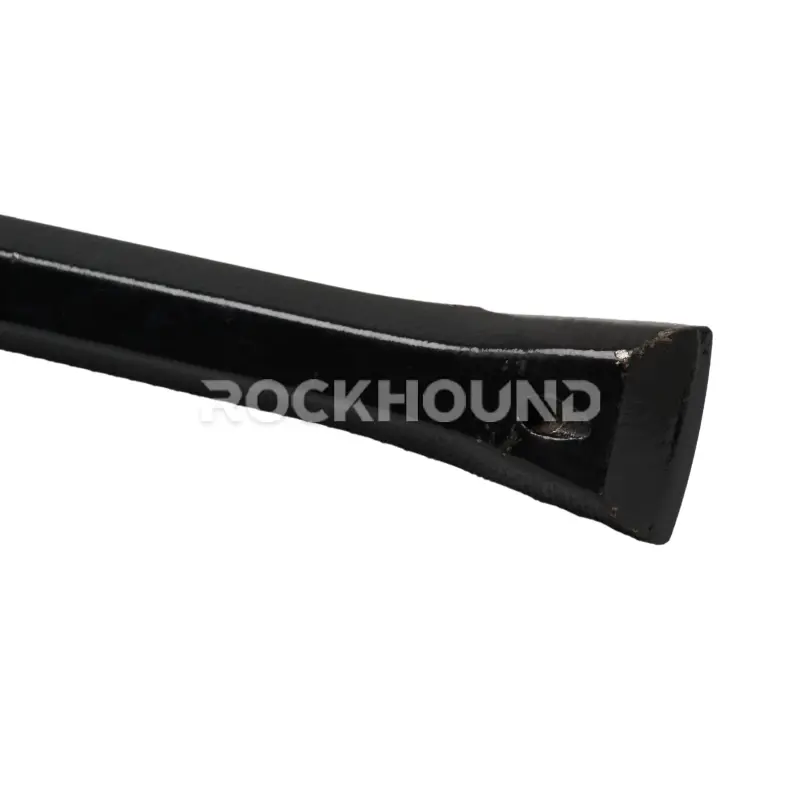
For Top Hammer, the critical wear items are the drill bit (button geometry, carbide grade, and flushing hole design), the drill rod (steel grade, thread tolerance, and heat treatment), and the shank adapter (the highest-stress component in the string — a failure point that should never be compromised on cost). Mismatched thread systems between drifter, shank adapter, and rod are a common and avoidable cause of premature joint failure.
For DTH, hammer and bit must be matched to your compressor’s operating pressure range. Running a premium hammer at sub-specification pressure is one of the fastest ways to destroy piston and bit shank. Bit selection — button diameter, carbide grade, face profile — should reflect your specific formation hardness and abrasivity index.
At RockHound, our Top Hammer bits, shank adapters, and drill rods are manufactured from premium alloy steel with 0.01mm rigorous thread tolerance control, and our DTH hammer and bit range is engineered to perform across a broad pressure envelope in the field conditions that matter most to our customers.
Conclusion
The Top Hammer vs. DTH question is not a matter of one system being better — it is a matter of matching the physics of energy delivery to the demands of the formation, the hole geometry, and the project economics.
Top Hammer wins on speed, cost, and versatility at shallow depths and smaller diameters.
DTH wins on depth, straightness, and sustained performance in the hardest ground.
Understanding where one method ends and the other begins is the mark of a drilling professional — and it is the foundation on which every tooling decision should be built.
Explore RockHound’s Top Hammer range — bits, rods, and shank adapters for every thread standard — or browse our DTH hammers and button bits for your next deep-hole project.
About the Author
This article was written by the RockHound Engineering Team. Our specialists have provided technical support and tooling solutions for drilling contractors, mining operations, and civil construction projects across multiple continents. We combine hands-on field experience with up-to-date knowledge of drill rig systems from leading OEMs.
FAQ
The core difference is where the percussive energy is generated. In Top Hammer, the rock drill sits on the rig above the hole and transmits impact energy down through the drill rods to the bit. In DTH, the hammer assembly is positioned directly behind the bit at the bottom of the hole, delivering the blow to the bit face without any energy loss through the rod string.
As a general guideline, Top Hammer drilling is most efficient at depths under 20–25 metres. Beyond this range, energy attenuation through the rod string becomes significant enough to reduce penetration rate and increase hole deviation. DTH becomes the more cost-effective and accurate solution from approximately 25–30 metres onwards, and is the standard choice for any application exceeding 50 metres.
Top Hammer drilling carries an inherent deviation risk that increases with depth, because the unsupported drill string can deflect in response to geological discontinuities. While modern hydraulic drifters and precision rods minimise this, Top Hammer is not the recommended method where tight hole straightness tolerances are required at depth. DTH is the industry standard for deviation-sensitive applications such as pre-split blasting and water well drilling.
The DTH hammer is a pneumatic piston assembly powered entirely by compressed air delivered through the drill string. The air volume and pressure directly determine the hammer's impact frequency and energy per blow. Larger-diameter hammers and deeper holes require greater air volumes to maintain effective face flushing and hammer performance. A typical large DTH operation may require compressors rated at 20–35 bar and 30–60 m³/min, representing a substantial operating cost compared to the hydraulic drifter used in Top Hammer rigs.
Common Top Hammer thread systems include R25, R28, R32 (for smaller diameters), T38, T45, and T51 (the most widely used mid-range standards in quarry and mining bench drilling), and ST58/ST68 for heavier applications. The thread standard must be consistent across the shank adapter, all drill rods, and the bit. Mixing incompatible standards is a leading cause of premature rod and coupling failure.
DTH drilling excels in medium-hard to extremely hard and abrasive rock, typically characterised by a Uniaxial Compressive Strength (UCS) of 150 MPa and above. Common formations include granite, basalt, dolerite, quartzite, and hard limestone. Because the hammer impact is applied directly at the face and is not transmitted through the rod string, DTH maintains consistent penetration rates even in highly variable or fractured hard-rock formations where Top Hammer energy would be erratically dispersed.
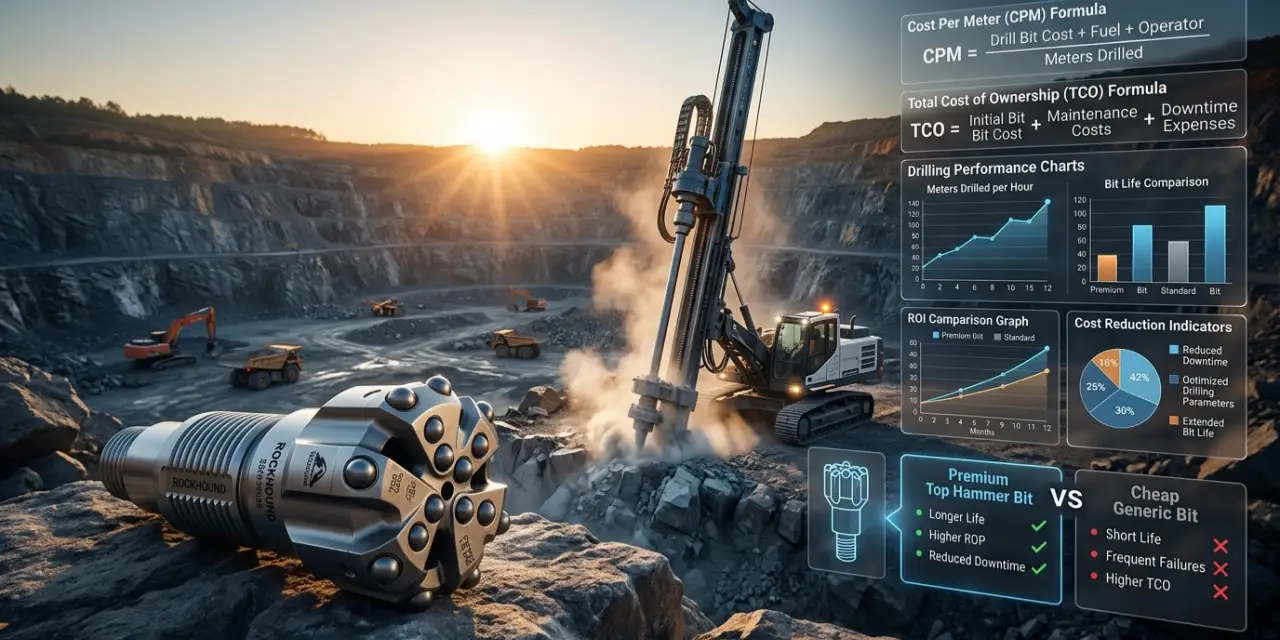
The cost-effectiveness of each method depends entirely on the application. Top Hammer typically has a lower tooling cost per unit and a lower operational air requirement, making it more economical for shallow, small-diameter drilling. DTH has higher per-component costs (hammer body, high-pressure compressor) but delivers substantially lower cost-per-metre in deep, large-diameter, or hard-rock conditions where Top Hammer productivity would be severely diminished. Always evaluate cost-per-metre drilled — not upfront tooling cost alone — when making this decision.
Yes. RockHound's product range covers both drilling methods, including Top Hammer drill bits, shank adapters, and drill rods across all major thread standards, as well as DTH hammers and button bits for a full range of operating pressures and hole diameters. Our team can assist with system matching to ensure your tooling selection is compatible with your rig specifications and formation conditions.