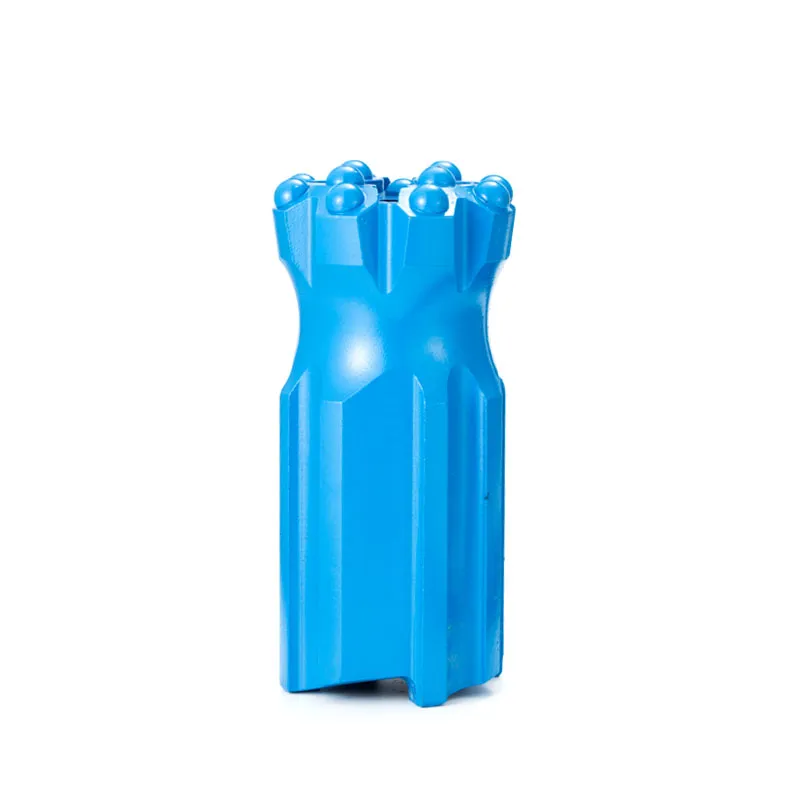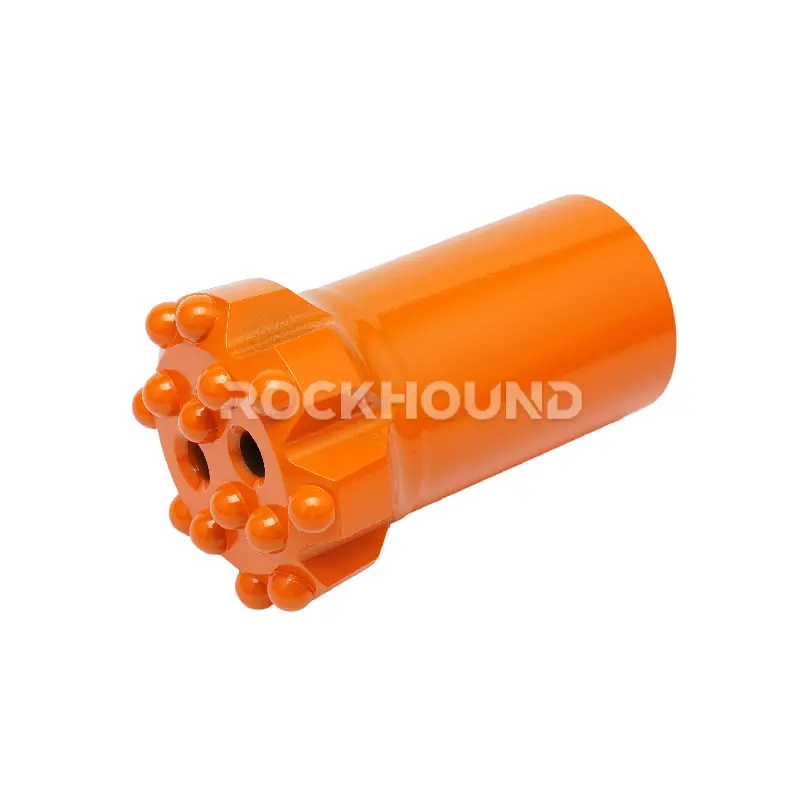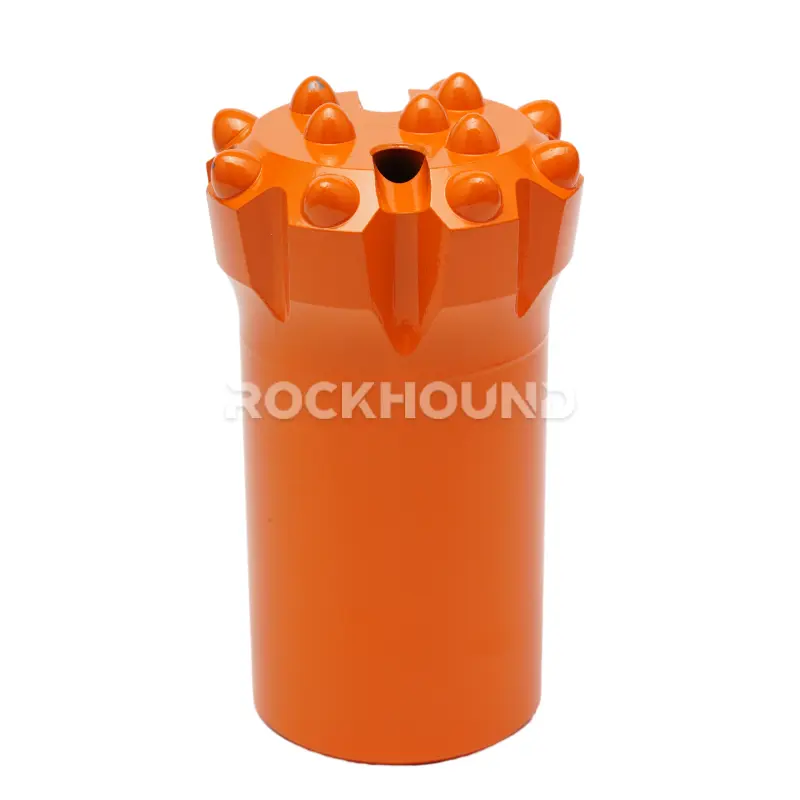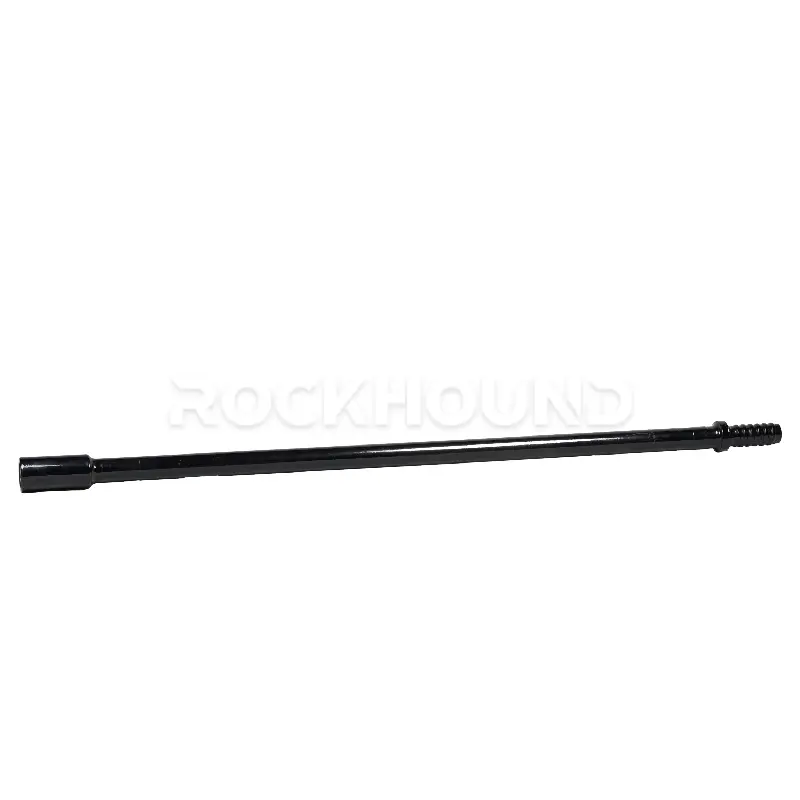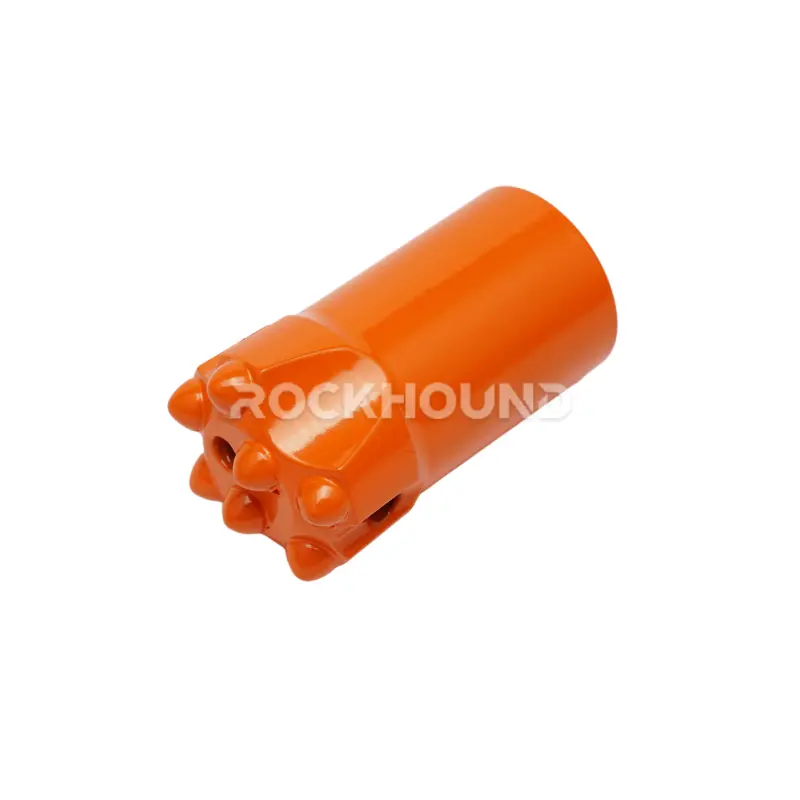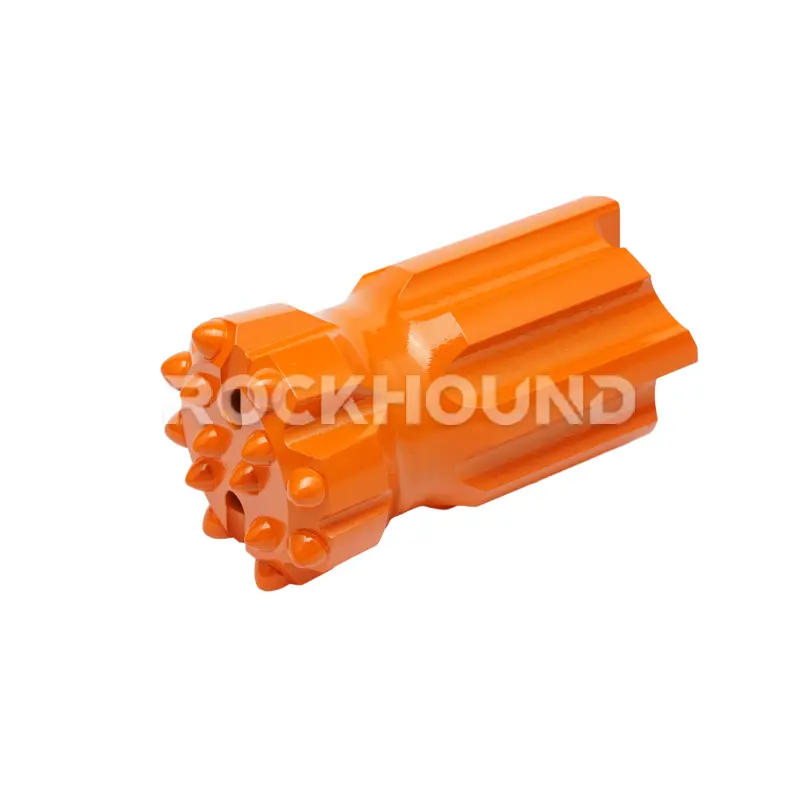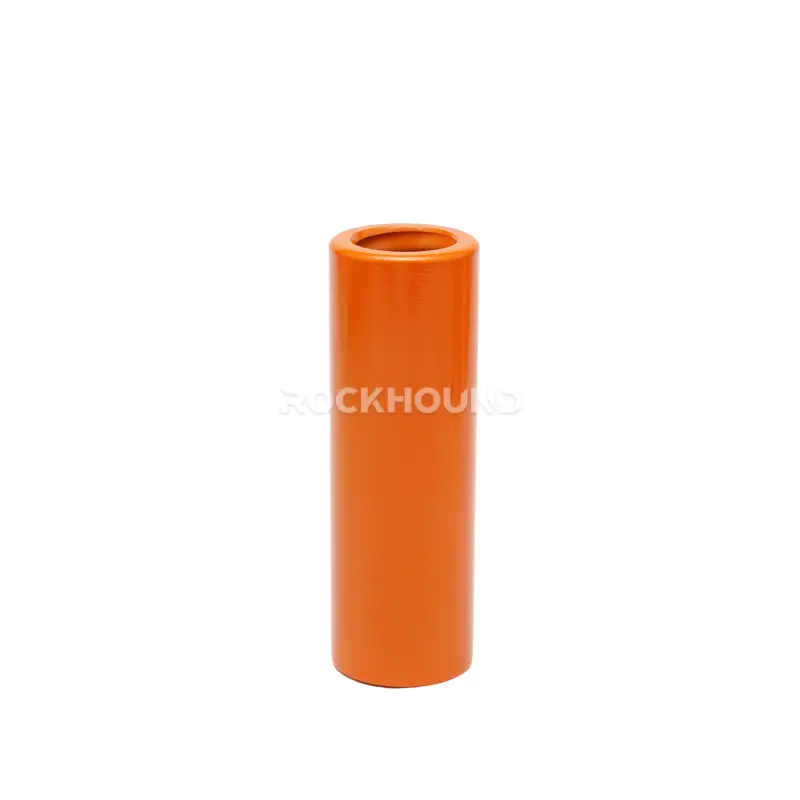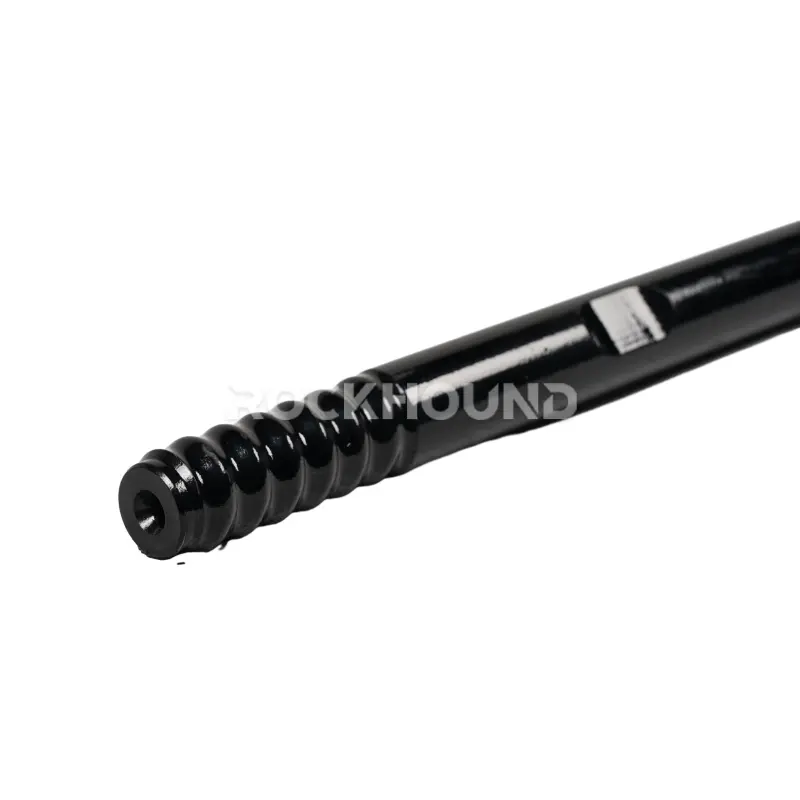
Explore the applications of top hammer rock drill tools — from underground mining and tunneling to quarrying and hydropower projects. Includes technical tool selection by hole diameter (28–203 mm), rig type, and formation. RockHound’s engineered solutions for every application.
By Rock Drill Tools Applications
Mining — Surface & Underground
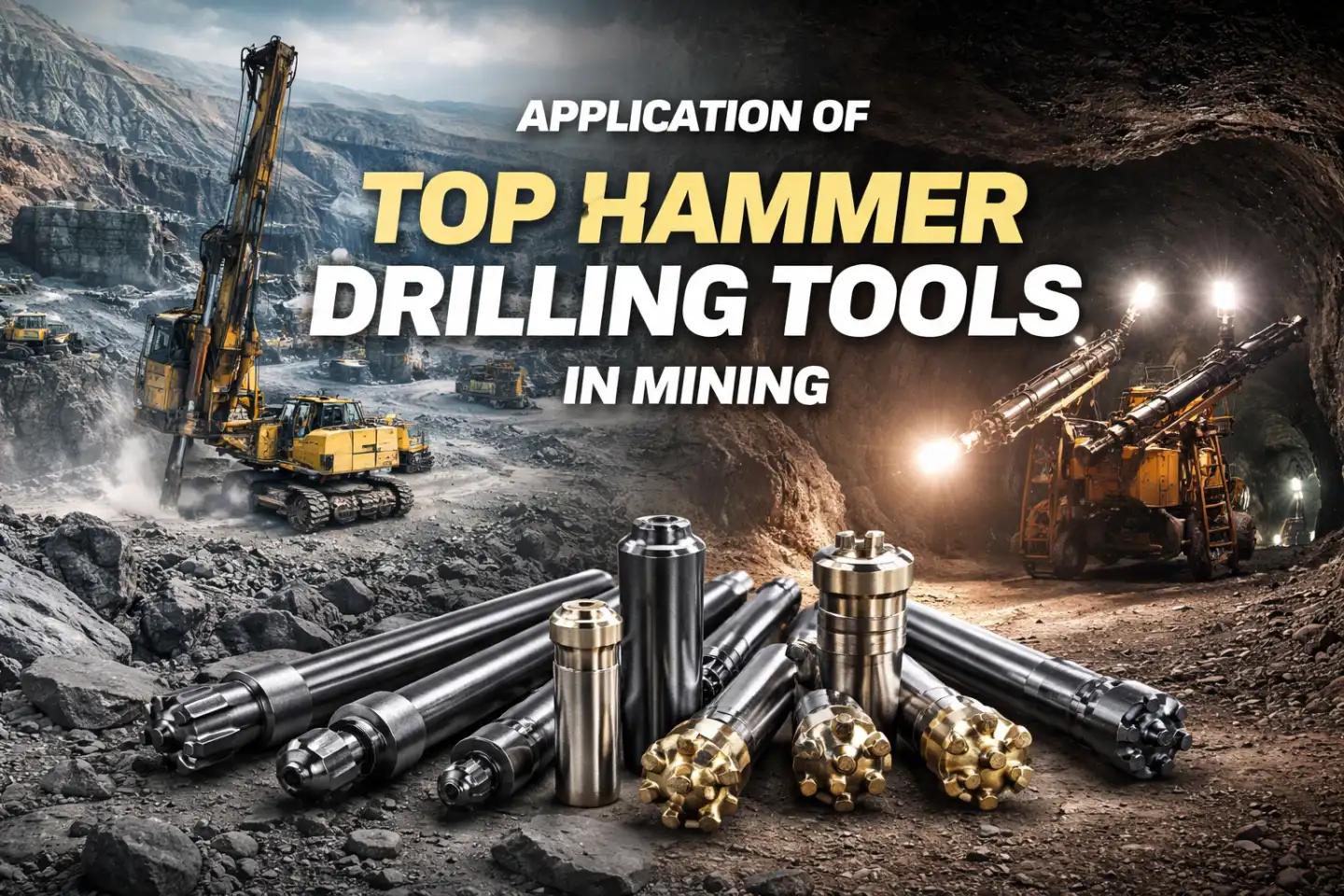
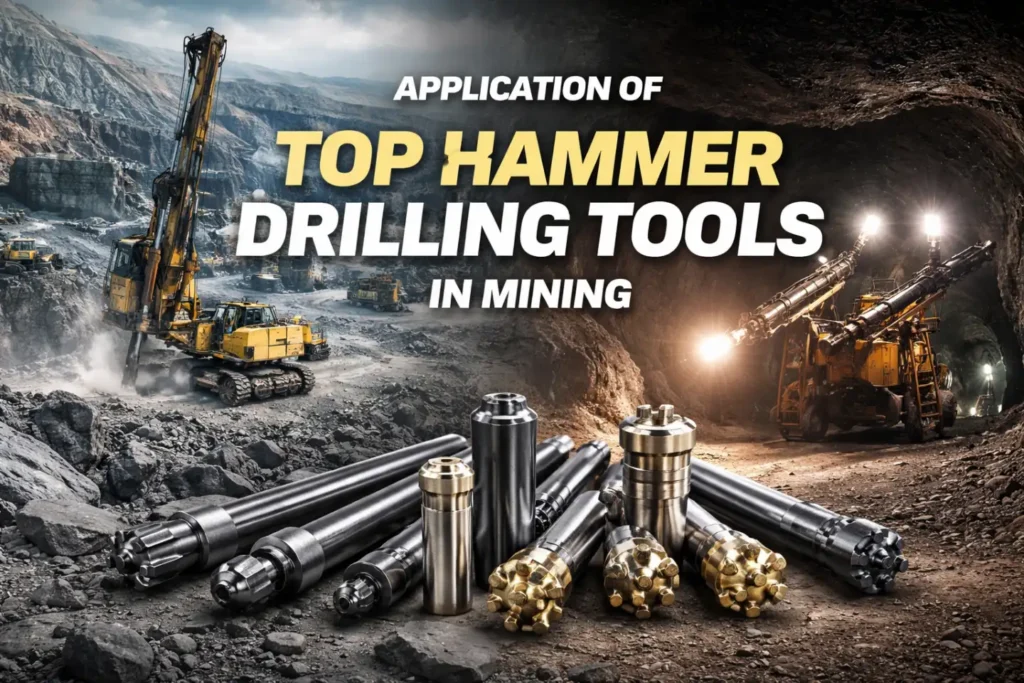
Top hammer drilling is the dominant method for both open-pit production drilling and underground stoping operations. In surface mining, crawler-mounted hydraulic rigs equipped with bench drilling tools deliver high penetration rates and precise hole straightness for large-diameter blast patterns. Underground, the compact profile of drifting jumbos and long-hole rigs enables efficient ore extraction in confined stopes and development headings.
Key operations: Production blasting, ore development, long-hole stoping, secondary fragmentation, and rock bolting for ground support.
Expolre More: Advantage of Top Hammer Drilling Tools In Mining
Quarrying & Aggregate Production
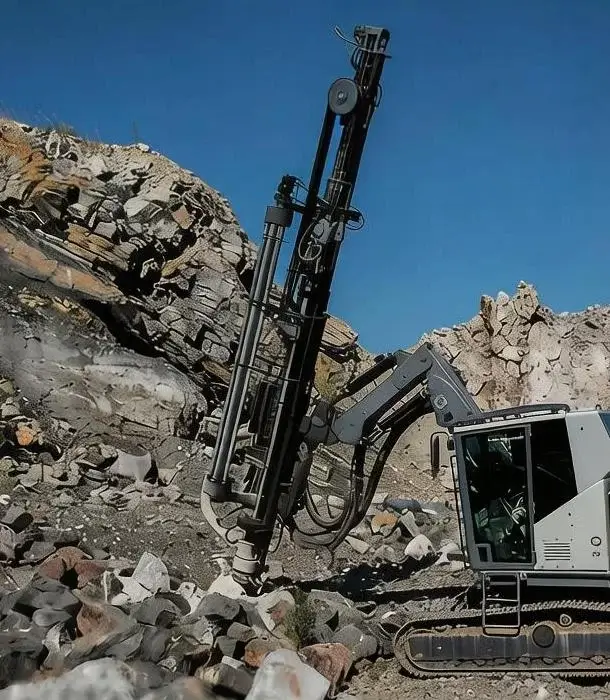
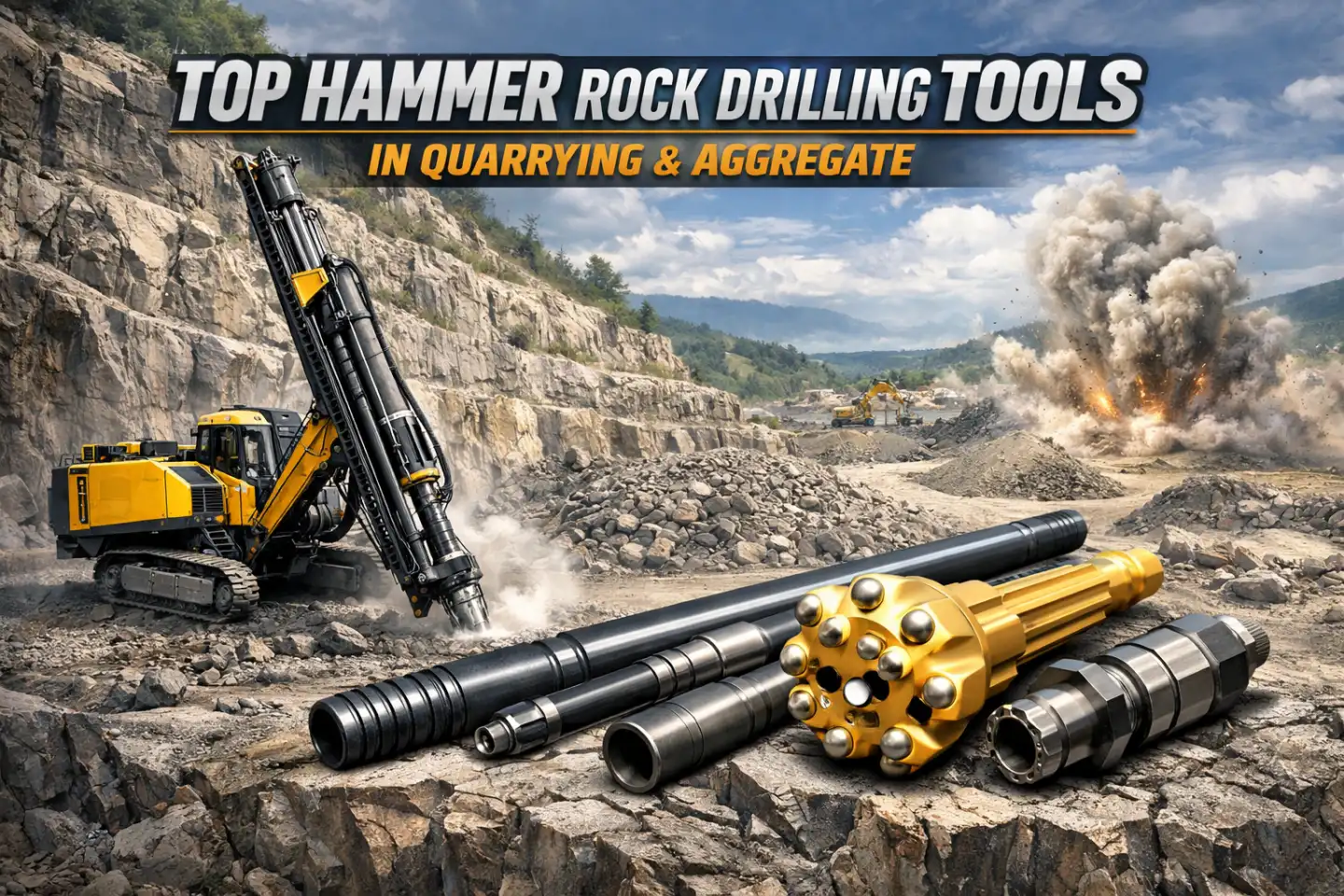
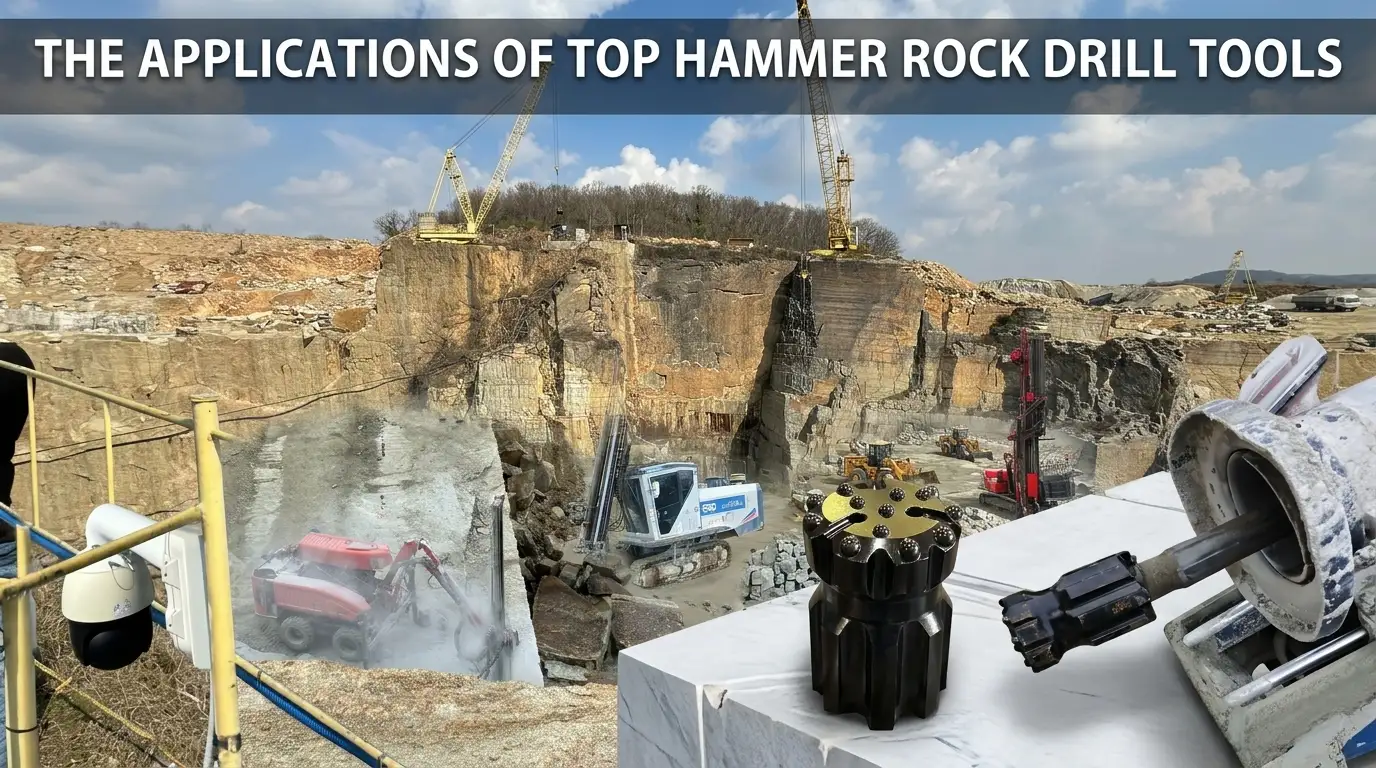
Limestone, granite, and sandstone quarries rely on top hammer systems for high-volume blast hole drilling. Dimensional stone operations require low-deviation holes to minimize waste and preserve block integrity, while aggregate producers prioritize penetration rate and bit longevity in highly abrasive formations. Crawler-type fully hydraulic rigs paired with bench drilling tools are the standard for ladder-face excavation.
Key operations: Quarry face blasting, dimensional stone extraction, cement raw material exploitation.
Tunneling & Underground Projects
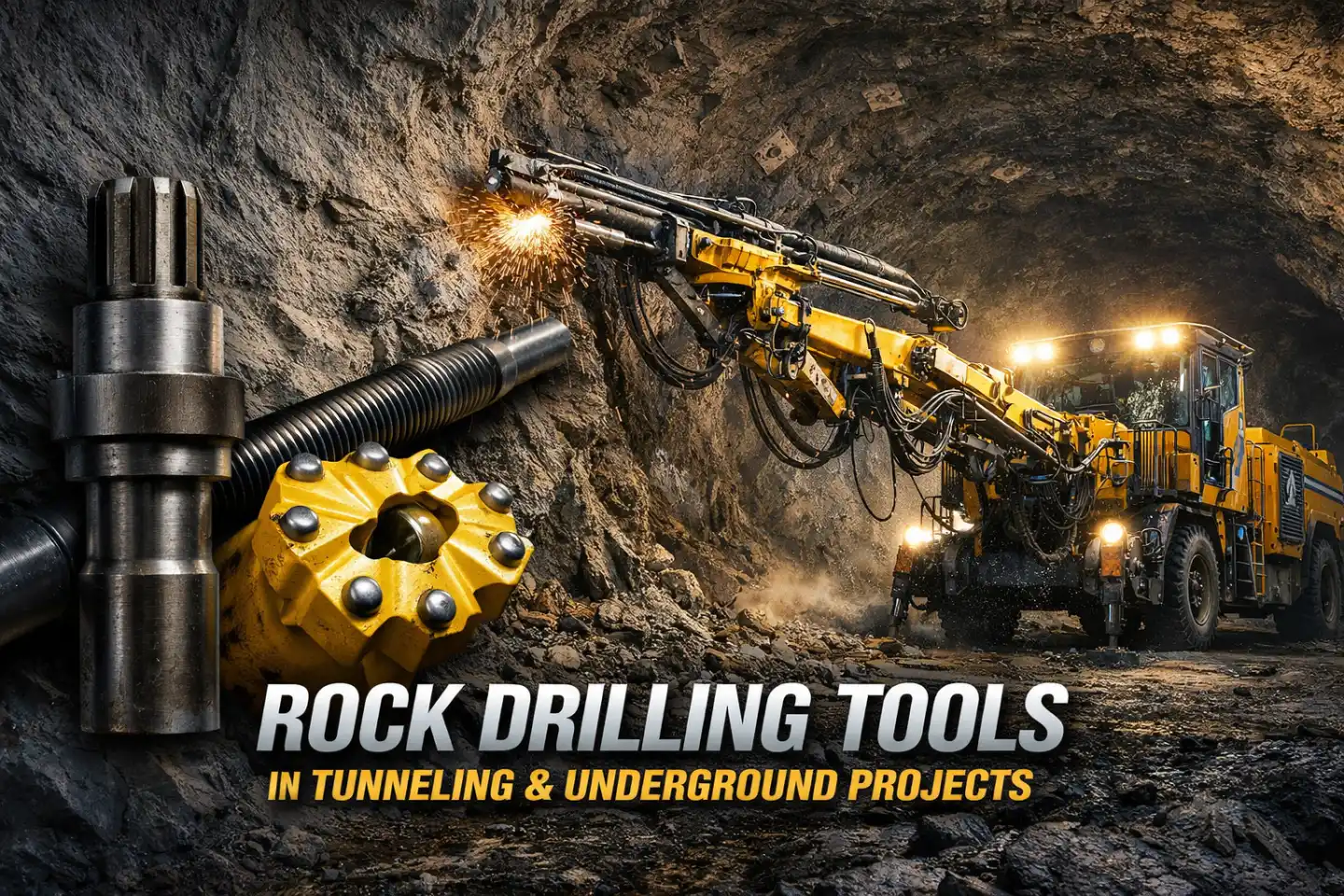
Precision and advance rate are the twin priorities in mechanized tunneling. Hydraulic drill jumbos equipped with drifting and tunneling tools execute full-face excavation profiles for railway tunnels, metro systems, and highway corridors. The combination of optimized shank adapters, extension rods, and drop-center bits minimizes hole deviation and achieves consistent round lengths, directly reducing overbreak and support costs.
Key operations: Full-face drifting, contour blasting, roof bolt installation, probe and drainage hole drilling.
Explore More: Rock Drilling Tools In Tunneling & Underground Drifting
Construction Drill and Blast
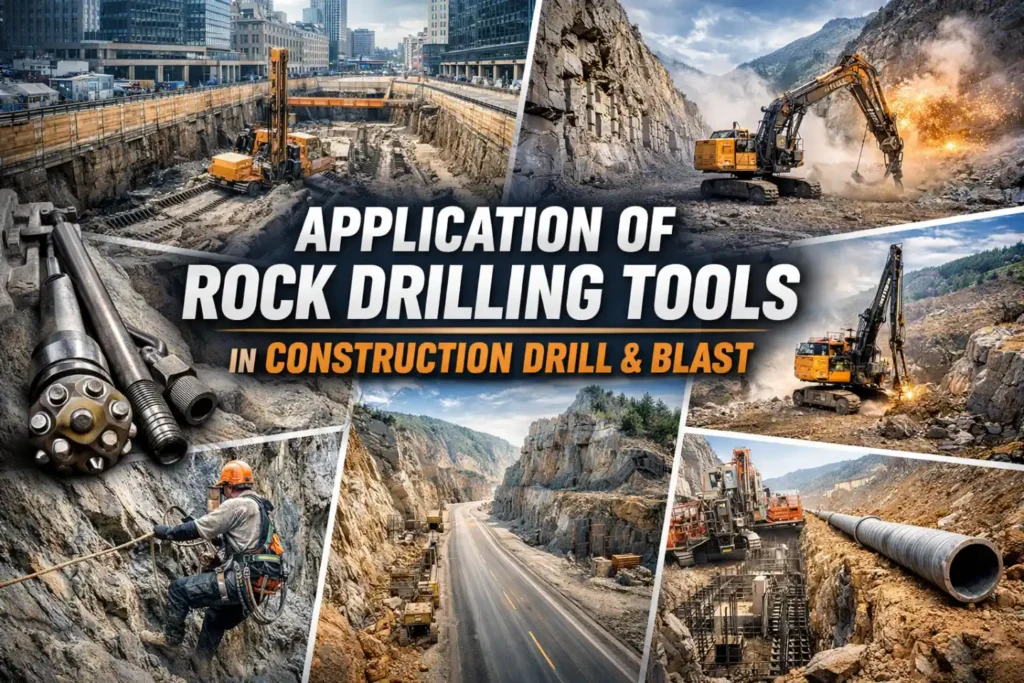
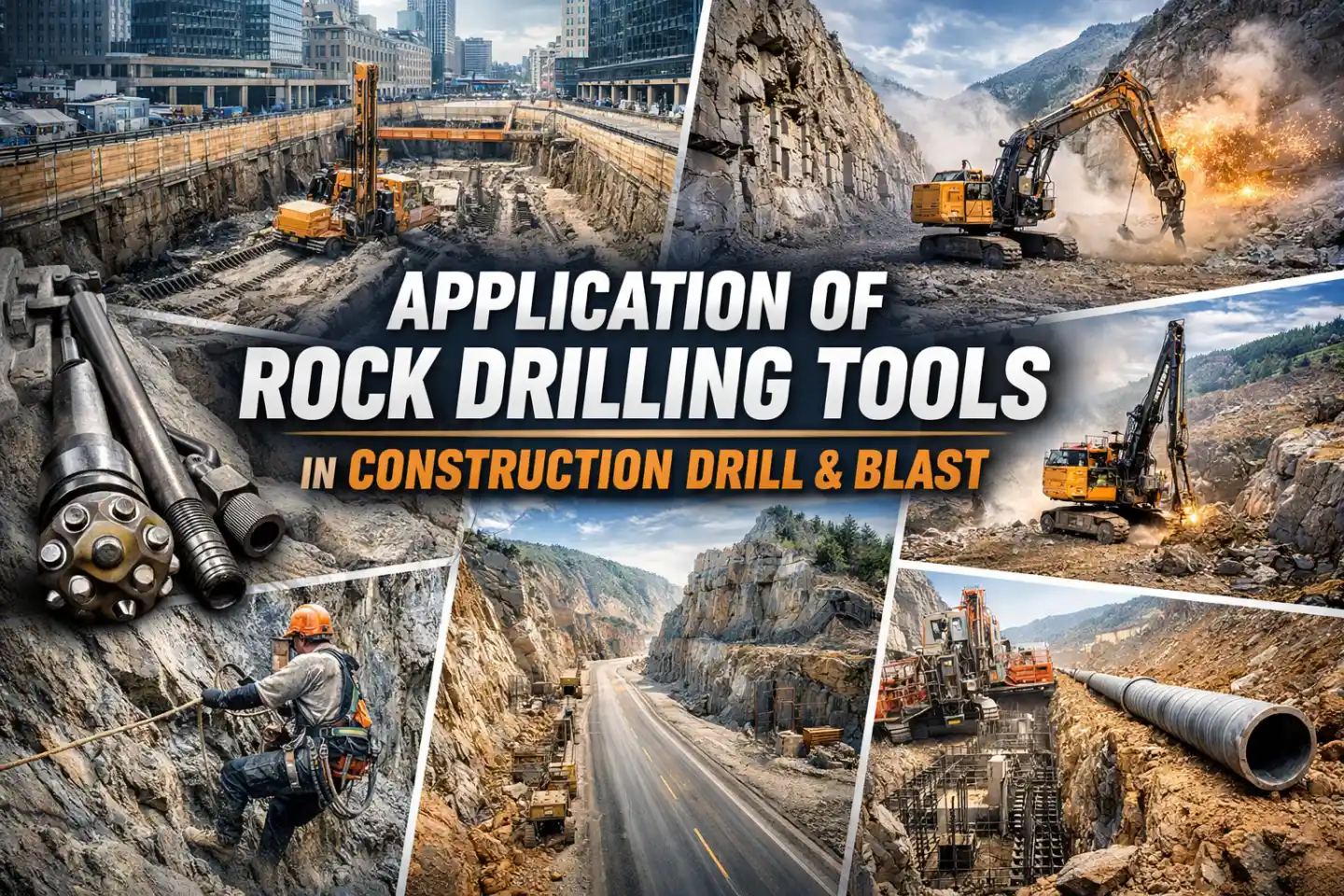
Urban infrastructure and civil earthworks increasingly rely on controlled drill-and-blast techniques facilitated by top hammer tools. Foundation anchor hole drilling, rock slope stabilization, and trench excavation in hard rock formations demand tool systems that can transition between light and medium-duty work with precision. Hand-held air-leg drills and guide-rail pneumatic drills serve small-diameter anchoring applications on vertical or inclined faces.
Key operations: Rock anchor installation, pre-split blasting, urban cut-and-cover, road cutting, foundation drilling.
Explore More: Top Hammer Rock Drilling Tools In Construction & Blast
Hydropower Projects
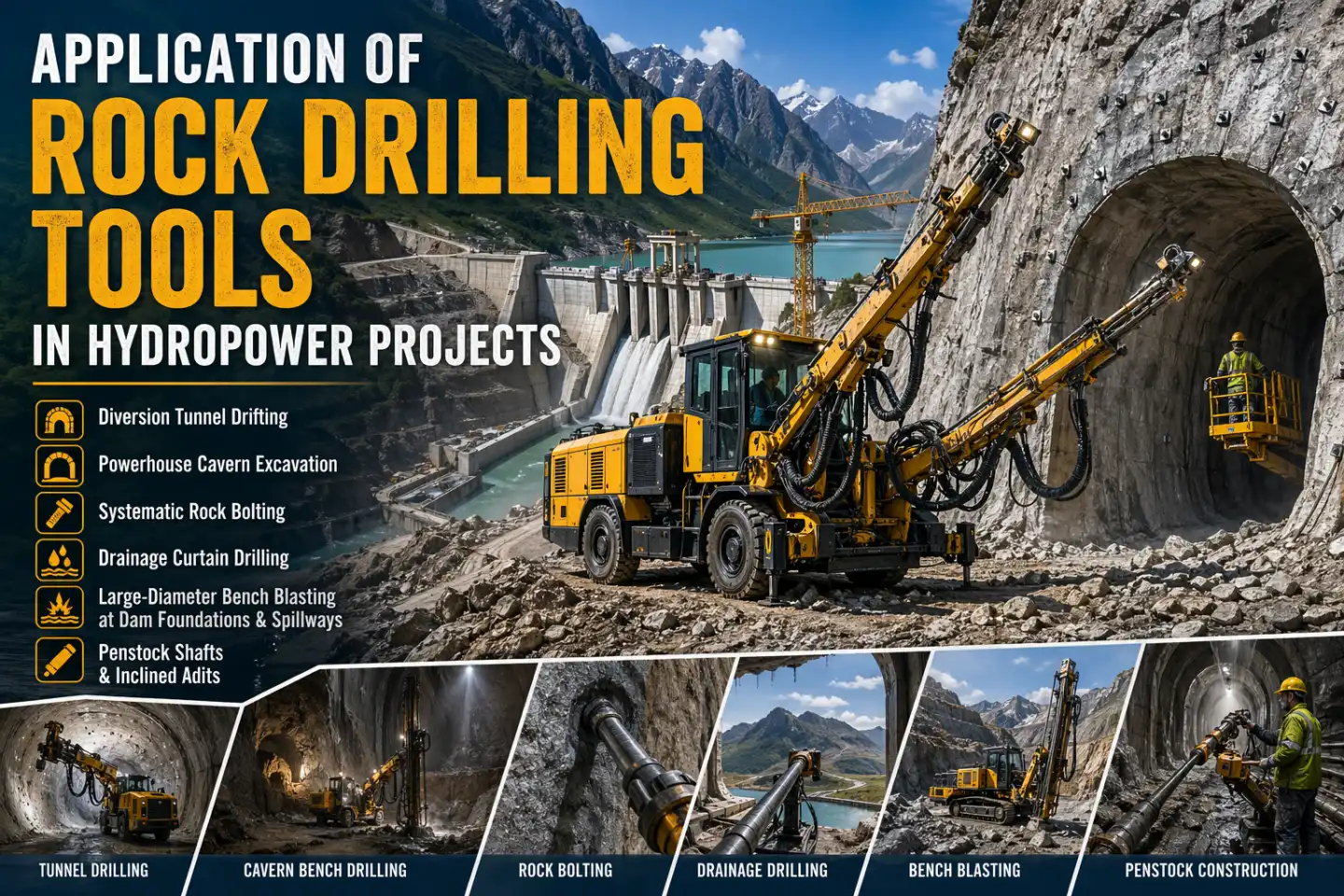
Hydropower development involves some of the most demanding excavation profiles in civil engineering — diversion tunnels, powerhouse caverns, dam abutments, and penstock shafts. Top hammer technology, particularly hydraulic jumbo-mounted drifting tools and specialized long-hole systems, supports both excavation and the systematic rock reinforcement required at scale. Large-diameter bench drilling tools serve dam foundation and spillway excavation.
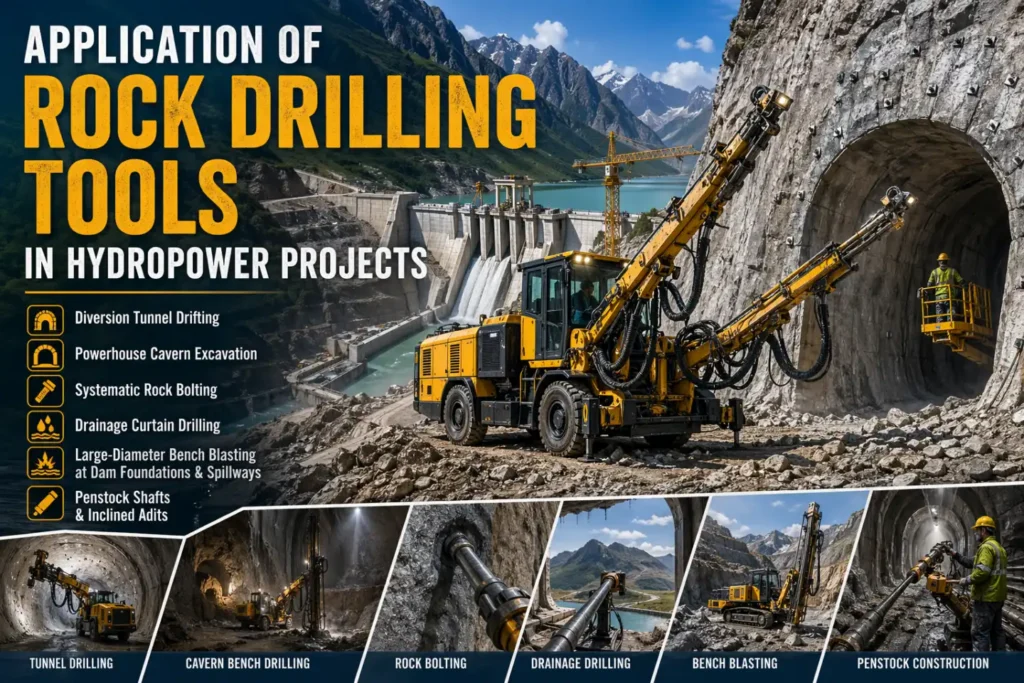
Key operations: Diversion tunnel drifting, cavern blasting, rock bolt installation, drainage curtain drilling, large-diameter bench blasting.
Explore More: Rock Drilling Tools in Hydropower Projects
By Rock Drill Tools Category
Small Hole Drilling Tools
| Parameter | Specification |
|---|---|
| Rig Type | Guide-rail pneumatic drill rig or full-hydraulic underground drill rig truck |
| Applications | Underground production blasting, long-hole stoping, retaining hole drilling |
| Technical Note | Extension rods and coupling sleeves are critical for maintaining hole straightness over depths exceeding 20 m in fan or parallel drill patterns |
Light-duty Rock Drilling Tools
| Parameter | Specification |
|---|---|
| Rig Type | Guide-rail type pneumatic rock drill |
| Applications | Underground mining, anchoring hole drilling (rock bolting), shallow-hole blast hole drilling, mine shaft sinking |
| Key Advantage | Improved hole straightness vs. hand-held; suitable for confined mine entries and inclined faces |
Underground Long-hole Drilling Tools
| Parameter | Specification |
|---|---|
| Rig Type | Guide-rail type pneumatic rock drill |
| Applications | Underground mining, anchoring hole drilling (rock bolting), shallow-hole blast hole drilling, mine shaft sinking |
| Key Advantage | Improved hole straightness vs. hand-held; suitable for confined mine entries and inclined faces |
Drifting and Tunneling Tools
| Parameter | Specification |
|---|---|
| Rig Type | Multi-boom hydraulic drill jumbo |
| Thread Systems | R32, T38, T45, T51 (matched to boom impact energy) |
| Applications | Large underground metal mines, roadway development, railway and highway tunnels, hydropower diversion tunnels, underground construction |
| Key Tools | Shank adapters, drill rods, coupling sleeves, retrac bits, drop-center face bits |
Bench Drilling Tools
| Parameter | Specification |
|---|---|
| Rig Type | Crawler-type fully hydraulic surface drill rig (DTH or top hammer) |
| Applications | Open-pit mining, quarry ladder-face blasting, construction stone mining, cement raw material exploitation, hydropower dam and spillway excavation |
| Key Tools | Shank adapters, MF rods, guide tubes, spherical button bits (ST, RT, ballistic profiles) |
| Diameter Range | Optimized for 76–203 mm blast holes at bench heights of 8–15 m |
Conclusion
In summary, top hammer rock drill tools serve as the backbone of modern excavation, delivering the critical balance of speed, precision, and cost-efficiency across diverse industries. From the high-tonnage demands of surface mining and quarrying to the millimeter-precision required in tunneling, civil construction, and massive hydropower projects, selecting the right tool string is paramount. By carefully matching tool specifications—spanning hole diameters from 28 to 203 mm—with specific rig types (from pneumatic guide-rails to multi-boom hydraulic jumbos) and changing geological formations, operators can drastically improve penetration rates and maximize bit longevity.
As a trusted partner in challenging terrains, RockHound delivers engineered, high-performance solutions tailored to every application. Whether you are executing deep underground long-hole stoping or precise urban contour blasting, our comprehensive range of premium shank adapters, drill rods, and button bits ensures your operation achieves lower total drilling costs and optimal rock fragmentation every single shift.
FAQ
Top hammer drilling is a percussive drilling method where the rock drill (hammer) sits at the top of the drill string, outside the hole. The drill delivers rapid impact energy through the drill rod directly to the bit face, combined with rotation, to fracture rock.
Flushing — using compressed air or water — removes cuttings from the hole. It is the preferred method for holes up to approximately 127 mm diameter due to its high penetration rate and energy efficiency.
Top hammer drilling is widely used across underground and surface mining, aggregate quarrying, civil tunneling (railway, highway, metro), hydropower project excavation, and construction drill-and-blast. It is particularly suited to hard rock formations where high penetration rates are required in small to medium hole diameters (28–203 mm).
Top hammer drilling typically covers hole diameters from 28 mm (hand-held air-leg drills) up to approximately 203 mm (crawler-mounted hydraulic bench rigs). Small-hole applications (28–42 mm) use integral steels or tapered rods, while medium and large-hole applications (76–203 mm) use fully coupled MF rod systems with thread standards such as R25, R32, T38, T45, or T51.
Bit selection depends on four factors:
- Rock hardness and abrasivity (UCS and CAI values guide carbide grade selection);
- Hole diameter and required drill rod thread (R, T, or ST series);
- Formation structure — massive rock favors ballistic buttons, while fractured or mixed formations suit spherical buttons for re-sharpening;
- Flushing method (air vs. water), which affects face design and water port configuration.
Tunneling applications using hydraulic drill jumbos typically employ T38, T45, or T51 thread systems, selected based on the rig's impact power class. T38 is common on medium-sized jumbos (15–18 kW), T45 suits higher-power booms (18–23 kW), and T51 is reserved for the most powerful machines. Rod lengths are standardized at 3.1 m, 3.7 m, or 4.3 m to match round length requirements.
The primary causes of premature bit wear include: excessive rotation speed causing button flat-topping in abrasive rock; insufficient flushing velocity leaving cuttings under the bit face; mismatched impact energy relative to formation hardness; and incorrect penetration pressure leading to overfeeding. Using the correct carbide grade for the rock abrasivity index (AI) and maintaining optimal feed force-to-rotation ratios are the most effective wear reduction strategies.
Yes. Rock bolt hole drilling is one of the most common top hammer applications in underground mining and civil tunneling. Guide-rail pneumatic drills (light-duty category) and hydraulic jumbos with dedicated bolting booms drill anchor holes to specified diameters (typically 38–51 mm) for grouted rebar bolts, split-set friction bolts, and resin-anchored cable bolts used in systematic ground support.
Top hammer systems in open-pit applications offer high penetration rates in competent rock, lower capital cost per rig versus rotary alternatives for medium diameters, and easier rod handling on benches. Modern crawler-mounted hydraulic rigs with on-board measurement-while-drilling (MWD) systems also enable real-time formation logging, improving blast design and fragmentation control.
Formation hardness (UCS) directly influences percussion frequency, bit carbide grade, and rod steel specification. Soft rock (UCS <50 MPa) permits higher penetration rates with standard grades; medium-hard rock (50–150 MPa) requires premium carbide grades and robust thread connections; very hard or abrasive formations (UCS >200 MPa, high AI) demand ultra-premium carbide inserts, optimized button protrusion, and frequent regrinding intervals to maintain efficiency.